
We Tested:
Picture this: It’s December 2024. You’re standing in the Washington Convention Center, surrounded by twenty thousand earth scientists, holding a coffee that cost more than your lunch, and staring at a schedule with fourteen parallel sessions that all look equally important. You feel a familiar mix of exhaustion and exhilaration. The pandemic is firmly in the rearview mirror—or so it seems. But something is different. The crowds are back, the handshakes are real, but the ghost of Zoom still lingers in the corner of every panel discussion.
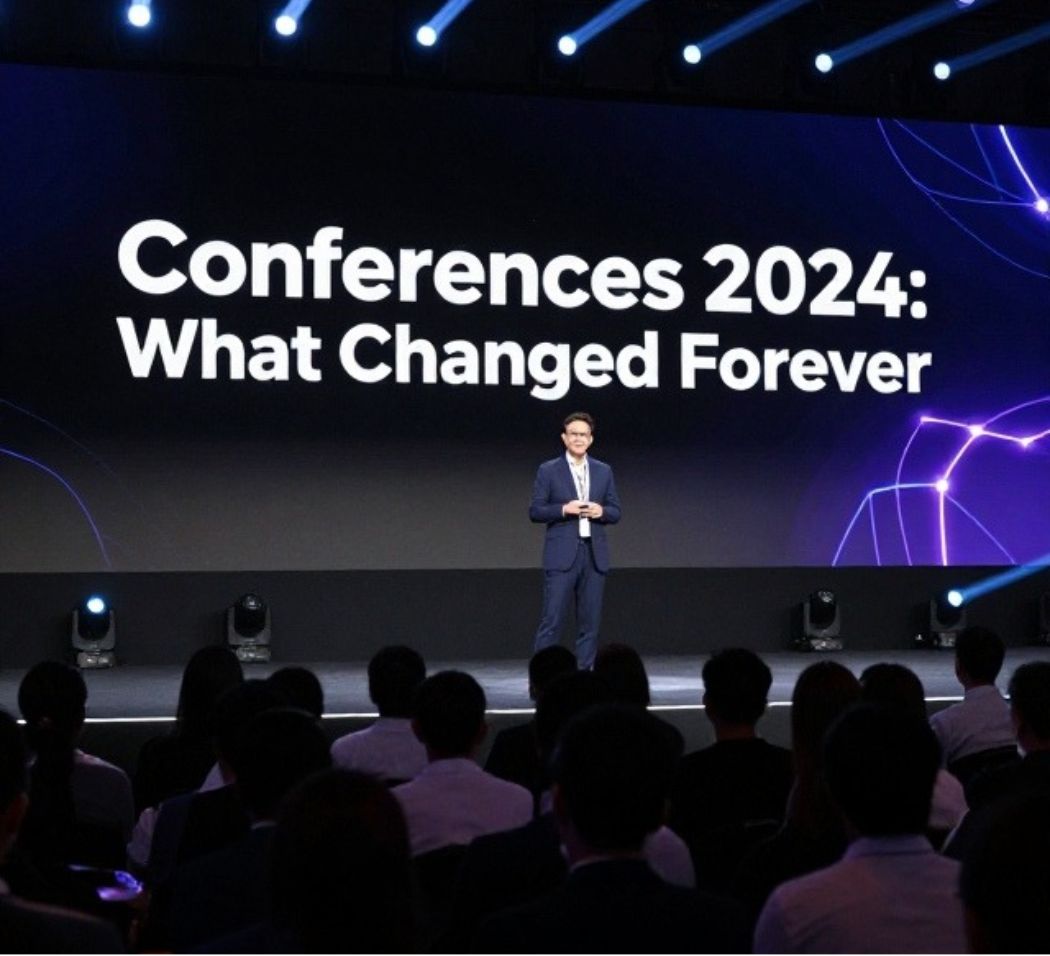
Was 2024 the year conferences finally returned to “normal,” or was it the year we quietly admitted that the old normal was broken? If you attended any major professional gathering in 2024—whether it was the massive AGU meeting, the radiology megashow RSNA, or a smaller niche symposium—you likely noticed a subtle but profound shift. The numbers looked impressive, but the texture of the experience had changed. We weren’t just rebuilding attendance; we were rebuilding the value of gathering.
This deep dive isn’t just a recap of dates and locations. It’s a forensic look at what actually happened at conferences in 2024, why some strategies failed, and the uncomfortable truths about networking, hybrid models, and the carbon cost of handshakes that most industry cheerleaders ignore.
Background: The Great Reversion and the Ghost of Hybrid
To understand 2024, you have to look back at the trajectory. During the pandemic, virtual conferences proved that geography didn’t have to be a barrier. Attendance skyrocketed because the barrier to entry—travel costs, visas, time away from family—was removed. The scientific community, in particular, realized that a PhD student in the Global South could attend a world-class event without a six-figure travel budget.
But by 2023 and 2024, the pendulum swung back hard. Research tracking environmental science conferences from 2018 to 2024 documented a dominant “reversion to in-person”. Conference managers, pressured by venue contracts and the massive tourism industry that supports convention centers, pushed for full-capacity ballrooms. The result was a 2024 calendar packed with record-breaking physical gatherings.
RSNA 2024 in Chicago was a perfect example of this scale. Nearly 39,000 registrants walked through the doors of McCormick Place, exploring over 412,000 square feet of technical exhibits. The theme was “Building Intelligent Connections,” but the real story was the sheer physical density of people trying to reconnect after years of screens.
However, this reversion came at a cost. The hybrid infrastructure that many organizations invested in during 2020-2022 was often treated as an afterthought. As one analysis noted, virtual social forums in hybrid formats were often “artificial and not enjoyable,” leaving remote attendees feeling like second-class citizens watching a party through a window. The 2024 conference was, for better or worse, a live event—and if you weren’t in the room, you were missing the real action.
The Anatomy of a 2024 Conference: Three Hard Truths
Truth 1: The “Big Tent” Model Is Burning People Out
The largest conferences in 2024, like AGU (which drew over 20,000) and RSNA, offered a paradoxical experience. On one hand, the diversity of content was staggering—AGU covered everything from glacial calving to artificial intelligence in cryosphere science. On the other hand, this magnitude created a paralysis that veteran attendees recognized all too well.
Jack Baker, a researcher who has attended the 25,000-person AGU meeting for years, noted a brutal reality: “Even navigating the huge physical space is overwhelming, and I would sometimes finish the day having had only a couple of meaningful interactions”. In 2024, the “big tent” succeeded in bringing everyone together, but it failed at facilitating connection. The sheer volume of parallel sessions meant that the most valuable discussions often happened in the margins—over coffee, in poster halls, or waiting in line for the bathroom—rather than in the formal programming.
The Takeaway: If you measure a conference’s success solely by attendance numbers, 2024 looked like a triumph. But if you measure it by the depth of collaboration, the mega-conference model may have hit its ceiling.
Truth 2: The “Predatory” Underbelly Got Bolder
While the marquee events soaked up the spotlight, a more troubling trend simmered beneath the surface. As in-person events returned, so did the predatory conference organizers who prey on desperate academics needing publication credits or presentation lines on a CV.
Take the case documented by Nature in 2024 involving a gerontology researcher who traveled from Canada to London for what she thought was a focused conference on aging. Upon arrival, she discovered the event was a mishmash of education, language learning, and arts topics. Non-academics were presenting, attendees were chairing their own sessions, and the keynotes were dominated by the organizer’s own committee members. She left early.
This wasn’t an isolated incident. The proliferation of “interdisciplinary” mega-conferences that promise a little bit of everything often deliver very little of substance. The warning signs are subtle: vague agendas, suspiciously high acceptance rates for abstracts, and a venue that feels more like a tourist attraction than a scholarly hub.
Truth 3: Networking Is a Skill, Not a Byproduct
Perhaps the most valuable insight from the 2024 conference circuit is that the “hallway track” is dying—or at least, it’s no longer accidental. With so many people desperate to make up for lost time, the most successful attendees in 2024 were the ones who treated networking with the same rigor as their research.
Experts recommended a strategy that most people ignore: reaching out three months in advance to secure meetings with key collaborators or mentors. The passive approach—showing up, slapping on a name tag, and hoping for serendipity—failed miserably in the crowded, chaotic environments of 2024. The people who got the most out of the year were the ones who built an “Excel spreadsheet” of targets and sessions, who scheduled coffee chats before they even packed their bags.
Practical Tips: How to Survive (and Thrive) at the Next Big Event
If 2024 taught us anything, it’s that conference attendance is an investment that requires a strategy. Here’s how to apply those hard-won lessons to your next event.
The Pre-Conference Sprint (4–12 Weeks Out)
-
Define Your “One Goal”: Before looking at the agenda, write down the single most important outcome. Is it to find a postdoc position? To learn a specific technique? To meet one specific person? Everything else is secondary.
-
The 20-Second Pitch: You will introduce yourself dozens of times. Prepare a concise, human version of what you do. Avoid jargon. Practice saying it out loud until it sounds natural, not robotic.
-
Targeted Outreach: Identify 3–5 people you want to meet. Email them a month in advance with a specific reason for meeting. “I saw your paper on X and I’m working on Y; could we grab 10 minutes of coffee?” Specificity is your friend.
The On-Site Survival Guide
-
Embrace the “Divide and Conquer”: If you are traveling with lab mates, split up for the overlapping sessions. Take notes and debrief over dinner. This is the only way to cover a mega-conference without cloning yourself.
-
The Poster Hall Strategy: The poster hall is the most scientifically dense and least intimidating place to network. Presenters are captive and eager to talk. Go in with a plan: identify five posters that are directly relevant to you and five that are completely outside your field. The latter often yield the most surprising conversations.
-
Protect Your Energy: Overstimulation is real. Schedule 30-minute buffer blocks between sessions. Find a quiet corner (not the coffee line) to decompress. You cannot network effectively if you are running on fumes and over-caffeinated.
The Post-Conference Follow-Up (The Part Everyone Skips)
Within 48 hours of returning home, send a brief follow-up email to everyone you met. Mention something specific from your conversation. This is the difference between a fleeting encounter and a lasting professional relationship. If you promised to send a paper or a protocol, do it immediately. Your reliability is your reputation.
Common Mistakes: The Traps That Caught People in 2024
Mistake 1: The “Quantity Over Quality” Networking Trap
Many attendees in 2024, starved for connection, tried to meet everyone. They collected business cards like trading cards. But research on networking failures is clear: overloading conversations with personal pitches and focusing on volume over quality creates superficial connections that vanish after the event. Solution: Aim for three meaningful conversations per day rather than thirty shallow handshakes.
Mistake 2: Ignoring the “Outside” the Conference
You flew 3,000 miles to sit in a windowless room. Why? Some of the best ideas in 2024 came from attendees who took a walk, visited a local museum, or explored the host city. The brain needs novelty to make creative connections. The formal program is the skeleton; the informal experiences are the muscle.
Mistake 3: Assuming Hybrid Means “Free Access”
If you attended a hybrid conference remotely in 2024, you likely experienced the “second-class citizen” problem. The audio was bad, the questions from the room were inaudible, and the networking breakout rooms were ghost towns. Solution: If you can’t be there in person, treat the virtual component as a broadcast, not a conversation. Focus on the talks, but don’t expect to replicate the hallway magic. Plan separate virtual follow-ups with people afterward.
Pros, Cons, and the Carbon Elephant in the Room
Let’s be honest about the trade-offs that the conference industry rarely wants to discuss.
The Pros (Why 2024’s Return Mattered):
-
Serendipity: The unexpected conversation that leads to a breakthrough or a job offer almost never happens on Zoom. It happens in the coffee line.
-
Tacit Knowledge: You can read a paper, but you can’t read the room’s reaction to a tough question. You can’t feel the tension of a controversial finding. In-person events transmit the culture of a field in ways that text cannot.
-
Career Visibility: For early-career researchers, presenting a poster is a rite of passage. The feedback loop is immediate and visceral.
The Cons (The Price of Admission):
-
The Carbon Footprint: This is the uncomfortable truth. The return to in-person conferences in 2024 came with a massive spike in aviation emissions. Research published in 2025 confirmed that while the scientific community talks about sustainability, its conference behavior often contradicts its climate goals.
-
The Accessibility Gap: The reversion to in-person disproportionately hurt scientists from the Global South, caregivers, and those with disabilities or chronic illnesses who relied on virtual formats. As one study noted, virtual participation isn’t a perfect solution due to bandwidth issues, but eliminating it entirely shuts the door on a massive talent pool.
-
The Cost: Between flights, hotels, and registration fees (often $400–$800 for non-members), a major international conference can easily cost $2,000+. For students, this is often prohibitive.
Future Trends: What 2026 and Beyond Will Look Like
The lessons of 2024 have not been lost on organizers. As we look toward the 2026 conference calendar (which includes massive gatherings like CES in January, MWC Barcelona in March, and the return of the Ocean Sciences Meeting in Glasgow), several trends are crystallizing.
Trend 1: The Rise of the “Intentional” Hybrid
We are moving past the “let’s just put a camera in the back of the room” phase. The 2026 events that succeed will be those that design for remote participants from the start—with dedicated virtual moderators, asynchronous Q&A that actually gets answered, and curated digital networking that doesn’t feel like a corporate icebreaker.
Trend 2: The Localization of Expertise
The mega-conference (20,000+ people) will survive because it serves a purpose (vendor exhibitions, job fairs). But there is a growing appetite for smaller, regional, or specialized “summits” that prioritize depth over breadth. Why fly across the world to be one of 20,000 when you can drive three hours to be one of 50 experts in your niche?
Trend 3: The AI “Copilot” for Networking
Several platforms are already experimenting with AI matchmaking that goes beyond “people also viewed.” The 2026 conference app will likely analyze your research interests and suggest specific people to meet, specific sessions to attend, and even facilitate the introductory email. This could solve the “overwhelm” problem that plagued 2024.
Key Takeaways
-
The Crowds Returned, But Connection Required Effort: 2024’s conferences were massive, but the best experiences were not accidental. They were engineered through pre-planning and targeted outreach.
-
The “Big Tent” Has Limits: Mega-conferences like AGU and RSNA offer incredible scale, but they can be exhausting and impersonal. Balance them with smaller, focused events.
-
Beware the Predatory Interdisciplinary Trap: If a conference promises everything to everyone, it often delivers nothing. Vet organizers carefully.
-
Hybrid Is Not Dead, But It’s Still Imperfect: Virtual attendance remains a vital accessibility tool, but the technology and format still lag behind the in-person experience.
-
The Carbon Cost Is Real: The environmental impact of flying thousands of people to a single location is a contradiction that the industry has not solved.
Detailed FAQs
Q: Was 2024 the biggest year for conferences since the pandemic?
A: In terms of raw physical attendance at flagship events, yes. RSNA 2024 saw nearly 39,000 registrants, and AGU drew over 20,000. However, many smaller or regional conferences saw stagnant or declining numbers as travel budgets tightened and hybrid options allowed for remote participation.
Q: What is the biggest mistake people make at conferences?
A: The biggest mistake is failing to follow up. Most people collect business cards or LinkedIn connections and then do nothing. The second biggest mistake is over-scheduling and burning out by Day 2, making them useless for the rest of the event.
Q: Are virtual conferences still a thing in 2026?
A: Yes, but the format has matured. The “all-virtual” mega-conference is rare outside of specific tech niches. The dominant format is now “hybrid,” where the in-person event is primary, but virtual access is offered—often with mixed results in terms of quality. True hybrid excellence (equal experience for both) remains the exception, not the rule.
Q: How do I spot a predatory conference?
A: Red flags include: vague or overly broad themes (“International Conference on Science and Society”), promises of rapid publication in suspicious journals, a venue that is a hotel ballroom with no academic host institution, and a lack of transparency about who is on the organizing committee. If the keynote speakers are all affiliated with the organizing company itself, be very wary.
Q: What is the best way to network if I’m an introvert?
A: Skip the crowded receptions. Use the poster hall (it’s structured and time-limited). Schedule one-on-one coffee meetings in advance. Arrive early to sessions and talk to the person sitting alone in the front row (they are usually as nervous as you are). Have a specific question ready so you don’t have to rely on small talk.
Sources and Further Reading
-
American Geophysical Union (AGU) 2024 Recap: Insights on scale and session fatigue from the OCEAN:ICE project team.
-
RSNA 2024 Press Release: Official attendance and programming data from the Radiological Society of North America.
-
American Physiological Society (2026): Practical advice on scheduling, networking, and goal-setting for scientific meetings.
-
Nature (2025): Investigative reporting on predatory conference models and the challenges of choosing the right meeting.
-
ScienceDirect (2025): Research on the reversion to in-person conferences in environmental sciences and the trade-offs with accessibility and carbon footprint.
-
Jack Baker Research Group (2025): A candid assessment of conference size, format, and alternatives to traditional meetings.

Novara Lin
Senior Editor & Clean Beauty Analyst
Novara Lin is a clean beauty researcher and wellness editor dedicated to demystifying modern skincare and evidence-based living. With a background in formulation science and consumer health reporting, she specializes in analyzing complex ingredient profiles, evaluating product safety, and bridging the gap between clinical research and daily self-care routines. Her work focuses on helping readers cut through industry noise to build minimal, highly effective routines rooted in transparency and skin health. When she isn’t testing active formulations or auditing non-toxic household choices, Novara leads editorial strategy for NovaRa Pure.