
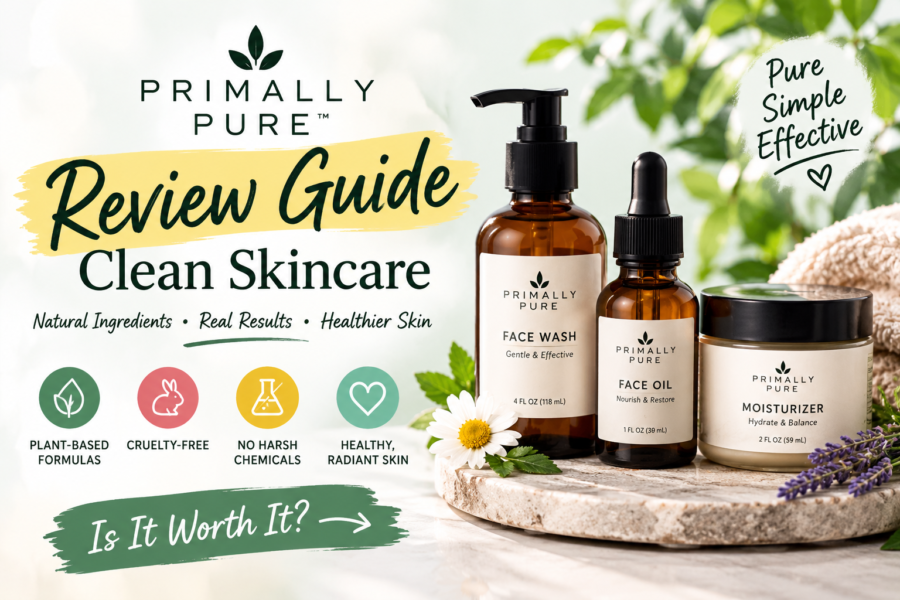
We Tested:
Primally Pure is a Southern California natural skincare brand founded by Bethany McDaniel that formulates with plant and animal-based ingredients. Including grass-fed tallow, organic oils, and essential oils, under a “soil to skin” regenerative philosophy.
It positions itself as non-toxic, results-focused personal care rather than conventional beauty filled with synthetic fragrance and fillers.
Key Takeaways:
- Primally Pure is a clean, farm-rooted skincare brand founded by Bethany McDaniel
- Philosophy centers on soil health, short ingredient lists, and ancestral practices
- Product range includes face, body, deodorant, and family care
- Tallow and other animal-derived ingredients are part of the brand identity
- Best for ingredient-conscious shoppers open to richer natural formulas
- Not ideal for strict vegans or essential-oil-intolerant users
- Start simple, patch test, and keep sunscreen in your routine
If you have searched for Primally Pure, you are probably trying to answer a few practical questions: Is it truly clean? Is tallow skincare worth trying? Which products are best for dry, oily, or sensitive skin? And how does the brand differ from the crowded “clean beauty” shelf?
This guide covers the brand’s origin, philosophy, product categories, standout formulas, who it suits, limitations to know, and how to shop it intelligently.
Background: How Primally Pure Started?
Primally Pure grew out of a personal skin struggle and a farm-based lifestyle shift. Founder Bethany McDaniel has described dealing with acne and frustration with conventional products that felt harsh or hormone-disrupting. When her family became involved in regenerative livestock farming through Primal Pastures in Southern California, she connected food quality, soil health, and personal-care ingredients more tightly.
She began making replacements for everyday bathroom products using simpler inputs from the farm and nature. What started as DIY solutions expanded into a formal brand in the early 2010s and grew into a broader line spanning face, body, deodorant, baby care, and related wellness products.
The brand’s public identity rests on a few repeating ideas:
- Fewer, more intentional ingredients
- Regenerative and organic sourcing when possible
- Ancestral / traditional ingredient logic, including animal fats
- “Actually clean, actually works” performance claims
- Made in the USA, with a strong Southern California operational base
Brand Philosophy: Soil to Skin?
Primally Pure often uses the language of soil to skin. The argument is straightforward:
- Soil health affects the nutrient density of plants and animals.
- Those plants and animals become food and, in this case, skincare inputs.
- Skin, like soil, is a living ecosystem with a barrier and microbiome that can be supported or disrupted.
This is why the brand emphasizes regenerative agriculture, transparent farm sourcing, and avoiding synthetic fragrance, fillers, and many common cosmetic additives. It also explains the comfort with animal-based ingredients such as grass-fed tallow, beeswax, and honey — materials framed as nutrient-dense and traditionally used, not as marketing novelties.
Important note for shoppers: Primally Pure is not a vegan brand. That is a feature for some customers and a deal-breaker for others.
What’s in the Product Range?
Primally Pure’s catalog generally covers:
Face care
- Cleansing oils tailored by skin type
- Mists / toning sprays
- Serums (including popular plumping formulas)
- Creams and clarifying products for breakout-prone skin
- Balms and multi-use treatments
Body care
- Body butters
- Oils and balms
- Scrubs and richer moisture products
Deodorant
- Natural deodorants using oils, powders, waxes, and essential oils
- Often discussed as a gateway product for people leaving conventional antiperspirant
Baby / family care
- Gentle balms and simple formulas designed for sensitive skin
Hair and specialty items
- Additional clean-care products depending on current catalog expansions
Many routines are sold as simplified regimens: cleanse, mist, treat — rather than ten-step charts.
Signature Ingredient Approach
Common Primally Pure ingredient themes include:
- Organic plant oils such as jojoba, rosehip, castor, pomegranate seed, and similar lipid-rich oils
- Grass-fed / pasture-raised tallow in select formulas for barrier support
- Beeswax and honey in balms and some deodorants
- Essential oils for scent and targeted botanical effects
- Botanical actives such as bakuchiol, green tea compounds, manuka-related inputs, charcoal, and antioxidant oils in higher-performance products
- Short ingredient lists compared with conventional cosmetics
The brand leans on the idea that skin recognizes certain lipids and that nourishing the barrier can improve comfort, clarity, and resilience over time.
Popular Products People Search For?
While catalogs change, these names appear repeatedly in brand materials and customer discussions:
- Cleansing Oil — oil-based cleanse designed to remove buildup while supporting the moisture barrier; often skin-type specific
- Plumping Serum — oil serum positioned for hydration, firmness, and tone support; frequently includes rich botanical oils and bakuchiol
- Everything Balm — multi-use balm for dry patches, cuticles, and calm-down moments
- Clarifying line — mists, creams, and related products aimed at breakout-prone skin
- Everything Spray — versatile mist-style product for body/face use cases depending on formula guidance
- Natural deodorants — a major entry point for clean-switchers
- Body butters — richer occlusive moisture for dry skin climates and winter routines
- Baby balm — simple family-care staple
Always check current ingredient decks on the official site, because natural brands refine formulas over time.
Who Primally Pure Is Best For?
Strong fit
- People seeking non-toxic / low-synthetic personal care
- Customers open to tallow and animal-derived ingredients
- Dry, dehydrated, or barrier-impaired skin looking for oil-rich care
- Minimalist routine fans who prefer fewer steps
- Shoppers motivated by regenerative farming narratives
Possible fit with patch testing
- Sensitive skin (essential oils can still irritate)
- Acne-prone skin (some do well with clarifying oils; others need a slower transition)
- Fragrance-sensitive users (essential oils are natural, but still bioactive)
Likely poor fit
- Strict vegans
- People who want clinical actives only (high-percentage retinoids, prescription pathways, etc.)
- Shoppers who dislike richer oil textures
- Anyone expecting drugstore pricing
How to Use Primally Pure in a Simple Routine?
A practical starter framework:
Morning
- Rinse or cleanse lightly if needed
- Mist
- Serum or light oil
- Cream/balm if required
- Sunscreen as a separate step (critical; natural skincare does not replace UV protection)
Night
- Cleansing oil
- Mist
- Serum
- Richer cream or balm as needed
Transition tips
- Introduce one product at a time
- Patch test essential-oil-heavy formulas
- Give barrier-support routines 2–4 weeks before judging breakout changes
- Adjust amount by climate; oil serums can feel heavier in humid weather
Common Mistakes When Trying Primally Pure?
- Mistake: Switching every product overnight
Solution: Replace stepwise so you can identify what helps or irritates. - Mistake: Assuming “natural” means non-irritating
Solution: Essential oils, strong botanicals, and rich lipids can still trigger reactions. - Mistake: Using cleansing oil like a harsh detergent
Solution: Massage, emulsify if directed, and avoid over-stripping afterward. - Mistake: Skipping sunscreen
Solution: Keep UV protection non-negotiable, especially when using brightening or resurfacing botanicals. - Mistake: Expecting instant acne erasure
Solution: Barrier-first routines often improve tolerance and inflammation over time; stubborn acne may still need professional care. - Mistake: Buying the whole catalog at once
Solution: Start with cleanser + one treatment product matched to your main concern.
Pros, Cons, and Balanced Assessment
Pros
- Clear non-toxic positioning with short formulas
- Distinct regenerative / farm-rooted brand story
- Meaningful option for people seeking tallow-based skincare
- Broad enough range for face, body, and deodorant transitions
- Strong appeal for minimalist, ingredient-conscious shoppers
Cons
- Not vegan
- Premium pricing
- Essential oils may not suit highly reactive skin
- Rich textures are not universally loved
- “Clean” claims still require personal label reading; natural is not automatically best for every condition
Balanced verdict
Primally Pure is best understood as ancestral-leaning clean skincare with a regenerative sourcing story. It can work exceptionally well for barrier support and ingredient-minimal routines. It is not a universal solution, and it is not trying to be a clinical dermatology brand.
Future Outlook for Brands Like Primally Pure
Consumer interest in regenerative agriculture, tallow skincare, and ultra-short ingredient lists has grown. That creates opportunity and scrutiny:
- More demand for traceable farm sourcing
- Higher expectations for third-party testing and preservation transparency
- Continued polarization between vegan clean beauty and animal-based traditional care
- Pressure to prove results beyond aesthetic branding
Primally Pure’s long-term strength depends on formula consistency, sourcing credibility, and staying useful as trends shift from “clean” buzzwords to measurable skin outcomes.
Clean / Natural Skincare Comparison Table
| Brand / type | Core philosophy | Animal-derived ingredients | Typical strength | Watch-outs |
|---|---|---|---|---|
| Primally Pure | Regenerative, ancestral, soil-to-skin | Yes (tallow, beeswax, etc.) | Barrier oils, deodorant, simple routines | Not vegan; essential oils |
| Vegan clean indie brands | Plant-only non-toxic | No | Ethical alignment for vegans | May use more emulsifiers/synthetics of allowed class |
| Clinical derm-inspired lines | Evidence-led actives | Usually no | Targeted actives | Can be harsher for compromised barriers |
| Tallow-focused cottage brands | Animal fat traditional care | Yes | Deep moisture | Limited range / variable quality control |
| Mainstream “clean” mass brands | Marketable ingredient screens | Mixed | Accessibility / price | Greenwashing risk |
| Oil-cleansing specialists | Lipid cleansing method | Mixed | Makeup removal, barrier feel | Technique-dependent results |
| Sensitive-skin minimal brands | Ultra-low irritant design | Mixed | Reactive skin tolerance | Fewer essential-oil scents |
| Luxury organic lines | Certified organic positioning | Mixed | Sensorial experience | Price + scent intensity |
| Pharmacy barrier-repair creams | Ceramides / functional repair | Usually no | Compromised barrier rescue | Less “natural lifestyle” branding |
| DIY oil blends | Full ingredient control | Optional | Customization | Preservation and stability risks |
Matching Primally Pure to Specific Needs
| Need | Better starting point | Why |
|---|---|---|
| Dry, tight skin | Cleansing oil + rich serum/butter | Lipid support |
| Breakout-prone skin | Clarifying-oriented products, slow intro | Avoid over-stripping |
| Conventional deodorant transition | Primally Pure deodorant | Common switch entry |
| Sensitive but not essential-oil reactive | Mild balm / simple oil | Fewer variables |
| Vegan requirement | Not ideal | Animal-derived ingredients |
| Clinical acne under dermatologist care | Complementary only | Don’t replace medical treatment |
| Minimal routine seekers | 3-step cleanse/mist/serum | Brand aligns with simplicity |
| Fragrance-free seekers | Check each label carefully | Essential oils are common |
FAQs
What is Primally Pure?
A natural skincare and personal-care brand founded by Bethany McDaniel, known for organic oils, regenerative sourcing narratives, and animal- and plant-based formulas.
Is Primally Pure vegan?
No. Many products use animal-derived inputs such as tallow, beeswax, or honey.
Is Primally Pure good for sensitive skin?
It can be, especially barrier-support formulas, but essential oils and rich botanicals can irritate some people. Patch testing is important.
What is Primally Pure best known for?
Clean, short-list formulas, cleansing oils, serums, balms, natural deodorant, and tallow-inclusive skincare.
Where is Primally Pure made?
The brand is associated with Southern California production and U.S.-based operations.
Can Primally Pure replace sunscreen?
No. Use a dedicated sunscreen daily.
Is tallow safe for face?
Many users tolerate grass-fed tallow well as an occlusive moisturizer, but individual results vary; comedogenicity and personal preference matter.
How do I start with Primally Pure?
Begin with one cleanser and one treatment product matched to your main concern, then expand only if your skin responds well.
Conclusion
Primally Pure sits at the intersection of clean beauty, regenerative agriculture storytelling, and traditional ingredient logic. It is especially relevant if you want fewer synthetic additives and are open to animal-based skincare. It is less relevant if you need vegan formulas or prefer strictly clinical active-led routines.
The smartest way to evaluate it is practical: match texture and ingredient style to your skin barrier needs, introduce products slowly, and judge results over weeks—not one overnight transformation claim.
Quick Summary
Primally Pure is a Southern California natural skincare brand known for regenerative sourcing, organic oils, and animal- and plant-based formulas. It appeals to clean-beauty shoppers seeking simpler ingredients and traditional moisture support, especially those open to tallow-based care.
Short Content Disclaimer
This article is for general informational purposes only and is not medical, dermatological, or purchasing advice. Product formulas, availability, and claims can change. Always read current labels, patch test new products, and consult a qualified professional for skin conditions.
Authority sources:
Brand origin, philosophy, and product positioning are based on Primally Pure’s public about/story materials and commonly reported founder background connected to regenerative farming and non-toxic formulation. Product examples reflect widely promoted categories such as cleansing oils, serums, balms, and deodorants. For the most accurate ingredient lists and current offerings, use the official Primally Pure product pages.

Novara Lin
Senior Editor & Clean Beauty Analyst
Novara Lin is a clean beauty researcher and wellness editor dedicated to demystifying modern skincare and evidence-based living. With a background in formulation science and consumer health reporting, she specializes in analyzing complex ingredient profiles, evaluating product safety, and bridging the gap between clinical research and daily self-care routines. Her work focuses on helping readers cut through industry noise to build minimal, highly effective routines rooted in transparency and skin health. When she isn’t testing active formulations or auditing non-toxic household choices, Novara leads editorial strategy for NovaRa Pure.