
We Tested:
Quick Summary (For the Scrollers)
The Big Idea: Treating life as a movie isn’t just a TikTok aesthetic. It’s a psychological framework with real benefits (agency, meaning, presence) and real dangers (narcissism, avoidance, performative living). The difference between main character energy and main character syndrome comes down to one thing: whether you’re directing for authenticity or editing for applause. This article gives you the director’s chair—and the discipline to use it well.
Introduction: The Camera Is Already Rolling
Close your eyes for a second. Imagine the opening scene of your biopic.
What’s the first shot? Is it a sweeping drone view of your childhood home? A tight close-up on your face the morning everything changed? Or is it something embarrassingly mundane—you, standing in front of the fridge at 11 p.m., eating shredded cheese directly from the bag?
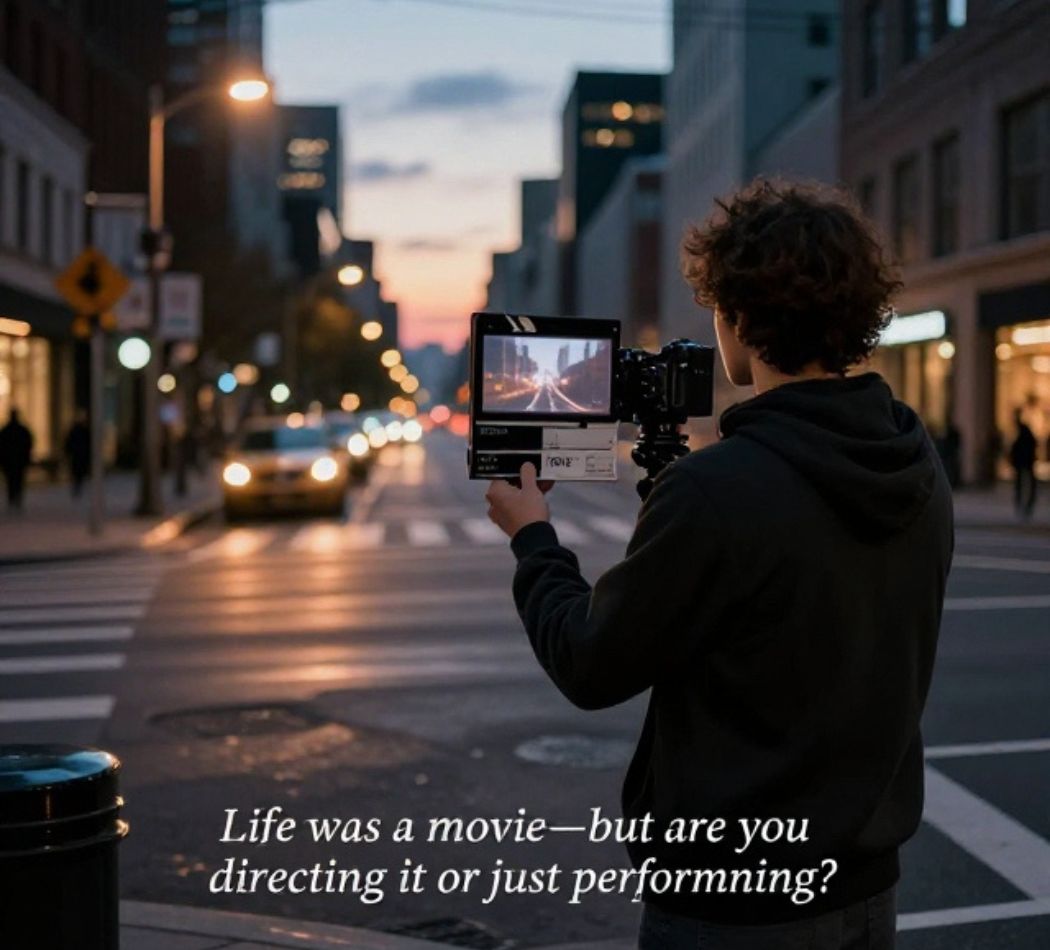
Here’s the strange truth about 2026: millions of people are already editing that movie in their heads. They’re scoring their morning commute to a lo-fi beat, framing their coffee cup against the window light, and narrating their heartbreak in a voiceover that sounds suspiciously like a coming-of-age indie film. The hashtag #romanticizeyourlife has been accumulating for years, and the “main character energy” conversation has matured from a confidence hack into a full-blown cultural philosophy.
But here’s what most takes miss: life was a movie is not a new idea. It’s one of the oldest tricks the human mind has ever pulled on itself. The question isn’t whether you’re already doing it. The question is whether you’re doing it well.
Because there’s a version of cinematic selfhood that makes you braver, more present, and more alive. And there’s a version that makes you a hollow performer in your own biopic, editing out everyone who doesn’t fit the narrative.
This article is about telling the difference—and choosing the director’s chair on purpose.
Background: How We All Became Directors (Whether We Admit It or Not)
The Psychology Was There First
Long before TikTok, psychologists were quietly using the movie metaphor in clinical settings. Acceptance and Commitment Therapy (ACT) practitioners have a powerful exercise: imagine your life as a film. The past episodes are already shot—you can’t reshoot them. But the camera is still rolling. You’re not just the actor playing your part; you’re the director of that actor. You can’t control the scriptwriter (life events) or the other actors (other people). But you can give the actor playing you precise instructions for the next scene.
The point of the exercise isn’t escapism. It’s defusion—creating enough psychological distance to act on your values instead of your impulses. “How would the version of me I want to be walk into this meeting? What would she say to her partner right now?” It’s a way of stepping out of autopilot and into intentionality.
Narrative psychology goes further. Researchers have found that the perspective we take when recalling vivid memories—first-person versus third-person “watching myself in a movie”—shapes how we construct identity. As one researcher put it, seeing oneself as acting in a movie “is not merely fantasy or indulgence; it is fundamental to how people work out who it is they are, and may become”.
In other words: the cinematic self is not a bug in human cognition. It’s a feature.
The 2026 Twist: The Camera Became Real
What’s changed is the technology. The metaphor used to live only in the privacy of your skull. Now it lives in your pocket, your feed, and your algorithm.
The romanticize your life trend, which the New York Times traces back to the pandemic-era hunger for small joys, has evolved into a full aesthetic vocabulary. You don’t just feel like your life is a movie anymore. You film it that way. The morning routine becomes a montage. The solo date becomes a “main character moment”. The heartbreak becomes a three-part story with a bittersweet soundtrack.
This isn’t inherently bad. As the Indonesian outlet Onews noted in 2026, main character energy encourages people—especially Gen Z—to stop being spectators in their own lives, to make decisions, to enjoy solitude, and to find meaning in ordinary days. There’s real empowerment in that.
But the same technology that lets you direct also lets you edit. And editing is where the trouble starts.
The Director’s Cut: Why the Metaphor Works (When It Works)
Agency Without Omnipotence
The most psychologically healthy version of the movie metaphor is refreshingly humble. You are not the screenwriter. You don’t get to decide that the pandemic happens, that the job falls through, that the person you love gets sick. The ACT framework is explicit about this: the director’s power is limited to one actor—the one playing you.
This is liberating precisely because it’s honest. You stop wasting energy trying to control the uncontrollable. You stop resenting the other actors for not following your script. All your creative energy funnels into the one thing you actually own: how you show up in the next scene.
The Third-Person Gift
There’s a reason therapists love this metaphor. When you’re inside your own head, every inconvenience feels like a catastrophe. The third-person “camera” view creates just enough distance to see the shape of the scene. You can ask: What would a great director tell this character to do right now? Often the answer is obvious in a way it wasn’t thirty seconds ago.
This isn’t dissociation. It’s perspective-taking—a skill that research on narrative identity suggests is central to resilience and growth. The people who navigate hardship best aren’t the ones who feel it least. They’re the ones who can hold their pain and their agency in the same frame.
The Aesthetics of Attention
There’s a lighter, more playful benefit, too. Romanticizing your life—deliberately noticing the steam rising from your tea, the way the late-afternoon light hits the kitchen wall, the small ritual of choosing a playlist for the walk home—is essentially a practice of attention training. The British illustrator Florence Given calls it “living deliciously”: orchestrating small moments so that you are the center of your own universe, not because you’re narcissistic, but because you’re finally paying attention to the life you’re actually in.
In a world designed to hijack your attention, choosing what to notice is a radical act.
When the Movie Goes Wrong: The Editing Room Trap
Now for the uncomfortable part. The same metaphor that can liberate you can also quietly imprison you.
Main Character Syndrome vs. Main Character Energy
The internet has been sloppy about this distinction, so let’s be precise.
Main character energy says: I am the protagonist of my own growth story. My choices matter. My experience is worth paying attention to.
Main character syndrome says: I am the protagonist, and everyone else is a supporting cast member whose purpose is to advance my plot. As Medical News Today and the Cleveland Clinic have clarified, this isn’t a diagnosis—it’s an internet-born pattern of behavior that resembles narcissistic traits: a need for admiration, a lack of empathy, treating conversations as monologues.
The line between the two is thin but unmistakable. One is about agency. The other is about entitlement.
The Editor’s Dark Art
Filmmaker Magazine published a prescient essay years ago that deserves more attention than it got. The author, a filmmaker himself, described the modern condition as “being in your own iPhone movie”—and he wasn’t celebrating. His key insight: when life becomes a movie, we don’t just become the star and director. We become the editor. And the editor has a terrible power: the power to cut.
Conflict with a friend? Cut them out of the frame. Delete their number. Never investigate why the conflict existed, never notice that they might be reflecting something uncomfortable about yourself. Just edit. Bury the inconvenient material under filters, captions, and a soundtrack that tells the audience exactly how to feel.
The result, he argued, is a culture where no one is accountable anymore, where everyone is the victim of their own edit, where “my bad” has been replaced by a P.R. strategy. “The need to be perfect, the need to be infallible, is at an all-time high,” he wrote. “The more that everything is public, the less room there is for mistakes”.
The Performance Trap
There’s a subtler cost, too. When you start seeing your life as a movie, you can slip into living for the trailer. The photogenic café wins out over the quiet one, sadness gets framed beautifully rather than actually felt, and the recap’s look matters more than the moment’s feel.
The Indonesian analysis of main character energy put it sharply: when there’s an audience—likes, comments, views—the temptation is to beautify the story. “The result is a life that looks like a film. The problem is, real life rarely has perfect lighting”.
The Director’s Toolkit: Practical Ways to Use the Metaphor Well
So how do you get the benefits without the pathology? Here’s a framework I’ve found useful—call it the Three C’s of Cinematic Selfhood.
1. Camera Placement: Choose Your Perspective Deliberately
The metaphor is a tool, not a permanent state. Use it when you’re stuck, reactive, or overwhelmed. Ask the director’s question: “What would I tell the actor playing me to do in this exact moment?”
But then put the camera down. The goal isn’t to live permanently in third-person observation. It’s to use the director’s view to re-enter first-person experience with more intention. The movie metaphor is a scaffold, not a house.
Practical tip: Keep a “director’s notebook” for a week. Jot down one scene per day where you felt autopilot take over. Then write the director’s note you wish you’d given yourself in the moment. Don’t judge. Just practice the muscle.
2. Casting: Treat Other People as Co-Stars, Not Extras
This is the ethical heart of the metaphor. If you’re the director of your own actor, remember: everyone else is the director of theirs. They have their own scenes, their own backstories, their own camera angles you’ll never see.
The healthiest cinematic selfhood is deeply relational. It says: My movie matters. So does yours. Let’s share the frame.
Practical tip: In your next difficult conversation, silently ask: “What movie is this person the protagonist of right now?” It doesn’t mean you agree with them. It means you stop treating them as a plot device.
3. Cutting Room Discipline: Know What You’re Editing Out
The editor’s power is real. But great directors don’t edit to make themselves look flawless. They edit to tell the truth more clearly. The question isn’t “Does this make me look good?” It’s “Does this help me see what’s actually happening?”
When you catch yourself cropping out the messy parts—the envy, the boredom, the moments you were wrong—that’s the signal to stop editing and start watching. The unedited footage is where the growth is.
Practical tip: Once a week, write a “scene I wanted to cut” paragraph. The moment you’re ashamed of. The conversation that went badly. The day you were petty. Don’t share it. Just practice seeing it without the filter. That’s the director’s real work.
Common Mistakes (And How to Avoid Them)
Even with good intentions, the movie metaphor can go sideways. Here are the three most common pitfalls and their antidotes.
Mistake 1: Confusing aesthetics with meaning.
The algorithm rewards the picturesque. But a beautiful frame isn’t the same as a meaningful scene. You can have a perfectly curated morning routine and still feel empty inside. Solution: Before you romanticize a moment, ask: “Am I doing this for the feeling, or for the footage?” If it’s the latter, put the phone down and just have the feeling.
Mistake 2: Using the metaphor to bypass real problems.
The director’s perspective is great for values clarification. It’s terrible for avoidance. If you’re using “What would the character do?” as a way to dodge a difficult conversation or a necessary ending, you’ve become the editor again. Solution: The director’s question should always lead to action, not analysis. If you’ve asked it three times and still haven’t moved, the metaphor is covering for fear.
Mistake 3: Forgetting that you’re not the only one with a camera.
Main character syndrome creeps in when you forget that the people around you have inner lives as vivid and complicated as yours. The moment you start treating a loved one’s pain as “a scene in your story,” you’ve crossed the line. Solution: Regular reality checks. Ask someone you trust: “Do you feel like I actually listen, or do I just wait for my turn to talk?” Their answer will tell you more than any self-assessment.
The Future of the Cinematic Self: Where This Is Going
As we move deeper into the 2020s, the movie metaphor is only going to get more literal. Spatial computing, AI-generated video, and persistent digital identities are blurring the line between the life you live and the life you broadcast. The question won’t be whether your life feels like a movie. It’ll be whether you can tell the difference between the two.
The most interesting counter-trend is already emerging: analog nostalgia. Substack newsletters about slow living. Film cameras. Handwritten journals. The deliberate rejection of the edited life in favor of something messier and more real.
The future probably isn’t a binary choice between “cinematic” and “authentic.” It’s a skill: knowing when to direct, when to watch, and when to just be in the scene without a camera at all. The people who thrive will be the ones who can move fluidly between those modes—who can use the director’s view to act with intention, then step back into first-person experience to actually feel the life they’re directing.
Conclusion: The Camera Is Still Rolling
Life was a movie. It still is. The question was never whether you’d see it that way—your brain does that automatically. The question is whether you’ll pick up the director’s chair with both hands and use it with integrity.
Here’s what I keep coming back to: the ACT therapists were right. The script isn’t yours to write, the other actors aren’t yours to direct, and the scenes already shot can’t be reshoot.
All you can do is give the actor playing you the clearest, most honest instructions for the next take.
And sometimes the best instruction is: stop acting. Just be here.
Key Takeaways
-
Life was a movie is a psychological framework, not just a TikTok trend. It has roots in ACT therapy, narrative psychology, and the human need for meaning-making.
-
The director’s chair is powerful but limited. You control one actor—you. Not the script, not the other characters.
-
Main character energy ≠ main character syndrome. One is agency. The other is entitlement. The difference is whether you treat others as co-protagonists or extras.
-
The editor is the most dangerous role. When you edit to look good instead of to see clearly, you lose accountability, empathy, and growth.
-
Use the metaphor, then put it down. Third-person perspective is a tool for re-entering first-person life with more intention—not a permanent escape hatch.
-
The future belongs to the flexible. People who can direct when needed, watch when useful, and simply live the rest of the time.
FAQs
Q: Is “life is a movie” just a Gen Z thing?
Not at all. The phrase has roots in existential philosophy, narrative psychology, and therapeutic practice going back decades. Gen Z popularized the aesthetic version through TikTok, but the underlying cognitive habit—seeing your life as a story—is human universals.
Q: What’s the difference between romanticizing your life and toxic positivity?
Romanticizing is about attention: noticing the small beauties that are already there. Toxic positivity is about denial: insisting everything is fine when it isn’t. You can romanticize a rainy Tuesday and still acknowledge that you’re lonely. The key is whether the practice includes the full spectrum of experience or edits out the hard parts.
Q: How do I know if I’ve crossed into main character syndrome?
Three warning signs: (1) You find yourself mentally “casting” people in your life based on what role they play in your story. (2) You feel resentful when others’ needs interrupt your narrative. (3) You’re more focused on how a moment will be remembered than how it’s being experienced. If any of those ring true, it’s time for a reality check.
Q: Can this metaphor help with anxiety or depression?
It can, but carefully. The ACT version—directing the actor playing you—is a legitimate defusion technique used in clinical settings. But if the metaphor becomes another way to judge yourself (“I’m directing badly, I’m failing at the movie of my life”), it can feed the very loop it’s meant to interrupt. Use it as a tool, not a verdict.
Q: What’s the single best question to ask yourself?
“What would the person I want to be do in this exact moment?” That’s it. That’s the whole director’s toolkit in one sentence. The rest is practice.
Sources & Further Reading
-
Association for Contextual Behavioral Science — “Your Life as a Movie” metaphor for values work and defusion.
-
Filmmaker Magazine — “When Life Becomes a Movie” (2017), on the editing-room trap and accountability .
-
Cosmopolitan (Italy) — “Romanticizzare la nostra vita ci aiuta a essere felici o è un’illusione?” (2026), on the #romanticizeyourlife trend and its limits .
-
Onews.id — “Main Character Energy, Saat Hidup Terasa Seperti Film” (2026), on the distinction between energy and syndrome.
-
Narrative psychology research — Benedict Carey’s New York Times piece “This Is Your Life” (2007), as cited in PopMatters, on third-person memory and identity construction.

Novara Lin
Senior Editor & Clean Beauty Analyst
Novara Lin is a clean beauty researcher and wellness editor dedicated to demystifying modern skincare and evidence-based living. With a background in formulation science and consumer health reporting, she specializes in analyzing complex ingredient profiles, evaluating product safety, and bridging the gap between clinical research and daily self-care routines. Her work focuses on helping readers cut through industry noise to build minimal, highly effective routines rooted in transparency and skin health. When she isn’t testing active formulations or auditing non-toxic household choices, Novara leads editorial strategy for NovaRa Pure.