
We Tested:
Walk into any convenience store in Seoul in late 2026, and you will not find the rice cakes of your childhood. Instead, you will see shelves packed with pizza seolgi topped with mozzarella and pepperoni, glutinous rice cakes stuffed with fresh chocolate, and fruit-filled chapssal tteok that sell out before 3 p.m.. The rice cake—a snack once dismissed as a sad, low-fat relic of the 1990s diet culture—has been reborn as a viral, chewy, social-media-friendly obsession.
But here is the question that matters for your grocery cart: Is this renaissance actually good for you, or are we just dressing up a nutritionally hollow snack in trendier clothing?
The answer, as with most food questions worth asking, is complicated. Rice cakes occupy a strange space in the modern pantry. They are simultaneously celebrated as gluten-free, low-calorie diet food and criticized as blood-sugar-spiking “air” that leaves you hungrier than before you ate them. In 2026, with the global rice cake market valued at over $6.2 billion and projected to approach $9.6 billion by 2034, it is time to separate the hype from the helpful.
This guide cuts through the noise. Whether you are a curious beginner, a fitness-focused snacker, or someone simply wondering why your TikTok feed is full of cheese-topped rice cakes, you will leave with a clear, evidence-informed understanding of what rice cakes are, what they are not, and how to make them work for you.
Background: From Low-Fat Hero to Chewy Trendsetter
The 1990s Diet Culture Origins
To understand why rice cakes carry so much baggage, you have to go back to the low-fat craze. In the 1990s, fat was the enemy. Snack companies rushed to create fat-free alternatives to chips, crackers, and cookies. Rice cakes—essentially puffed rice pressed into a disc—fit the bill perfectly. They were fat-free, low in calories, and made a satisfying crunch. Dieters stocked their pantries with them, often eating them plain or with a thin scrape of jam, convinced they were making a virtuous choice.
The problem was that virtue does not equal nourishment. A plain rice cake offers roughly 35 calories, 7 grams of carbohydrates, and virtually no protein, fiber, or fat. It was a snack that promised satisfaction and delivered mostly air.
The Korean Tteok Renaissance (2023–2026)
Fast forward three decades. The rice cake’s comeback did not start with Western diet culture—it started with Korean tteok culture going mainstream. In 2023, gaeseong juak (bite-sized rice cakes styled like donuts) went viral. In 2025, the “Dubai chewy cookie” craze highlighted texture as the new frontier of food trends. By 2026, the spotlight landed squarely on rice cakes.
What changed? Texture and novelty. Young consumers in their 20s and 30s began flocking to traditional markets for pizza seolgi—a savory steamed rice cake topped with tomato sauce, cheese, and pepperoni—priced at just 2,000 won (about $1.50). Convenience stores took notice. CU’s rice cake sales jumped 96.5% year-over-year from January to September 2026, and 7-Eleven saw rice cake sales to foreign customers rise 80%. The rice cake transformed from diet food to dessert.
This bifurcation matters. When you buy a plain brown rice cake in the health food aisle, you are buying a completely different product—nutritionally and culturally—than the chocolate-stuffed mochi being sold at a convenience store in Seoul.
Main In-Depth Sections
The Nutrition Reality: What Is Actually in a Rice Cake?
Let us start with the baseline. A standard plain rice cake (about 9 grams) made from brown rice contains approximately 35 calories, 7 grams of carbs, 1 gram of protein, and 0 grams of fat. It offers trace amounts of manganese (15% of the Daily Value) and small amounts of niacin and copper, but essentially no fiber, no meaningful vitamins, and no antioxidants.
The manufacturing process itself is worth noting. Puffing rice—the high-heat expansion that gives rice cakes their airy structure—has been shown to reduce the rice’s natural antioxidant content. So even if you start with whole-grain brown rice, the final product is a shadow of its original nutritional self.
The Glycemic Problem
Because rice cakes are almost pure refined carbohydrate with no fiber or protein to slow digestion, they digest quickly and can spike blood sugar. Dietitians consistently flag this: “Rice cakes have a higher glycemic index, so you may get hungry quicker after consumption compared to higher-fiber foods,” says Umo Callins, a registered dietitian. For anyone managing insulin sensitivity, eating a plain rice cake alone is functionally similar to eating a spoonful of white rice—but with less staying power.
The Arsenic Consideration
Rice absorbs more inorganic arsenic from soil and water than other grains. A 2016 study analyzing rice-based products found that rice cakes had the highest maximum inorganic arsenic content among the products tested (149 μg/kg), though the estimated daily intake for consumers remained below safety thresholds. A 2023 South Korean market study of 239 rice-based products concluded that most rice-based foods, including rice cakes, are “generally safe to consume.” The takeaway is not avoidance—it is moderation and variety. If rice cakes are your only grain source, that is worth reconsidering. As part of a diverse diet, the risk is negligible for most healthy adults.
The 2026 Flavor Explosion: When Rice Cakes Became Dessert
The most interesting story in the rice cake world right now is not about nutrition—it is about innovation. Korean rice cake makers are experimenting with flavors and formats that would have been unthinkable a decade ago.
At Han Jeong Sun, a dessert brand in Seoul Station, glutinous rice cakes wrapped around seasonal fruits like figs and tangerines sell for 4,000 to 7,000 won each—two to three times the price of a conventional rice cake—and six of nine varieties had sold out by 3 p.m. on a recent Sunday. Godiva launched chocolate-filled glutinous rice cakes that became a social media sensation. Convenience store chain GS25 launched frozen pizza seolgi, taking preorders for a limited run of 5,000 units.
This innovation cuts both ways. On one hand, it has brought a traditional food to a new generation and created economic opportunities for small rice cake shops. On the other, the nutritional profile of a chocolate-stuffed mochi is dramatically different from a plain brown rice cake. The trend adds sugar, fat, and calories—often in quantities that erase any “diet food” credibility the category once had.
The Texture Thesis
Food trend analysts point to a unifying thread: chewiness. The Dubai chewy cookie craze of 2025 primed consumers for textural novelty. Rice cakes, particularly glutinous chapssal varieties, deliver that chewy satisfaction in a form that is visually striking and highly shareable on social media. As one tteok shop owner told The Korea Herald, “The hype only lasts for a moment”—but the format keeps evolving.
Rice Cakes vs. the Competition: How They Stack Up
If your goal is a satisfying, nutrient-dense snack, rice cakes face stiff competition. A 2026 comparison from EatingWell pitted rice cakes against popcorn for weight-loss support. The verdict? Popcorn wins as a standalone snack because it provides more fiber and protein per serving, making it more satiating. Two brown rice cakes offer about 69 calories—roughly half a serving of whole-wheat crackers—but without the fiber that makes crackers more filling.
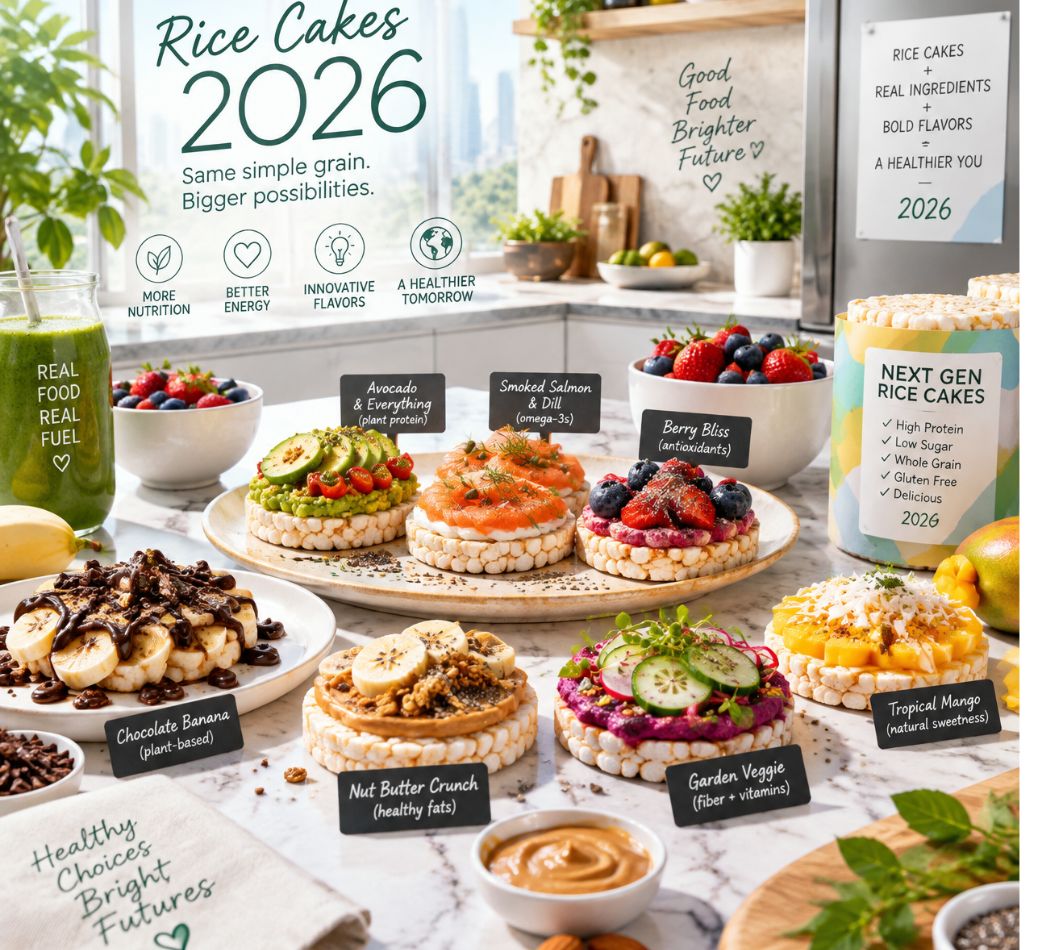
The comparison reveals the core issue: rice cakes are a vehicle, not a destination. They are at their best when used as a base for nutrient-dense toppings. Plain, they are less satiating than almost any whole-food snack alternative. Topped with cottage cheese, avocado, or nut butter, they become a legitimate component of a balanced snack.
Practical Tips: How to Eat Rice Cakes Without Falling into the “Air Food” Trap
The Topping Framework
The single most important rule for rice cake consumption is this: never eat them alone. A plain rice cake is a carbohydrate delivery system with no built-in satiety mechanism. Pair it with protein, healthy fat, and fiber to slow digestion and create a satisfying snack.
Protein-first toppings (choose one per cake):
-
Cottage cheese (adds ~12g protein per half-cup)
-
Hummus (fiber + plant protein)
-
Smoked salmon or tuna
-
A hard-boiled egg, sliced
-
Ricotta with a drizzle of olive oil
Fiber and fat additions:
-
Mashed avocado with lemon and chili flakes
-
Nut butter (almond, peanut, or sunflower seed for a nut-free option)
-
Sliced fruit (banana, apple, or berries)
-
A sprinkle of ground flaxseed or chia seeds
Choosing the Right Rice Cake
Read the label. The ingredient list should say “brown rice” or “whole grain brown rice”—not “rice flour” or “white rice.” Some flavored varieties contain added sugar, sodium, and artificial flavors that undermine any health halo. If you are gluten-free, verify that the product is made solely from rice and not contaminated with barley or other gluten-containing grains.
Plain vs. flavored: Plain rice cakes let you control the toppings. Flavored varieties (caramel, chocolate, apple-cinnamon) are essentially cookies in a different shape. There is nothing wrong with enjoying them as a treat, but do not confuse them with the plain version in the health aisle.
Storage and Freshness
If you are buying fresh Korean-style rice cakes (tteok), storage matters. Fresh rice cakes should be eaten within a week and kept refrigerated; rub them with a little sesame oil and wrap tightly to prevent drying. Frozen rice cakes should be soaked in cold water for 20–30 minutes before cooking to restore texture and prevent cracking. For the compacted rice cakes common in Chinese cuisine, research shows that aluminum foil packaging and storage at 4°C (39°F) best preserves texture and delays starch aging over a 28-day period.
Common Mistakes and Challenges (and How to Fix Them)
Mistake #1: Treating rice cakes as a meal replacement.
A rice cake with a smear of jam is not breakfast. It is a pre-breakfast. Without protein and fat, you will be hungry within an hour. Fix: Build a “rice cake plate” with two cakes, a protein source, and a fruit or vegetable.
Mistake #2: Assuming “gluten-free” means “healthy.”
Gluten-free products are not automatically nutritious. A plain rice cake is gluten-free because it is made of rice—not because it was engineered for health. Fix: Evaluate rice cakes on their actual nutrient profile, not their allergen status.
Mistake #3: Ignoring portion context.
One rice cake is 35 calories. Four rice cakes with peanut butter and banana is a 300-calorie snack. That is fine—but it is not the “free food” that diet culture once promised. Fix: Count the toppings, not just the cakes.
Mistake #4: Buying flavored varieties for “health.”
Caramel rice cakes are candy. Chocolate-stuffed mochi is dessert. There is a time and place for both, but calling them health food is a category error. Fix: Buy plain for everyday snacking; buy flavored for intentional treats.
Pros, Cons, and a Balanced Verdict
The Case For Rice Cakes
-
Low calorie density: At ~35 calories per cake, they are an easy way to add crunch to a snack without significant caloric load.
-
Gluten-free convenience: Widely available and naturally gluten-free (if made from rice alone), making them a reliable option for people with celiac disease or gluten sensitivity.
-
Whole-grain option: Brown rice cakes provide whole grains, which are associated with lower risk of chronic disease in large population studies.
-
Versatile vehicle: Their neutral flavor makes them an ideal base for both sweet and savory toppings.
-
Cultural innovation: The 2026 rice cake renaissance has produced genuinely delicious, creative foods that honor tradition while pushing it forward.
The Case Against (or at Least a Caution)
-
Nutritionally hollow on their own: Minimal protein, fiber, vitamins, or antioxidants.
-
Blood sugar spike: High glycemic index and low satiety when eaten plain.
-
Arsenic trace concerns: Rice-based products contain inorganic arsenic, though at levels generally considered safe.
-
Trendy versions are not health food: Flavored and dessert-style rice cakes can be high in sugar and calories.
-
Less filling than alternatives: Popcorn, crackers, or a piece of fruit will keep you satisfied longer.
The Balanced Verdict: Rice cakes are neither a superfood nor a villain. They are a neutral, convenient carbohydrate delivery system that becomes as nutritious—or as indulgent—as the toppings you put on them. If you enjoy them, eat them strategically. If you do not, there is no nutritional reason to force yourself.
Future Trends: Where Rice Cakes Are Headed
1. Functional fortification. The global market report highlights demand for “fortified options where regulations allow,” alongside clean-label formulations, reduced sodium, and whole-grain positioning. Expect to see rice cakes with added protein, fiber, and micronutrients targeting fitness and weight-management consumers.
2. Regional flavor localization. The Asia-Pacific region leads traditional rice cake consumption, but markets in Latin America and the Middle East are growing. Manufacturers are adapting flavors to local palates—think mango-chili rice cakes for Latin America or za’atar-spiced varieties for the Middle East.
3. The “chewy texture” economy. The success of glutinous rice cakes and mochi-style products suggests that texture will continue to drive innovation. Expect more collaborations between traditional tteok makers and global confectionery brands, following the Godiva model.
4. Sustainability and packaging. Research into edible films and active packaging for rice cakes is ongoing, with the goal of extending shelf life while reducing plastic waste. As the category grows, sustainability claims will become a differentiator.
5. The nutrition backlash. As the dessert-ification of rice cakes accelerates, expect a counter-trend: brands positioning themselves as “the real healthy rice cake,” emphasizing whole grains, minimal ingredients, and low glycemic impact. The category may split into “snack” and “treat” tiers, much like yogurt did in the 2010s.
Conclusion: Key Takeaways
-
Rice cakes are a vehicle, not a meal. Their nutritional value depends entirely on what you put on them. Plain rice cakes are low-calorie but also low-satiety; pair them with protein, fat, and fiber.
-
The 2026 rice cake boom is real—and it is mostly about texture and novelty. Korean tteok innovations have transformed the category, but dessert-style rice cakes are treats, not health foods.
-
Brown rice cakes offer whole grains; flavored varieties often offer sugar. Read labels and choose plain for everyday use.
-
Arsenic is a trace concern, not a reason for panic. Rice-based foods are generally safe in the context of a varied diet.
-
Rice cakes are not a weight-loss magic bullet. They can fit into a calorie deficit, but they are less filling than popcorn, crackers, or whole foods. Use them as a crunchy base, not a standalone snack.
-
The future of rice cakes is functional, regional, and texture-forward. Expect more protein-fortified options, localized flavors, and continued innovation from both traditional makers and global brands.
Detailed FAQs
Are rice cakes healthy?
Plain rice cakes are low in calories and can be part of a healthy diet, but they are not particularly nutritious on their own. They lack protein, fiber, and most vitamins. Their healthfulness depends on toppings. A rice cake with avocado and egg is a balanced snack; a rice cake with caramel is candy.
Are rice cakes good for weight loss?
They can be, because they are low in calories and can satisfy a crunch craving. However, they are not very filling on their own and may leave you hungry sooner than higher-fiber snacks. Use them as a base for protein- and fiber-rich toppings, and be mindful of portion size.
Are rice cakes gluten-free?
Rice cakes made solely from rice are naturally gluten-free. However, some varieties include barley or other gluten-containing grains, and cross-contamination can occur during manufacturing. Always read the label if you have celiac disease or gluten sensitivity.
Do rice cakes contain arsenic?
Rice absorbs inorganic arsenic from soil and water, so rice-based products, including rice cakes, contain trace amounts. Studies have found levels that are generally considered safe for most consumers. The key is dietary variety—do not rely on rice cakes as your only grain source.
What are the best toppings for rice cakes?
For a balanced snack, combine protein (cottage cheese, hummus, smoked salmon, egg), healthy fat (avocado, nut butter, olive oil), and fiber (sliced vegetables, fruit, seeds). Avoid high-sugar spreads if you want sustained energy.
Are brown rice cakes better than white rice cakes?
Brown rice cakes contain whole grains, which offer slightly more fiber and nutrients than white rice cakes. However, the difference is modest, and both are low in protein and fiber overall. Brown rice cakes are a marginally better choice, but toppings matter more than the base.
Why are Korean rice cakes suddenly so popular?
The popularity surge is driven by social media-friendly formats, innovative flavors (pizza seolgi, chocolate mochi, fruit-filled tteok), and a cultural interest in chewy textures that began with the Dubai chewy cookie trend. Convenience stores and specialty shops have capitalized on the trend, making rice cakes a viral snack for younger consumers.
Can I eat rice cakes every day?
Yes, but variety matters. Eating the same low-nutrient food daily can crowd out more nutritious options. If you enjoy rice cakes, use them as one snack among many, and always pair them with nutrient-dense toppings.
Sources
-
Healthline. “Are Rice Cakes a Healthy Snack? Nutrition, Calories, and More.”
-
Cano-Lamadrid M, et al. “Inorganic and Total Arsenic Contents in Rice and Rice-Based Foods Consumed by a Potential Risk Subpopulation: Sportspeople.” Journal of Food Science, 2016.
-
Vietnam News / The Korea Herald. “Tteok, Korea’s beloved rice cake, gets modern makeover.” October 2026.
-
Research and Markets. “Rice Cakes Market – Global Forecast 2026-2032.”
-
ScienceDirect. “Effect of packaging materials and temperature on water migration, thermal and textural properties of compacted rice cakes during storage.” 2025.
-
EatingWell. “Rice Cakes vs. Popcorn: Which Is the Better Weight-Loss Snack?” April 2026.
-
Noh CH, et al. “Monitoring arsenic species concentration in rice-based processed products distributed in South Korean markets and related risk assessment.” Food Science and Biotechnology, 2023.
-
His Korean Stomach. “Prepping & Storing Korean Rice Cakes (떡).” 2024.
-
Noom. “Rice Cakes: Calories, Weight Loss, Nutrition Facts & Health Benefits.” 2026.
-
Financial News (Korea). “Rice cakes emerge as the next big trend after the ‘Dubai chewy cookie’ craze.” October 2026.
-
Deep Market Insights. “Global Rice Cakes Market Size & Outlook, 2026-2034.”

Novara Lin
Senior Editor & Clean Beauty Analyst
Novara Lin is a clean beauty researcher and wellness editor dedicated to demystifying modern skincare and evidence-based living. With a background in formulation science and consumer health reporting, she specializes in analyzing complex ingredient profiles, evaluating product safety, and bridging the gap between clinical research and daily self-care routines. Her work focuses on helping readers cut through industry noise to build minimal, highly effective routines rooted in transparency and skin health. When she isn’t testing active formulations or auditing non-toxic household choices, Novara leads editorial strategy for NovaRa Pure.