
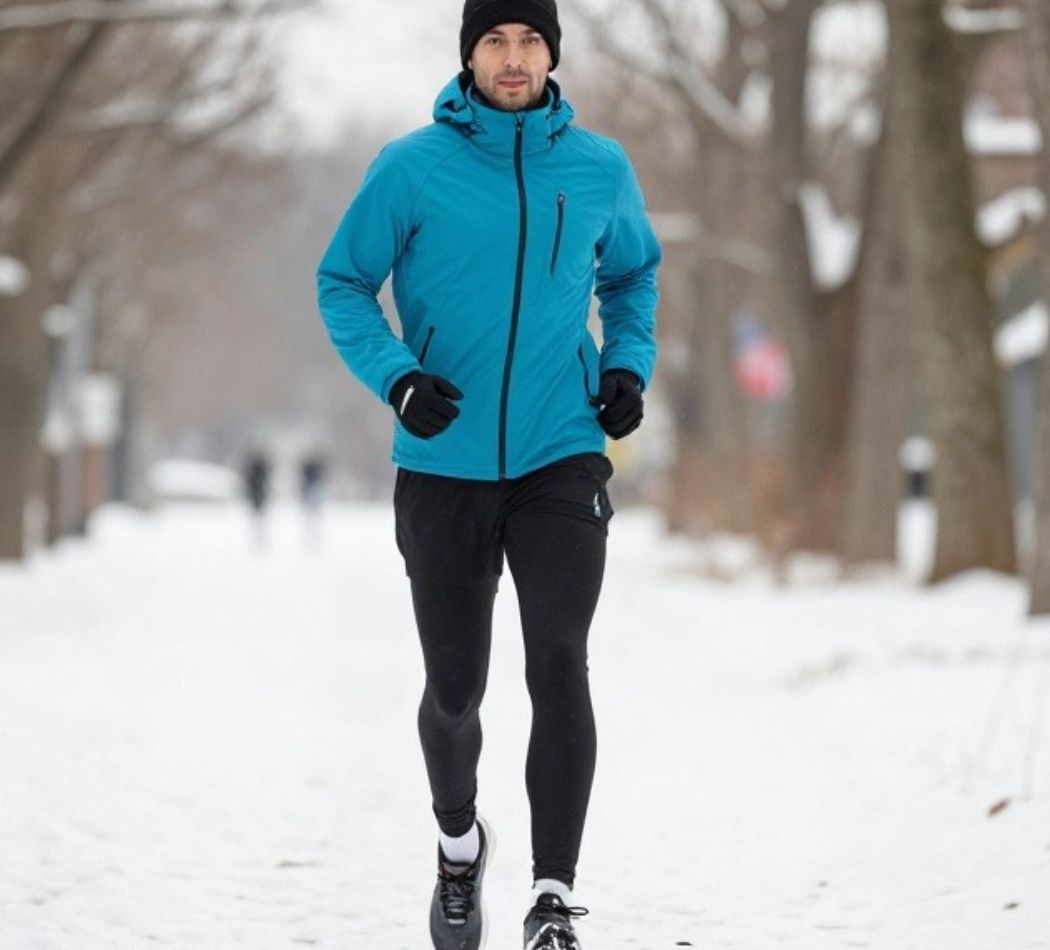
We Tested:
It was 14 degrees Fahrenheit, with a wind chill that made it feel like single digits. I stood in my doorway, staring at the icy sidewalk, and seriously considered the dreaded alternative: the gym treadmill. I had the wrong gloves, a cotton hoodie that was already feeling clammy, and zero confidence in my footwear.
That run almost didn’t happen. But it did—and it changed how I think about winter running forever. The difference wasn’t mental toughness; it was the gear. Once I stopped treating winter as an obstacle to endure and started treating it as a technical problem to solve, everything shifted.
If you’ve ever cut a run short because your fingers went numb, your feet turned into blocks of ice, or you overheated in a jacket that trapped sweat like a sauna, you already know the truth: winter running is a gear sport. The right equipment doesn’t just make you comfortable—it makes you safe. Frostbite and hypothermia are real risks when skin is exposed to freezing temperatures for too long, and they strike fastest in extremities with lower blood flow.
This guide is your roadmap to the best winter running gear of 2026. We’ll cut through the marketing noise, explain the why behind each piece, and give you a framework for building a kit that works for your climate, your body, and your budget.
Background: Why Winter Gear Has Gotten So Much Better (And Why It Still Confuses People)
A decade ago, winter running gear was a compromise. Waterproof shoes felt like bricks. “Breathable” jackets were a myth. Base layers were either itchy wool or clammy polyester. You picked your poison.
In 2026, that’s changed. Membrane technology like Gore-Tex Invisible Fit has made waterproof uppers feel nearly indistinguishable from standard trainers. Wool blends have become softer and more thermoregulating. And a new category—the running midlayer—has emerged to fill the gap between a base layer and a jacket, offering warmth without the sweat-trap problem of full shells.
But here’s the catch: more options mean more ways to get it wrong. The average runner doesn’t need the most expensive piece in every category. They need to understand the physics of winter comfort: moisture management, insulation, and wind protection. Get those three right, and you can run comfortably in almost anything.
The Core Framework: The Three-Layer System (And Why Most People Get It Backwards)
Before we dive into specific gear, let’s establish the mental model. Winter running comfort comes down to a simple three-layer system: Base (wicking), Mid (insulating), Shell (protecting) .
The mistake most runners make? They overdress. Your body generates enormous heat once you start moving. The golden rule from outdoor educators and running coaches alike is to dress as if it’s 10 to 20 degrees warmer than the actual temperature. If you step outside and feel perfectly warm and cozy, you’re already overdressed. You should feel a slight chill in the first five minutes.
The Base Layer: Your Most Underrated Piece
The base layer sits against your skin. Its job is simple: move sweat away from your body before it can chill you. Cotton is the enemy here—it absorbs moisture and holds it, turning your shirt into a refrigerated sponge.
For 2026, the standout trend is the mockneck baselayer. Unlike a claustrophobic turtleneck or a drafty crew neck, the mockneck offers neck coverage without the choke factor. Runner’s World tested options like the Oiselle Flyout Mile One and the Bandit AuraGrid, noting that the mockneck “kept my throat protected” without the “swampy neck gaiter” problem. Merino wool blends remain the gold standard for temperature regulation, with brands like Tracksmith and Icebreaker leading the charge.
What to look for: Merino wool or a high-quality synthetic blend (polyester/spandex). A mockneck or high collar for draft protection. Thumbholes if you want hand coverage without gloves.
The Midlayer: The 2026 Breakout Category
This is where the biggest innovation has happened. Traditionally, runners either wore a thin long-sleeve or jumped straight to a jacket. The new running midlayer—essentially a technical sweatshirt—sits in the Goldilocks zone.
Outside Magazine’s gear testers call this trend a “moment,” praising pieces like the Brooks Notch Thermal Hoodie and the Tracksmith Downeaster for being “warmer than a shirt, softer than a jacket”. The key insight: a good midlayer breathes far better than any jacket, letting your body heat and sweat escape through porous materials while still trapping warmth. For calm, dry conditions, a base layer plus a midlayer is often all you need—even in single-digit temperatures.
What to look for: Waffle knits or fleece-backed fabrics. A relaxed fit that allows layering. Watch windows and thumbholes are nice bonuses.
The Shell: When Protection Matters
The shell is your barrier against wind, rain, and snow. But here’s the nuance most guides miss: you don’t always need one. A fully waterproof jacket is essential for wet, windy conditions, but it’s overkill for a calm, dry 25-degree morning.
If you do need a shell, 2026’s best options balance protection with breathability. The Path Projects Graves PX Shell won Outside’s all-around men’s jacket pick for its stretchy, breathable fabric that testers reached for “on most days”. For truly frigid, dry conditions, an insulated jacket like the Rabbit Warm Up and Go provides warmth without the sweat-box effect. And for mountain adventures where output stays high, the Arc’teryx Norvan Insulated Hoody uses targeted insulation and generous back vents to prevent overheating.
What to look for: DWR (durable water repellent) coating for light precipitation. Pit zips or back vents for breathability. A hood that fits over a hat without flapping.
The Extremities: Where Winter Runs Go to Die
Your core will stay warm. Your hands, feet, head, and ears are the battlefields. The body prioritizes blood flow to the core in cold conditions, leaving your digits vulnerable.
Hands: The Glove vs. Mitten Debate (Solved)
Mittens are warmer than gloves because your fingers share heat. But you need dexterity for zippers, watches, and phones. The 2026 solution? Convertible gloves.
Outside’s testers raved about the Janji Vortex Windblock Gloves, which start as gloves and have a stowable wind-resistant mitt shell that pulls over the fingers when the wind picks up. One tester called the “full monty” setup her go-to for frosty starts, peeling the mitts off after 15-20 minutes. For a budget-friendly liner option, the Ibex Merino Glove Liners offer warmth-to-weight ratio that punches far above their price, especially layered under a mitten.
The vapor barrier trick: For truly frigid days, some winter athletes wear a thin plastic bag or vapor barrier sock under their insulating sock. This traps sweat next to the skin and keeps the insulating layer dry, which is the real key to warmth.
Head and Ears: The Heat-Loss Myth (Partially) Debunked
You don’t lose most of your body heat through your head—that’s an old military myth. But you do lose heat through any exposed skin, and your ears and face are highly vascular and prone to frostbite. A simple headband like the Buff Dryflx protects ears while letting the top of your head vent heat during hard efforts. For colder days, the Buff Wahly Ice ThermoNET Beanie packs down to nothing and provides surprising warmth for its thin profile.
Feet: Waterproof Is Not Always Better
This is the counterintuitive truth that trips up many runners. Waterproof shoes keep outside water out—but they also keep sweat in. If water gets in over the ankle (from a deep puddle or slush), it has nowhere to go, and your feet get colder than if you’d worn breathable shoes.
The 2026 market has finally solved the “brick” problem. Gore-Tex Invisible Fit and similar membranes now feel remarkably close to standard uppers. The Hoka Clifton 9 GTX pairs the beloved Clifton cushioning with a waterproof upper and “Traction Pods” for slick roads. For trail and mixed terrain, the Nike Trail Pegasus 5 Gore-Tex adds a high ankle cuff and reflective detailing for messy conditions. And if you’re running on packed snow or ice, look for carbide spikes or aggressive lugs—standard road rubber won’t cut it.
Sock strategy: Thin merino wool socks that extend past the ankle are the sweet spot. Smartwool Trail Run socks or Le Bent’s targeted cushion models keep feet warm even when damp.
Practical Tips: How to Actually Use This Gear
1. The “10-Degree Rule” and the Journal. Dress for 10-20 degrees warmer than the thermometer says. But because everyone runs hot or cold differently, keep a simple training journal: note the temperature, wind, what you wore, and how you felt. After a month, you’ll have a personalized formula no generic guide can match.
2. The Mid-Run Layer Adjustment. Start with everything on. If you’re still comfortable after 10 minutes, you’re overdressed—unzip, remove the hat, or stash the mitts. The goal is to stay slightly cool throughout, not toasty.
3. Breathe Through Your Nose. Especially below 20°F, cold air can irritate airways. Your nose warms and filters air naturally; mouth-breathing bypasses that system. If you have exercise-induced asthma, a neck gaiter pulled over your mouth can help humidify the air.
4. Hydrate (Yes, Even in Winter). Cold air is often dry, and you can dehydrate without realizing it. Dehydration makes you more susceptible to the cold. Carry warm tea in an insulated bottle, or plan a route that ends at a coffee shop.
Common Mistakes and How to Fix Them
Mistake #1: Wearing cotton.
Fix: Audit your winter drawer. Any cotton base layers or hoodies are for lounging, not running. Replace with merino or synthetic blends.
Mistake #2: Buying the most expensive jacket first.
Fix: Spend your money on the base layer and shoes first. A $40 merino mockneck and a $160 waterproof shoe will transform your winter running more than a $300 shell over a cotton t-shirt.
Mistake #3: Ignoring visibility.
Fix: Winter days are short. Reflective details on shoes, jackets, and gloves are not optional for dawn or dusk runs. The Nike Winflo GTX and Clifton 9 GTX both include 360-degree reflectivity.
Mistake #4: Wearing waterproof shoes in dry snow.
Fix: Waterproof shoes are warmer but less breathable. For a dry, cold day on packed snow, a standard trail shoe with good traction and a wool sock may actually keep your feet more comfortable than a sweaty waterproof membrane.
Pros, Cons, and the Honest Trade-Offs
| Gear Category | Pros | Cons |
|---|---|---|
| Waterproof Shoes | Dry feet in slush/puddles; warmer upper | Less breathable; sweat accumulation; heavier |
| Merino Wool Base | Odor-resistant; excellent thermoregulation; soft | More expensive; slower to dry than synthetics |
| Insulated Jacket | Warmth without bulk; good for low-output starts | Can overheat during hard efforts; less versatile |
| Convertible Gloves | Versatility for changing temps; touchscreen friendly | Bulkier than simple liners; can be overkill for mild days |
| Mockneck Baselayer | Neck protection without turtleneck choke | Slightly warmer than crew necks; not ideal for high-output mild days |
Future Trends: What’s Coming Next in Winter Running Gear
1. PFAS-Free Waterproofing. The outdoor industry is moving away from PFAS “forever chemicals” in DWR treatments. Arc’teryx’s Norvan Insulated Hoody already uses a non-PFAS coating. Expect more brands to follow, and expect prices to stabilize as the technology scales.
2. Smarter Layering Systems. The midlayer category is exploding, and we’ll likely see more modular systems—pieces that convert from vest to jacket to mitt, like the Janji Vortex gloves, applied to other parts of the kit.
3. Wool Hybrids. Pure merino is great, but it’s fragile and slow-drying. The next wave blends merino with Tencel, nylon, and recycled polyester to get the best of both worlds. Icebreaker’s ZoneKnit sports bra is an early example.
4. Reflective Integration. As winter running grows in popularity, expect reflective yarns and prints to be woven directly into fabrics rather than added as afterthought patches.
Key Takeaways (Quick Summary Box)
-
Dress for 10-20°F warmer than the actual temperature. You should feel slightly cool when you step outside.
-
The three-layer system works: Base (wicking) → Mid (insulating) → Shell (protecting). Skip the shell on calm, dry days.
-
Merino wool or synthetic blends only. No cotton. Ever.
-
Mocknecks are the 2026 baselayer upgrade—neck protection without the turtleneck choke.
-
Waterproof shoes are a trade-off, not a universal upgrade. They keep water out but trap sweat in.
-
Protect your extremities. Convertible gloves, a packable beanie, and wool socks matter more than a fancy jacket.
-
Test and journal. Your personal thermostat is unique. Track what works.
Frequently Asked Questions
What is the single most important piece of winter running gear?
Your base layer. It’s the foundation of moisture management. A great base layer under a mediocre jacket will keep you comfortable; a bad base layer under a $400 shell will leave you clammy and cold.
Are waterproof running shoes worth it?
Yes, for wet, slushy, or snowy conditions. No, for dry cold. They’re warmer but less breathable, so choose based on the day’s precipitation, not just the temperature.
How do I keep my hands warm without bulky gloves?
Use a liner glove (merino or thin synthetic) under a wind-resistant mitten or a convertible glove. The layering principle applies to hands too. Touchscreen-compatible fingertips are now standard on many models.
Can I run in freezing temperatures with asthma?
Many people do, but cold, dry air can trigger symptoms. Breathe through your nose, wear a neck gaiter over your mouth to humidify the air, and warm up gradually indoors before heading out. Consult your doctor for personalized advice.
What should I wear for a 30°F run?
A common formula: tights or lined leggings, a merino or synthetic long-sleeve base layer, a light vest or midlayer, a headband, and light gloves. You should feel a chill for the first mile.
How do I prevent my water bottle from freezing?
Use an insulated bottle, fill it with warm (not hot) water or tea, and carry it close to your body in a vest or pack rather than in a bottle cage. Take small sips frequently.
Sources and Further Reading
-
iRunFar, “Best Cold Weather Running Gear of 2026” — expert-tested picks and safety guidance on frostbite and hypothermia.
-
Outdoor Research, “Winter Running Tips” — temperature-based layering chart and practical cold-weather advice.
-
Outside Magazine, “The Best Running Jackets for Men” and “Best Winter Running Shoes” — comprehensive 2026 gear testing.
-
Outside Magazine, “Women’s Winter Running Hats and Gloves” — hands-on testing of convertible gloves and packable beanies.
-
Runner’s World, “2026 Is the Year of the Mockneck Baselayer” — trend analysis and baselayer reviews.
-
Outside Magazine, “Your Head-to-Toe Guide to Layering Up for Single-Digit Runs” — real-world testing from a 23-winter Colorado veteran.
-
Fleet Feet, “Winter Running Gear — Dress for Success” — foundational explanation of wicking and layering.
-
Pro: Direct Running, “The Best Winter Road Running Shoes” — waterproof membrane technology and traction guidance.

Novara Lin
Senior Editor & Clean Beauty Analyst
Novara Lin is a clean beauty researcher and wellness editor dedicated to demystifying modern skincare and evidence-based living. With a background in formulation science and consumer health reporting, she specializes in analyzing complex ingredient profiles, evaluating product safety, and bridging the gap between clinical research and daily self-care routines. Her work focuses on helping readers cut through industry noise to build minimal, highly effective routines rooted in transparency and skin health. When she isn’t testing active formulations or auditing non-toxic household choices, Novara leads editorial strategy for NovaRa Pure.