
We Tested:
Try to plant a Brazil nut tree on a farm, and it will almost certainly fail. The tree (Bertholletia excelsa) is famously stubborn: its flowers require specific orchid bees for pollination, and its coconut-like pods—weighing up to 2.5 kilograms—can only be opened by the razor-sharp teeth of the agouti, a forest rodent the size of a small cat . No agouti, no seed dispersal. No orchid bees, no fruit. This biological pickiness is why virtually every Brazil nut you have ever eaten was gathered from the wild floor of an intact Amazonian forest, not grown in an orchard.
That wild origin is both the nut’s superpower and its vulnerability. It makes Brazil nuts a powerful economic argument for keeping the rainforest standing. Yet the industry behind them is facing a reckoning in 2026: a tightening wild harvest, record price volatility, and uncomfortable questions about the labor conditions that bring this “superfood” to global shelves. Whether you are a health-conscious snacker, a buyer for a food brand, or simply someone who likes a good origin story with your trail mix, understanding the Brazil nut means looking past the label and into the forest.
Background: A Nut With a Deep Amazonian History
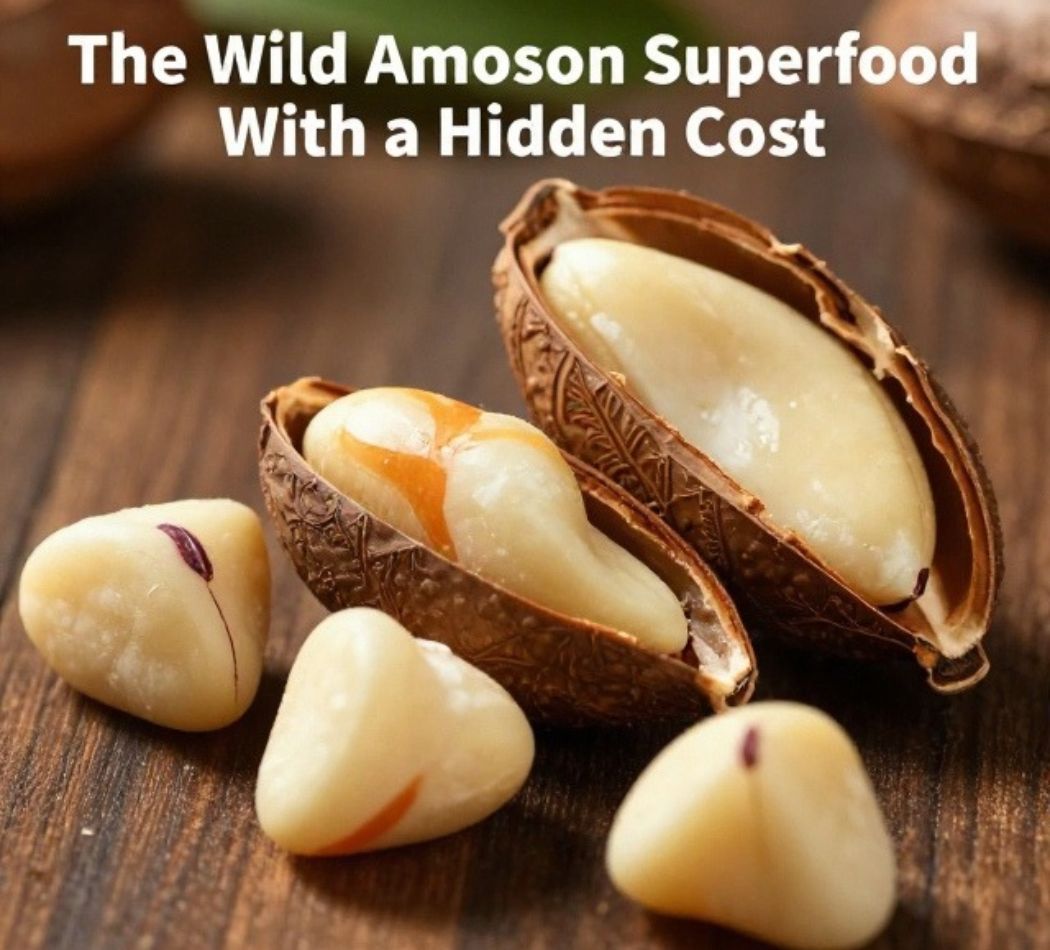
The Brazil nut is not really a nut—botanically speaking, it is a seed. It grows inside a hard, woody pod (a pyxidium) that resembles a cannonball and contains anywhere from 10 to 25 triangular seeds packed like orange segments. The tree itself is one of the Amazon’s giants, often reaching 30 to 50 meters in height and living for centuries; some specimens are estimated to be nearly a thousand years old.
For Indigenous communities across the Amazon basin—in what is now Brazil, Bolivia, and Peru—the collection of these seeds has been a seasonal livelihood for generations. The Kayapó people of southeastern Amazonia are even believed to have planted Brazil nut groves centuries ago, contributing to the tree’s distribution across the forest. Today, the harvest remains a deeply human endeavor: families and workers enter the forest during the rainy season (roughly January to March), gather the fallen pods, split them open with machetes, and carry heavy sacks of seeds to processing facilities.
The global market, however, has long been dominated by a quirk of naming and trade. Despite the name, Bolivia has emerged as the world’s largest exporter of Brazil nuts, followed by Brazil and Peru. The nuts are prized not just for their rich, earthy flavor but for an extraordinary nutritional profile—most notably, their selenium content, which is among the highest of any food on Earth.
The Science and the Superlative: Why Brazil Nuts Are a Selenium Powerhouse
A Micronutrient Concentrate in a Small Package
If you have ever eaten just two Brazil nuts and felt oddly satisfied, there is a biochemical reason. A single Brazil nut can contain anywhere from 50 to 90 micrograms of selenium, depending on the soil where its tree grew. Since the recommended daily intake for adults is around 55 micrograms, one or two nuts can cover your needs for the day. This is a rare example of a whole food delivering a trace mineral in a clinically meaningful dose.
The scientific literature on Brazil nuts and selenium has expanded rapidly in recent years. A 2025 review in ScienceDirect highlighted selenium’s role in reducing inflammation and enhancing immune function, both critical factors in managing chronic non-communicable diseases. Clinical trials have shown that regular Brazil nut consumption can improve lipid profiles and reduce oxidative damage to DNA in overweight patients with type 2 diabetes. For vegans—who often struggle to meet selenium needs from plant foods—Brazil nut butter has been shown to be as effective as a selenium supplement in raising blood selenium levels.
The Catch: Selenium Variability Is Real
Here is where the nuance matters. Selenium content in Brazil nuts is not standardized. It depends entirely on the selenium concentration in the forest soil where the tree grows. A nut from one grove might deliver a modest dose; another from a different region could deliver several times that amount. For most healthy adults, this variability is not dangerous—selenium toxicity from whole foods is exceedingly rare. But it is a reason why nutritionists generally advise against treating Brazil nuts as a “free” snack to be eaten by the handful. One or two a day is the sweet spot; a dozen is unnecessary and potentially counterproductive.
The Market in 2026: Tight Supply, High Prices, and a Reckoning With Risk
The Wild Harvest Is Shrinking
The Brazil nut market is not like the almond or cashew trade. You cannot simply plant more trees when demand rises. The 2025 harvest was brutal: an extreme drought linked to El Niño, followed by the Amazon’s worst fire season in nearly two decades, devastated production volumes and kernel sizes. The International Nut and Dried Fruit Council estimated the 2025/2026 global crop at just over 63,000 metric tons (in-shell basis), down sharply from the previous season’s 100,000 tons.
The consequences are visible in prices. By Q2 2026, the global average price for Brazil nuts had climbed to roughly $5,385 per metric ton, with U.S. prices—reflecting import dependence—reaching $6,745 per metric ton. Buyers who once treated Brazil nuts as a stable commodity are now learning to navigate a market driven by rainfall, pollination cycles, and the whims of wild trees.
The Social Cost Hidden in the Supply Chain
There is a more uncomfortable story beneath the price charts. A 2021 report cited by the Food and Agriculture Organization (FAO) documented forced labor situations in Bolivia’s Brazil nut harvest, where 88 percent of farmworkers said they had taken loans from employers in the form of advance payments, making it difficult to quit. Child labor has also been documented in Brazil nut harvesting. Living conditions in remote harvest camps can be poor, with inadequate housing and no access to clean drinking water.
These are not isolated anecdotes. They reflect a structural reality: Brazil nuts are harvested in some of the most remote, under-governed parts of the Amazon, where formal labor contracts and oversight are scarce. The industry’s informal nature—seasonal work, no contracts, middlemen taking margins—creates conditions where exploitation can flourish.
The Counterweight: Cooperatives and Certification
That said, the story is not uniformly bleak. Indigenous cooperatives and FSC-certified forest management initiatives are offering a different model. The Paiter Suruí people in Rondônia, Brazil, for example, hold FSC certification for their Brazil nut harvesting, which has generated income for over 50 harvesters while maintaining traditional knowledge and biodiversity conservation. In the Apiaká/Kayabi Indigenous Territory in Mato Grosso, the COOPESFPIAM cooperative has improved access to fairer markets and strengthened cultural identity by cutting out exploitative middlemen.
These models are not yet the norm, but they demonstrate that Brazil nuts can be a genuine force for forest conservation and community resilience—if the market is willing to pay for it.
Practical Tips: How to Buy, Store, and Eat Brazil Nuts Like Someone Who Knows the Supply Chain
For Consumers
Buy from brands that disclose origin and certification. Look for FSC certification or direct-trade cooperatives. A brand that can tell you which region or cooperative its nuts came from is more likely to have visibility into labor conditions.
Treat them as a supplement, not a snack. One to two nuts per day is sufficient for selenium. If you are making Brazil nut milk or butter, remember that selenium is water-soluble and will distribute into the liquid—but the calorie density is high, so portion awareness still matters.
Store them in the fridge or freezer. Brazil nuts are rich in polyunsaturated fats and can go rancid quickly. Their high oil content makes them vulnerable to oxidation; keep them cool and dark, and taste before using if they have been sitting in the pantry for months.
For Businesses and Buyers
Lock in forward coverage early. The 2026 harvest is expected to remain tight. The INC noted that the 2025 crop was “already sold out” before the new season arrived, and buyers were waiting for relief from the 2026 crop. Waiting for spot prices to drop is a risky strategy in a wild-harvest market.
Diversify your selenium sourcing narrative. If you are formulating a product around selenium, do not rely solely on Brazil nuts. Their variability is a feature of the wild supply chain, not a bug. A blended approach—using Brazil nuts for their story and other selenium sources for consistency—can protect your product quality.
Common Mistakes and Challenges (and How to Solve Them)
Mistake 1: Assuming “natural” means “ethical.” Wild-harvested does not automatically mean sustainably or fairly harvested. The absence of plantations is good for the forest, but labor abuses have been documented. Solution: Ask for certification or cooperative sourcing.
Mistake 2: Overconsuming for selenium “insurance.” More is not better. Selenium toxicity can cause hair loss, nail brittleness, and gastrointestinal distress. Two nuts a day is plenty. Solution: Pre-portion your intake rather than eating from the bag.
Mistake 3: Ignoring the aflatoxin risk. Brazil nuts are susceptible to mold contamination during storage in humid conditions. Reputable processors steam-pasteurize or otherwise treat nuts to reduce risk, but cheap, unregulated products may carry higher exposure. Solution: Buy from established brands with quality control, and avoid nuts that smell musty or taste bitter.
Mistake 4: Expecting stable prices and supply. The Brazil nut market is weather-dependent and biologically constrained. Buyers who plan annual contracts without flexibility get burned in short-crop years. Solution: Build contingency plans and communicate with suppliers about crop forecasts early.
Pros, Cons, and a Balanced Verdict
| Pros | Cons |
|---|---|
| Exceptional selenium source, especially for vegans and vegetarians | Wild harvest is inherently volatile; supply cannot be scaled on demand |
| Harvesting supports standing forests and can incentivize conservation | Documented labor risks, including forced and child labor in some regions |
| Rich in healthy fats, magnesium, and antioxidants | High calorie density; easy to overeat |
| Indigenous cooperatives and FSC certification offer a path to ethical sourcing | Certification is not universal; supply chain transparency remains weak |
| Distinctive flavor and texture with strong culinary versatility | Susceptible to aflatoxin if poorly stored |
The Verdict: Brazil nuts are a nutritionally remarkable food with a genuinely compelling conservation story—but that story is more complicated than the “superfood” marketing suggests. They are worth eating and worth sourcing carefully. The future of the industry depends on whether the market rewards the cooperatives and certified operations that are trying to do things right, or continues to prioritize cheap volume from opaque supply chains.
Future Trends and Predictions for 2026 and Beyond
Climate volatility will define supply. The 2025 drought and fire season demonstrated how quickly a wild-harvest crop can shrink. Expect more frequent supply shocks as El Niño patterns intensify. Buyers will need to treat Brazil nuts less like a commodity and more like a specialty crop with vintage variation.
Traceability technology will move from nice-to-have to necessary. Consumer and regulatory pressure on deforestation and labor abuses is pushing the industry toward digital traceability. Blockchain and satellite-based origin verification, already piloted in other Amazon commodities, are likely to expand into Brazil nuts.
Indigenous-led cooperatives will gain market share—if they get support. The success of groups like the Paiter Suruí and Apiaká/Kayabi shows that collective organization can improve both livelihoods and forest outcomes. But these operations need access to credit, infrastructure, and buyers willing to pay a premium. The next five years will reveal whether the market rewards them or leaves them behind.
Selenium science will deepen. As research into selenium’s role in inflammation, immune function, and chronic disease continues, Brazil nuts are likely to remain a subject of clinical interest. Expect more specific guidance on dosage and variability, and perhaps new products (fortified butters, standardized extracts) that address the consistency problem.
Conclusion: The Forest in a Nutshell
The Brazil nut is a paradox: a global commodity that cannot be farmed, a health food with a social shadow, and a conservation tool that depends on markets thousands of miles away. It is also, quite literally, a product of the forest’s complexity—the bees, the agouti, the ancient trees, and the human communities that have learned to work with all three.
If you take one thing from this deep dive, let it be this: the Brazil nut is not just a snack. It is a test case for whether the global food system can value wildness, pay for stewardship, and protect the people who do the hardest work in the supply chain. Every purchase is a small vote on that question.
Key Takeaways
-
Brazil nuts are wild-harvested, not farmed—their biology depends on intact Amazon forests and specific pollinators and seed dispersers.
-
One to two nuts per day provides more than enough selenium for most adults; more is not better.
-
The 2025 harvest was severely reduced by drought and fire, driving prices to multi-year highs and creating tight supply through 2026.
-
Labor risks are real—forced and child labor have been documented in some regions, making certification and cooperative sourcing essential.
-
Indigenous cooperatives and FSC certification offer a credible path to ethical Brazil nuts, but they need buyer support to scale.
-
Store Brazil nuts cold to prevent rancidity, and buy from brands that prioritize quality control against aflatoxin.
Frequently Asked Questions (FAQs)
Are Brazil nuts actually from Brazil?
They are native to the Amazon basin, which spans Brazil, Bolivia, and Peru. Despite the name, Bolivia is currently the world’s largest exporter of Brazil nuts.
How many Brazil nuts should I eat per day for selenium?
One to two nuts typically provide the recommended daily intake for adults. Selenium content varies by soil, so avoid eating large handfuls regularly.
Can you be allergic to Brazil nuts?
Yes. Brazil nut allergy is less common than peanut or tree nut allergies but is well-documented. People with existing nut allergies should consult an allergist before trying them.
Why are Brazil nuts so expensive in 2026?
A severe drought and fire season in the Amazon reduced the 2025 harvest, leading to a global supply shortfall. Prices reached multi-year highs, with U.S. prices above $6,700 per metric ton in Q2 2026.
Are Brazil nuts sustainable?
The harvest itself is inherently low-impact because it requires standing forest. However, sustainability depends on labor practices and whether harvesters are paid fairly. Look for FSC certification or cooperative-sourced products.
Do Brazil nuts go bad?
Yes. Their high oil content makes them prone to rancidity. Store them in an airtight container in the fridge or freezer, and discard them if they smell musty or taste bitter.
Sources
-
FAO / Open Knowledge Repository — Brazil nut harvest labor conditions, biological and social risks
-
WWF Perú — US$48 Million Growing from the Forest: The Story Behind the Amazon Brazil Nut (2025 export data)
-
ScienceDirect — Brazil nut or not? Uncovering the best source of selenium for chronic non-communicable disease (2025 review)
-
FSC — Amazonian Nut: Certification Case Study (Paiter Suruí Cooperative)
-
WWF Bolivia — The nut that could help save the Amazon (biology, harvest practices, conservation context)
-
Expert Market Research — Brazil Nuts Prices 2026: Forecast, Chart, Index & News
-
INC (International Nut and Dried Fruit Council) — Nutfruit Statistical Yearbook 2025/2026: Amazonia Nuts
-
ScienceDirect — Brazil nut consumption reduces DNA damage in overweight type 2 diabetes mellitus patients (2024 clinical trial)
-
Europe PMC — Improving the selenium supply of vegans and omnivores with Brazil nut butter (2025 RCT)
-
ScienceDirect Topics — Brazil Nut: Botanical and harvest overview
-
UNEMAT Journal — Cooperativism and Brazil nut harvesting in Indigenous communities (Apiaká/Kayabi)

Novara Lin
Senior Editor & Clean Beauty Analyst
Novara Lin is a clean beauty researcher and wellness editor dedicated to demystifying modern skincare and evidence-based living. With a background in formulation science and consumer health reporting, she specializes in analyzing complex ingredient profiles, evaluating product safety, and bridging the gap between clinical research and daily self-care routines. Her work focuses on helping readers cut through industry noise to build minimal, highly effective routines rooted in transparency and skin health. When she isn’t testing active formulations or auditing non-toxic household choices, Novara leads editorial strategy for NovaRa Pure.