
We Tested:
Walk into an orthodontist’s office in 2026, and you’ll notice something that would have seemed unusual a generation ago: adults. Not just a few parents in the waiting room, but patients themselves—professionals in their 30s, retirees in their 60s, and everyone in between.
Nearly one in three orthodontic patients today is an adult, up from roughly one in five just a couple of decades ago. In the United States alone, approximately 1.91 million adults were in active orthodontic treatment as of 2024, and that number has continued to climb. The reasons are practical as much as cosmetic: straight teeth are easier to clean, less prone to gum disease, and often necessary before restorative work like implants or crowns.
But the technology of braces has transformed just as dramatically as the demographics. Smart brackets, AI-designed prescriptions, 3D-printed ceramic appliances, and remote monitoring platforms are reshaping what it means to “get braces” in 2026. This guide cuts through the noise—covering every type of braces, real-world costs, the treatment journey from consultation to retainer, and the mistakes that derail even the most well-intentioned patients.
Whether you’re a nervous first-timer, a parent researching options for a child, or an adult who’s been “meaning to look into it” for years, here’s what you actually need to know.
Background: What Braces Actually Do (and Why It Matters Beyond a Pretty Smile)
Braces are orthodontic appliances that apply controlled, continuous force to gradually move teeth into better alignment. The biology is elegant: pressure on one side of a tooth compresses the periodontal ligament, while the other side stretches. The bone remodels in response—breaking down on the compressed side and building up on the tension side. A tooth moves the same way at 40 as it does at 14; the biology doesn’t expire. What changes is the treatment plan, especially if you have existing crowns, fillings, or gum issues.
The benefits extend well beyond aesthetics, and this is where most casual articles stop short. Research shows straight teeth are 25–40% easier to clean than crowded teeth, and people with aligned smiles maintain lower plaque levels even with identical brushing habits. Misaligned bites also direct biting forces in harmful directions, accelerating bone loss and gum disease. For adults with both bite problems and jaw pain, 45–65% experience improvement after orthodontic treatment, compared to only 15–25% without intervention.
There’s a functional payoff, too: a well-aligned bite improves chewing efficiency by 20–30%, which matters more than it sounds for digestion and jaw comfort over a lifetime.
The American Dental Association recommends children have their first orthodontic evaluation by age 7, when signs of jaw growth problems and bite issues begin to emerge. But for adults, the message is simpler: it’s never too late, but the plan matters more than the age.
The Types of Braces in 2026: A No-Nonsense Comparison
Choosing a braces system is not about which one is “best”—it’s about which one fits your bite, your budget, your lifestyle, and your tolerance for visibility. Here’s how the major options stack up.
Traditional Metal Braces
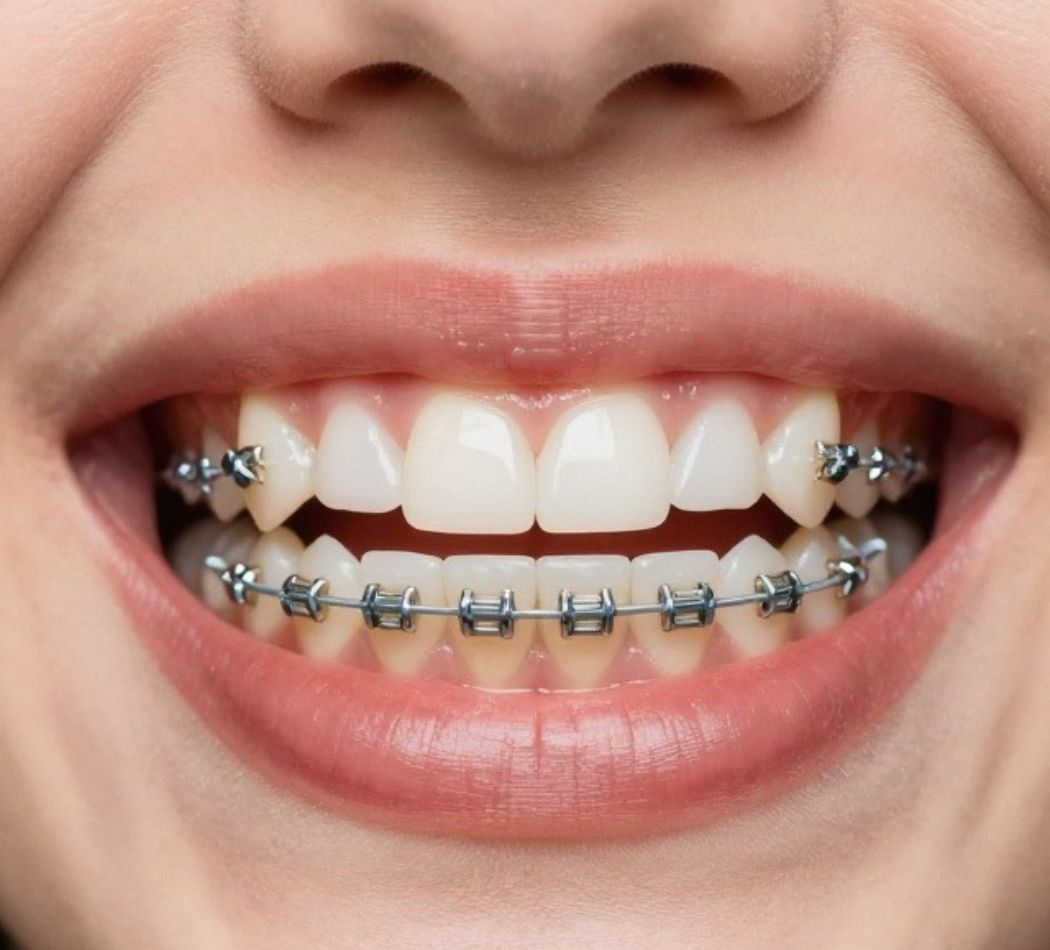
The workhorse. Metal brackets bonded to each tooth, connected by an archwire and secured with elastic ligatures. They’re the strongest and most affordable option, and they remain the gold standard for complex cases involving severe crowding, significant bite correction, or multiple planes of movement. Modern metal brackets are smaller and more comfortable than the ones many adults remember from their teenage years. Typical cost: $3,000–$7,000 for comprehensive treatment.
Ceramic Braces
Same mechanics, different materials. The brackets, wires, and ligatures are tooth-colored or translucent, blending with the smile and significantly reducing visibility. They provide completely comparable biomechanical control to metal braces, which is why they’re popular with adults who want effectiveness without the “metal mouth” look. The trade-offs: ceramic brackets are more fragile than metal and can stain over time, and they cost more—typically $4,000–$8,000.
Self-Ligating Braces
These use a built-in mechanism—a “door” or clip—to hold the archwire instead of elastic ligatures. The theoretical advantage is reduced friction and fewer appointment visits. Clinical data suggests self-ligating systems may reduce appointment duration by 15–20% and potentially shorten total treatment time by 4–6 months in some cases. Cost: $4,000–$6,500. The evidence on faster treatment is mixed—the biggest practical benefit is often fewer trips to the orthodontist, which matters for busy adults.
Lingual Braces
Brackets bonded to the back side of the teeth, completely hidden from view. This is the most discreet fixed option, but it comes with trade-offs: higher cost ($8,000–$13,000), a longer adjustment period for speech and tongue comfort, and maintenance challenges because the appliances are harder to see and clean. Lingual braces are often chosen by adults in highly visible professions who want fixed appliances without any front-facing hardware.
Clear Aligners (Invisalign and Others)
Not technically braces, but part of the same decision. Clear aligners are removable, nearly invisible trays that progressively move teeth. They’re excellent for mild to moderate cases, with a 90–95% success rate in uncomplicated Class I cases. They make eating and oral hygiene dramatically easier because you take them out. But they require 20–22 hours of daily wear—compliance is non-negotiable—and they are less effective for complex tooth movement or jaw correction than fixed braces. Treatment time is often 12–18 months for eligible cases, though aligner cases can run longer than braces in some comparisons.
The bottom line on types: If your case is complex, braces—metal or ceramic—give your orthodontist the most precise control. If your case is mild to moderate and you’re disciplined about wear time, aligners are a legitimate option. The worst choice is picking a system based on appearance alone without a proper clinical assessment.
How Braces Treatment Actually Works: The Journey from Consultation to Retainer
Most people are in active treatment for one to three years, followed by a retention phase that never truly ends if you want to keep your results. Here’s the realistic arc.
Phase 1: Consultation and Records
Your orthodontist examines your teeth, bite, and jaw relationship, and takes X-rays, photographs, and digital scans. In 2026, digital treatment planning is standard—many practices use AI-assisted software to simulate tooth movement and design appliance prescriptions before anything is bonded to your teeth. This is the phase where you should ask for an itemized treatment plan so you know exactly what the quoted fee covers: records, appliance, adjustment visits, retainers, and emergency visits are not always bundled.
Phase 2: Bonding (Day One)
The fitting itself is not painful. Teeth are cleaned and dried, brackets are bonded with a special adhesive, and the archwire is threaded and secured. The process typically takes 90–120 minutes. You’ll leave with instructions, wax, and a realistic warning: the first few days will feel strange.
Phase 3: Adjustment Visits
Every 6–8 weeks, you return for adjustments—wire changes, ligature replacements, and activation of the next stage of movement. Most patients experience soreness for a few hours to a few days after each adjustment, especially after the first wire changes. This is normal inflammatory response, not a sign that something is wrong. Over-the-counter pain relievers, soft foods, and orthodontic wax for irritation are the standard toolkit.
Phase 4: Debonding and Retention
When the teeth reach their planned positions, the brackets come off—a quick, satisfying appointment. Then comes the phase most patients underestimate: retention. Without a retainer, teeth have a strong tendency to relapse toward their original positions, and the risk is highest in the first month after braces are removed. Retainers—fixed (bonded wire behind the teeth), removable (clear plastic), or a combination—are not optional if you want to protect the investment. Long-term retention relies on shared responsibility among the patient, orthodontist, and dentist, and some level of retainer wear is typically lifelong.
The Real Cost of Braces in 2026 (and How to Think About It)
Comprehensive orthodontic treatment in the U.S. typically runs $3,000–$8,000, with a median state average around $6,211 across observed datasets. But that headline number obscures enormous variation by appliance type, geography, and case complexity.
| Appliance | Low | Average | High |
|---|---|---|---|
| Metal braces | $2,500 | $6,343 | $10,000 |
| Ceramic braces | $4,000 | $5,500 | $8,000 |
| Clear aligners | $4,000 | $6,000 | $8,000 |
| Lingual braces | $8,000 | $10,000 | $13,000 |
Data: 2026 U.S. national benchmarks
Two factors drive most of the spread. Geography: urban centers average $5,000–$7,000, while rural areas average $3,000–$4,500. Case complexity: mild crowding may be resolved in 12–18 months; severe bite correction can take 30–36 months and cost proportionally more.
What the fee usually includes: the appliance, all adjustment visits, and a first set of retainers. What it may not include: initial records and X-rays, replacement retainers, and any pre-treatment restorative work like fillings or crowns. Always ask for the itemized plan—this is the single most practical financial step you can take.
Insurance coverage is improving. Many orthodontic plans reimburse around 50% for both fixed appliances and clear aligners, and third-party financing through CareCredit and similar providers offers monthly payment options with promotional interest rates. The net out-of-pocket difference between metal braces and aligners is often smaller than the sticker prices suggest.
One cost comparison worth flagging: porcelain veneers to correct alignment on 8–10 anterior teeth cost $9,600–$20,000—two to four times comprehensive orthodontics—and they don’t address underlying bite function. Braces move teeth; veneers mask them. If the goal is lasting alignment, orthodontics is the higher-value investment.
The 2026 Technology Shift: AI, Smart Brackets, and Remote Monitoring
Orthodontics has historically been a field of incremental material improvements. In 2026, the pace has accelerated because of three converging technologies: artificial intelligence, additive manufacturing, and sensor integration.
AI-designed bracket prescriptions are now commercially available. Systems like Celebrace use AI to generate patient-specific metal bracket prescriptions based on individual tooth anatomy and the clinician’s intended biomechanics. The practical implication: more precise tooth movement, potentially fewer adjustments and shorter treatment time. AI is also embedded in cephalometric landmarking, treatment planning, model superimposition, and digital indirect bonding—tasks that once consumed hours of clinical time now happen with greater consistency.
Fully 3D-printed ceramic brackets and digitally customized labial systems are moving from concept to clinic, enabling individualized biomechanics at a scale that was previously impractical. The next frontier is smart brackets—sensors integrated into the appliance that monitor tooth movement and force application in real time. These are still emerging, but the direction is clear: orthodontics is becoming a data-driven, continuously monitored process rather than a series of intermittent office visits.
Remote monitoring platforms like DentalMonitoring use AI-powered scans to track tooth movement between appointments, reducing the number of in-person visits for patients who travel or have scheduling constraints. For adults juggling work and family, this is not a gimmick—it’s a meaningful quality-of-life improvement.
The global orthodontic market is valued at $6.8–$7.8 billion in 2026, projected to grow at 2.3–4.3% annually through 2031. The money is flowing toward personalization, digital workflows, and materials that are both more biocompatible and more sustainable—biodegradable polymers and recyclable resins are active areas of development.
Practical Tips for Living with Braces (Without Losing Your Mind)
Eating: The Short List
Avoid hard, sticky, and crunchy foods: nuts, popcorn kernels, hard pretzels, chewy caramel, gummy candies, and chewing gum. Don’t bite directly into whole apples or raw carrots—slice or chop them first. Cut corn off the cob. Skip fizzy drinks and energy drinks; the acid and sugar are doubly problematic with brackets that trap plaque. Soft foods—scrambled eggs, oatmeal, mashed potatoes, yogurt, smoothies, soft cheeses, soup—are your friends, especially in the first week after bonding and after each adjustment.
Oral Hygiene: Non-Negotiable
Brush after every meal, use a interdental brush or floss threader around brackets, and rinse with water if you can’t brush immediately. The 25–40% cleaning advantage of straight teeth only materializes if you actually keep them clean during treatment. A water flosser is a worthwhile investment.
Managing Discomfort
Orthodontic wax is the single most useful over-the-counter tool. About 15–30% of people experience mouth ulceration from brackets, especially in the first week or two—wax covers sharp edges and allows healing. Warm salt-water rinses (half a teaspoon of salt in 8 ounces of water) soothe irritated tissue. For adjustment soreness, take an over-the-counter pain reliever before the appointment or shortly after, and stick to soft foods for 24–48 hours.
Protecting Your Appliances
Avoid biting fingernails, pens, and ice. If a bracket loosens or a wire protrudes, cover it with wax and call your orthodontist—don’t try to cut the wire yourself unless instructed. Broken appliances mean longer treatment, not just inconvenience.
Common Mistakes, Challenges, and Honest Solutions
Mistake #1: Choosing aligners for a case that needs fixed appliances. Clear aligners are excellent for mild-to-moderate cases, but they are less effective for complex tooth movement and severe malocclusion than braces. The solution is straightforward: get a proper clinical assessment, not a direct-to-consumer mail-order impression kit. Mail-order aligner systems have 20–30% higher abandonment rates due to reduced professional oversight.
Mistake #2: Underestimating the retainer. The most common reason people end up back in braces decades later is failure to wear retainers consistently. Teeth do not “remember” their new position. Budget for retainers, set reminders, and treat retention as part of the treatment, not an optional epilogue.
Mistake #3: Poor hygiene during treatment. Brackets create traps for plaque. Patients who don’t adapt their brushing and flossing routine risk demineralization (white spots), cavities, and gum inflammation—problems that can undermine the very reason they got braces. The solution is mechanical: interdental brushes, water flossers, and more frequent professional cleanings.
Mistake #4: Ignoring insurance and financing options. Many patients pay more out-of-pocket than necessary because they don’t ask about orthodontic benefits, flexible spending accounts, or in-house payment plans. Ask for the itemized fee breakdown and the financing options before you commit.
Challenge: Adult treatment with existing dental work. Adults often have crowns, fillings, or missing teeth that complicate bracket placement and tooth movement. The solution is a coordinated plan between your general dentist and orthodontist, sometimes including pre-restorative orthodontics to create ideal conditions for implants or crowns.
Challenge: Speech and tongue comfort with lingual braces. The first few weeks can be challenging for enunciation and tongue comfort. Most patients adapt within 2–4 weeks, but it’s a real adjustment that should be factored into the decision, especially for professions that rely heavily on speaking.
Braces vs. Clear Aligners: A Balanced, Non-Ideological Comparison
This is not a “which is better” question. It’s a “which is better for this case, this patient, and this lifestyle” question.
| Factor | Fixed Braces | Clear Aligners |
|---|---|---|
| Complex case capability | Gold standard; precise control in all planes | Less effective for severe malocclusion |
| Visibility | Visible (metal or ceramic) | Nearly invisible |
| Removability | Fixed; no compliance required | Removable; requires 20–22 hours/day |
| Oral hygiene | Extra care around brackets | Easier; trays come out |
| Food restrictions | Yes—hard/sticky foods avoided | None; trays removed for eating |
| Treatment time | 18–24 months (typical) | 12–18 months for eligible cases |
| Relapse rate | ~5% | 15–25%; refinement trays may be needed |
| Cost | Generally lower | Generally higher (but insurance often covers both) |
Sources: clinical comparisons and 2026 cost data
The honest analysis: braces are the more robust clinical tool; aligners are the more convenient and discreet tool for appropriately selected cases. A good orthodontist will tell you which one your case actually needs—and a good patient will listen rather than insist.
The Future Outlook: Where Braces Are Headed Through 2030
Three trajectories are worth watching.
First, personalization will become the default, not a premium. AI-designed bracket prescriptions, 3D-printed ceramic appliances, and digitally customized archwires will move from “innovative” to “standard of care”. The practical effect will be fewer adjustments, shorter treatment times, and more predictable outcomes.
Second, monitoring will become continuous rather than episodic. Smart brackets and AI-powered remote monitoring platforms will shift orthodontics from a series of 6–8 week snapshots to a real-time data stream. This is especially transformative for patients in rural areas or with mobility constraints.
Third, materials science will address the sustainability and biocompatibility gap. Biodegradable polymers, recyclable resins, and lower-metal-risk appliances are active development areas, and 2026 is expected to see meaningful progress toward commercial viability. Orthodontics has a waste problem—every aligner, every bracket, every retainer has a lifecycle—and the market is beginning to respond.
The caveat: technology does not replace diagnosis. The most sophisticated AI planning system still needs a clinician to assess gum health, bone density, root resorption risk, and the patient’s ability to comply. The future is not “robot orthodontics”—it’s better-informed clinicians making more precise decisions with better tools.
Conclusion: The Key Takeaways
Braces in 2026 are more accessible, more precise, and more personalized than ever—but the fundamentals haven’t changed. Tooth movement is biology, retention is non-negotiable, and the best appliance is the one that fits your clinical needs and your life.
Key takeaways:
-
Nearly one in three orthodontic patients is now an adult—the “braces are for kids” era is over.
-
Types matter, but diagnosis matters more. Metal braces remain the gold standard for complex cases; ceramic and lingual options trade cost and maintenance for aesthetics; clear aligners work well for mild-to-moderate cases with disciplined wear.
-
Real cost in 2026 is $3,000–$8,000 for most comprehensive treatment, with lingual braces reaching $13,000. Insurance and financing narrow the out-of-pocket gap.
-
Retention is treatment. Without consistent retainer wear, teeth relapse, and the risk is highest in the first month after debonding.
-
AI and smart brackets are real, not hype—patient-specific prescriptions and remote monitoring are already changing how treatment is planned and managed.
-
The biggest mistakes are avoidable: choosing the wrong appliance for the case, neglecting hygiene, skipping retainers, and failing to ask about insurance and itemized fees.
Braces are an investment of time, money, and daily attention. Done right—with a proper diagnosis, a realistic plan, and consistent follow-through—they deliver benefits that last far beyond the day the brackets come off.
Frequently Asked Questions
How long do you have to wear braces?
Most people are in active treatment for one to three years, depending on case complexity, appliance type, and compliance with appointments and hygiene. Mild cases with clear aligners can finish in 12–18 months; complex bite correction with fixed braces often runs 24–36 months.
Do braces hurt?
The bonding appointment itself is not painful. The first few days after bonding and after each adjustment involve soreness and pressure that typically lasts a few hours to a few days. Over-the-counter pain relievers, soft foods, and orthodontic wax for bracket irritation are usually sufficient.
Can adults get braces?
Yes—age is not a barrier. About one in three orthodontic patients is an adult, and the biology of tooth movement works the same at 40, 50, or 60 as it does at 14. The difference is treatment planning, especially if you have existing crowns, gum disease, or missing teeth.
How much do braces cost in 2026?
Comprehensive treatment typically runs $3,000–$8,000 for metal or ceramic braces, with lingual braces reaching $8,000–$13,000 and clear aligners around $4,000–$8,000. Insurance often covers around 50%, and financing plans can spread the cost monthly.
What can’t you eat with braces?
Avoid hard foods (nuts, hard pretzels, ice), sticky foods (caramel, gummy candy, chewing gum), and crunchy foods (popcorn kernels, tortilla chips). Cut apples and carrots into small pieces rather than biting into them, and skip sugary/acidic drinks.
Are clear aligners as effective as braces?
For mild to moderate cases, aligners have a 90–95% success rate in uncomplicated Class I cases. For complex tooth movement or jaw correction, fixed braces provide more precise control and remain the preferred choice. Aligners also require 20–22 hours of daily wear to work as planned.
What happens if I don’t wear my retainer?
Teeth will relapse toward their original positions, and the risk is highest in the first month after braces are removed. Long-term retainer wear—whether fixed or removable—is the standard of care for maintaining results.
Do braces cause mouth sores?
About 15–30% of patients experience some mouth ulceration from brackets, especially in the first week or two. Orthodontic wax is the first-line solution, along with warm salt-water rinses and numbing gel if needed.
Is it safe to get braces during pregnancy?
The American Dental Association states that preventive, diagnostic, and restorative dental care can be safely provided during pregnancy, and braces can typically remain in place as long as your teeth and gums are healthy and treatment is monitored. Always inform your orthodontist if you are pregnant or planning to become pregnant.
What’s the best age for braces?
The American Association of Orthodontists recommends a first evaluation by age 7 to catch jaw growth issues early. Active treatment is often most efficient between ages 8 and 14, when the bone is more adaptable, but adults can be treated successfully at any age.
Sources
-
Dentalpedia, Your Guide to Adult Braces: Options (2026)
-
Flushing Dental, Adult Orthodontic Treatment: Options for Adults in 2026 (2026)
-
Real Dental Costs, Braces Cost Calculator 2026 (2026)
-
Dentalpedia, Clinical Protocol: Cost of Teeth Alignment Alternatives and Comparative Analysis (2026)
-
Zenodo, Next-Generation Orthodontic Brackets: A Review of Design Innovations and Clinical Applications (2026)
-
ADA Commons, Recent Advances and Current Trends in Contemporary Orthodontics (2026)
-
AAO, The Best New Products as Voted by YOU at AAO Annual Session 2026 (2026)
-
Smilebliss Orthodontics, Braces vs. Clear Aligners (2026)
-
Dentalpedia, Bracket Irritation and Oral Ulceration: Prevention (2026)
-
Cochrane Library / PubMed, Retention procedures for stabilising tooth position after treatment with orthodontic braces (2023)
-
American Dental Association, Braces (treatment duration and retainer guidance)
-
Market Research, Global Orthodontics Market Analysis & Forecast 2026–2031 (2026)
-
Real Dental Costs, Braces Cost 2026: Kids vs Adults, Phases & Real Fees (2026)
-
Orthodontics Australia / AAO, Braces-friendly foods (2024–2025)

Novara Lin
Senior Editor & Clean Beauty Analyst
Novara Lin is a clean beauty researcher and wellness editor dedicated to demystifying modern skincare and evidence-based living. With a background in formulation science and consumer health reporting, she specializes in analyzing complex ingredient profiles, evaluating product safety, and bridging the gap between clinical research and daily self-care routines. Her work focuses on helping readers cut through industry noise to build minimal, highly effective routines rooted in transparency and skin health. When she isn’t testing active formulations or auditing non-toxic household choices, Novara leads editorial strategy for NovaRa Pure.