
We Tested:
Quick question: when was the last time you cooked barley at home? If you’re like most home cooks, the answer might be “never” — or “only in soup.” Yet barley is one of the oldest cultivated grains on Earth, with a history spanning over 10,000 years. It fed ancient civilizations, sustained Tibetan highlanders for millennia, and remains a cornerstone of global agriculture. So why did it fall out of favor in Western home kitchens?
The answer is simple: most people don’t know how to cook it properly. And who can blame them? Walk into any grocery store and you’ll find “barley” without clear labeling of which type you’re buying. Cook it wrong, and you get a gummy, starchy mess that resembles wallpaper paste more than a wholesome grain. Cook it right, and you unlock a nutty, chewy, incredibly versatile ingredient that can star in salads, soups, risottos, and even breakfast bowls.
This guide is designed to change that. Whether you’re a complete beginner or someone who’s struggled with barley before, by the end of this article you’ll have the knowledge and confidence to cook perfect barley every single time. Let’s dig in.
Background: What Exactly Is Barley, and Why Should You Care?
Barley (Hordeum vulgare) is a cereal grain belonging to the grass family. It thrives in climates ranging from subarctic to subtropical regions, making it one of the most adaptable crops on the planet. Its resilience — drought resistance, tolerance to poor soil, and cold hardiness — has made it a staple food security crop for thousands of years.
Today, barley is cultivated primarily for three purposes: malting (for beer and spirits), animal feed, and food. In 2025, the global barley market was estimated at approximately $144.3 billion, with projections reaching $167 billion by 2032, driven largely by increasing consumer demand for ancient grains, fiber-rich foods, and plant-based ingredients.
But here’s what most articles miss: barley’s nutritional profile is genuinely exceptional. It’s particularly rich in beta-glucan, a soluble fiber that has been shown to lower blood glucose and lipid levels, combat obesity, and modulate gut microbiota. Recent research from 2025 and 2026 has even explored how barley polysaccharides may alleviate mild cognitive impairment through the liver-gut-brain axis — a finding that positions barley as a potential “brain food” in ways we’re only beginning to understand.
So why isn’t barley more popular? Partly because of confusion about its different forms, and partly because cooking it incorrectly leads to disappointing results. Let’s fix that.
The Great Barley Divide: Pearl vs. Hulled (and Everything In Between)
The single biggest mistake home cooks make is treating all barley as interchangeable. It’s not. Think of pearl barley and hulled barley as two completely different ingredients with different rules, textures, and best uses.
Pearl Barley: The Convenient Crowd-Pleaser
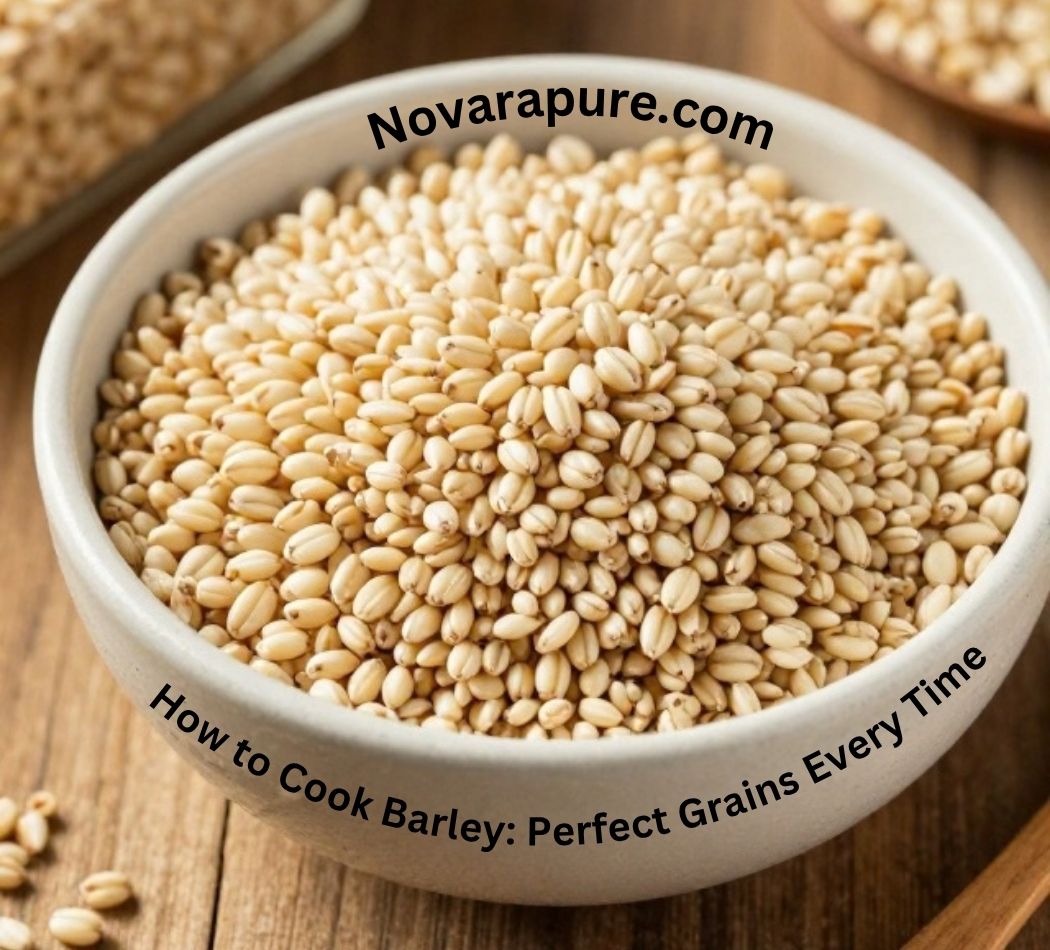
Pearl barley is the most common form sold in grocery stores. During processing, the outer husk and the bran layer are polished off, resulting in a pale, creamy-colored grain. This makes it faster to cook — typically 25 to 35 minutes on the stovetop — but it also means pearl barley is not a whole grain. It has less fiber and fewer nutrients than its hulled counterpart.
Best for: Creamy risottos, thickening soups and stews, and dishes where you want a softer, slightly chewy texture. Pearl barley releases more starch during cooking, which is why it’s ideal for recipes where creaminess is a feature, not a bug.
Liquid ratio: About 1 cup barley to 2.5 cups liquid.
Hulled Barley: The Nutritional Powerhouse
Hulled barley has only the tough, inedible outer husk removed. The bran layer stays intact, making it a true whole grain. This means significantly more fiber, vitamins, and minerals — but also a longer cooking time. Expect 45 to 60 minutes on the stovetop, or even longer for very fresh grains.
Best for: Grain salads, side dishes, meal prep, and anywhere you want a distinct, firm, “al dente” bite. The grains stay separate and defined, which makes hulled barley excellent for dishes where texture matters.
Liquid ratio: About 1 cup barley to 3 cups liquid.
Other Forms You Might Encounter
| Type | Cook Time (Stovetop) | Liquid Ratio | Best For |
|---|---|---|---|
| Quick-cooking pearl barley | 10–15 minutes | 2 cups | Weeknight sides, fast soups |
| Pot barley | 30–40 minutes | 3 cups | Stews, risotto-style dishes |
| Barley flakes | 8–10 minutes | 2.5 cups | Hot cereal, granola |
| Barley grits | 15–20 minutes | 3 cups | Porridge, savory breakfast bowls |
| Sprouted barley | 15–25 minutes | 2.5–3 cups | Salads, quick warm sides |
Source: Kitchprep cooking guide
Pro Tip: If you’re unsure which type you have, look at the grain. Pearl barley is pale and rounded. Hulled barley is darker, slightly more elongated, and has a visible bran layer. The packaging should also specify, but if it doesn’t, you can usually guess based on color.
How to Cook Barley: Three Foolproof Methods
Now that you know your grain, let’s cook it. The basic principle is the same across all methods: gentle heat, enough time, and a short rest. But different appliances offer different advantages.
Method 1: Stovetop (The Gold Standard)
The stovetop gives you the most control and works beautifully for one to three cups of dry barley. Here’s the foolproof process:
Step 1: Rinse — But Don’t Soak (Unless You Want To)
Place your barley in a fine-mesh sieve and rinse under cold running water for about 30 seconds, swirling the grains with your hand. This removes excess surface starch that causes gumminess. For pearl barley, rinsing is enough. For hulled barley, soaking overnight is optional — it shortens cooking time and may improve digestibility, but it’s not required for good texture.
Step 2: Toast the Grains (The Game-Changer)
This is the step most recipes skip, and it’s the single most important thing you can do for flavor. Heat a dry, medium-sized saucepan over medium heat. Add the rinsed and drained barley. Toast, stirring frequently, for 2–3 minutes until the grains are fragrant and smell nutty — almost like popcorn. You might see a few grains turn a very light golden brown. This dry toast awakens deep, nutty flavors and helps the grains stay separate during cooking, preventing that dreaded mushiness.
Step 3: Add Liquid and Simmer
Add your cooking liquid — broth is strongly preferred over water for flavor — along with about 1/2 teaspoon of kosher salt per cup of barley. You can also add aromatics now: a bay leaf, a few smashed garlic cloves, or a sprig of thyme. Bring to a rolling boil, then reduce to a low simmer and cover.
Step 4: Time It Right
-
Pearl barley: Simmer for 25–35 minutes
-
Hulled barley: Simmer for 45–60 minutes
Taste a few grains near the end. You’re looking for a tender but chewy texture — the center should no longer show a chalky dot when you bite a kernel.
Step 5: Rest and Fluff
Turn off the heat and let the pot stand, covered, for 5–10 minutes. This allows the grains to absorb any remaining liquid and finish cooking gently. Fluff with a fork before serving.
Method 2: Instant Pot / Pressure Cooker (The Speed Demon)
If you want hulled barley on a weeknight, the pressure cooker is your best friend.
Add rinsed barley, liquid, and a small splash of oil (to reduce foaming) to the pot. For pearl barley, use 2 cups of liquid per 1 cup of barley and cook on high pressure for 18–20 minutes. For hulled barley, add 5–8 minutes to the cook time.
Critical step: Allow the pressure to release naturally for at least 10 minutes. Quick-releasing will give you unevenly cooked grains. After the natural release, open the pot and fluff with a fork. If there’s excess liquid, simply drain it.
Method 3: Rice Cooker (The Set-and-Forget Option)
Your rice cooker can handle barley, though you’ll need to experiment slightly with your specific model.
Use the white-rice setting with a 2.5:1 liquid-to-barley ratio for pearl barley. The machine will take roughly 45–55 minutes until the switch flips. After it flips, let the barley sit on “warm” for 10 minutes before opening. If you see pockets of wetness around the edges, stir, close the lid, and let the residual heat finish the job.
Note: Rice cookers are less precise than stovetop or pressure cooking, so you may need to adjust the ratio slightly based on your model. Start with 2.5 cups liquid per cup of barley and tweak from there.
The Nutrition Story: Why Barley Deserves a Place in Your Rotation
Barley’s nutritional profile is genuinely impressive, and recent research has only deepened our understanding of its benefits.
Beta-Glucan: The Star Player
Beta-glucan is a soluble fiber found in significant quantities in barley. It forms a gel-like substance in your digestive tract that slows digestion, helps you feel full longer, and binds to cholesterol, helping to lower LDL (“bad”) cholesterol levels. Studies have shown that barley beta-glucans exhibit antiviral, anti-inflammatory, antioxidant, and metabolic regulatory effects, contributing to the management of chronic conditions including cardiovascular diseases and diabetes.
Gut Health and Beyond
A 2026 study published in ScienceDirect found that steamed barley promoted beneficial gut microbiota, with one study showing a 35% increase in certain beneficial bacterial populations. The same research found that baking barley increased beta-glucan content by 61.4% and free polyphenol levels by 28.8% compared to raw barley.
The Cognitive Connection
Perhaps most intriguingly, a 2025 study published in the International Journal of Biological Macromolecules explored how barley polysaccharides modulate metabolic and mild cognitive impairment in aging mice through the liver-gut-brain axis. While this research is still preliminary and primarily animal-based, it opens exciting possibilities for barley as a “brain food.”
Practical Nutrition Snapshot (Per 1 Cup Cooked Pearl Barley)
-
Calories: ~193
-
Fiber: ~6 grams
-
Protein: ~3.5 grams
-
Key minerals: Magnesium, potassium, calcium, iron
-
Vitamins: B vitamins (especially niacin and B6)
Hulled barley offers even more fiber — roughly 8–10 grams per cup — because the bran layer remains intact.
Common Mistakes (and How to Fix Them)
I’ve made every barley mistake in the book. Here are the ones that trip up most home cooks, along with simple solutions.
Mistake #1: Using the Wrong Type
The problem: Using pearl barley in a salad that calls for hulled barley (or vice versa).
The fix: Read the label carefully. If a recipe specifies “hulled barley,” using pearl barley will give you a mushier result. If it specifies “pearl barley,” using hulled will leave you with tough, undercooked grains. When in doubt, match the barley type to the recipe’s intent: creamy dishes want pearl, texture-forward dishes want hulled.
Mistake #2: Skipping the Toast
The problem: Bland, mushy barley with no depth of flavor.
The fix: Toast the grains in a dry pan for 2–3 minutes before adding liquid. This is non-negotiable. The Maillard reaction that occurs during toasting creates nutty, complex flavors and helps the grains stay distinct during cooking.
Mistake #3: Not Rinsing (or Over-Rinsing)
The problem: Gummy, starchy barley (from not rinsing) or flavorless grains (from over-rinsing).
The fix: A quick 30-second rinse under cold water removes excess surface starch without stripping flavor. Don’t soak pearl barley — it doesn’t need it. Hulled barley can be soaked to shorten cooking time, but it’s optional.
Mistake #4: Boiling Instead of Simmering
The problem: Barley that bursts open and turns mushy.
The fix: Once the liquid reaches a boil, reduce the heat to a low simmer immediately. Boiling agitates the grains, causing them to rupture and release starch. A gentle simmer is what you want.
Mistake #5: Not Tasting as You Go
The problem: Overcooked or undercooked barley.
The fix: Start tasting a few grains 5 minutes before the earliest recommended cook time. Doneness is a texture, not a time. You want tender but chewy — the center should no longer be chalky.
Mistake #6: Using Stale Grain
The problem: Barley that never seems to soften, no matter how long you cook it.
The fix: Check the freshness of your grain. Older barley — especially hulled barley, which contains oils in the bran that can go rancid — takes longer to cook and may never achieve the right texture. Buy from a source with good turnover, and store barley in an airtight container in a cool, dark place.
Practical Tips for Barley Success
Cook in broth, not water. This is the simplest upgrade you can make. Vegetable, chicken, or beef broth infuses the grains with flavor from the inside out.
Add aromatics to the cooking liquid. A bay leaf, smashed garlic cloves, or a sprig of thyme will perfume the barley as it cooks.
Cook extra and freeze it. Cooked barley freezes beautifully. Portion it into 1-cup containers and freeze for up to 3 months. Thaw overnight in the fridge or add directly to soups and stews.
Use barley as a rice substitute. Hulled barley makes an excellent base for grain bowls, pilafs, and even “risotto” — the starch released by pearl barley creates a naturally creamy texture without the constant stirring.
Toast in bulk. If you’re cooking barley frequently, toast a large batch in the oven (spread on a baking sheet at 350°F for 10–15 minutes) and store it in an airtight jar. This eliminates the toasting step on busy weeknights.
Season at the end, too. While salting the cooking liquid is essential, a finishing drizzle of good olive oil, a squeeze of lemon, or a sprinkle of fresh herbs can transform plain barley into something memorable.
Pros, Cons, and Balanced Analysis
The Case for Barley
Nutritional density. Barley’s beta-glucan content is among the highest of any cereal grain. Its fiber, mineral, and polyphenol profile make it a genuinely functional food.
Versatility. From soups to salads to breakfast porridge to risotto, barley adapts to sweet and savory applications alike.
Sustainability. Barley is drought-resistant, cold-tolerant, and thrives on marginal land. It aligns closely with FAO Climate-Smart Agriculture principles and is increasingly positioned as a climate-resilient crop for a warming world.
Affordability. Compared to trendy “superfoods” like quinoa or farro, barley is remarkably inexpensive.
The Honest Drawbacks
Cooking time. Hulled barley takes 45–60 minutes on the stovetop. In a world of 30-minute meals, that’s a real barrier.
Gluten content. Barley contains gluten and is not suitable for anyone with celiac disease or gluten sensitivity.
Texture learning curve. Getting barley to the perfect chew takes practice. Undercooked barley is unpleasant; overcooked barley is worse.
Labeling confusion. The pearl vs. hulled distinction isn’t always clear on packaging, leading to frustrated cooks.
The Verdict
Barley’s benefits far outweigh its drawbacks. The cooking time issue is easily solved with a pressure cooker. The labeling confusion is solved by knowing what to look for. And the texture learning curve? That’s what this guide is for.
Future Trends: Where Barley Is Heading in 2026 and Beyond
Barley is experiencing a quiet renaissance, and several trends are worth watching.
The “Ancient Grain” Rebrand
Consumers are increasingly drawn to ancient grains, fiber-rich foods, and plant-based ingredients. Barley — with its 10,000-year history and exceptional nutritional profile — is perfectly positioned to ride this wave.
Functional Food Innovation
Manufacturers are investing in specialty barley varieties with enhanced beta-glucan content, improved malting performance, and food-grade functionality. Advanced fractionation technologies are allowing producers to isolate barley’s functional components — beta-glucan, polyphenols, and dietary fiber — for use in everything from health supplements to fortified baked goods.
Sustainable Agriculture
Barley’s climate resilience is becoming a major selling point. The crop’s ability to thrive in high-altitude, marginal, and drought-prone environments makes it a strategic asset for food security in a changing climate. Recent research highlights how enzyme-assisted and non-thermal processing methods can maximize barley’s nutritional benefits while reducing environmental impact.
The Highland Barley Story
Highland barley (also known as naked or hulless barley), traditionally cultivated on the Tibetan Plateau, is gaining global attention. With its exceptionally high beta-glucan and phenolic compound content, it’s being positioned as a functional food ingredient with potential applications in metabolic health management.
Key Takeaways: Your Barley Cheat Sheet
-
Know your grain: Pearl barley cooks in 25–35 minutes and is best for creamy dishes. Hulled barley cooks in 45–60 minutes and is best for salads and side dishes.
-
Toast before you cook: 2–3 minutes in a dry pan transforms the flavor.
-
Rinse, don’t soak: A quick rinse removes starch without stripping flavor. Soaking is optional for hulled barley only.
-
Simmer, don’t boil: Gentle heat keeps grains intact.
-
Taste, don’t time: Doneness is a texture — tender but chewy.
-
Use broth, not water: Flavor starts with the cooking liquid.
-
Cook extra and freeze: Barley freezes beautifully for meal prep.
Frequently Asked Questions
Do I need to soak barley before cooking?
For pearl barley, no — a quick rinse is sufficient. For hulled barley, soaking overnight can shorten cooking time by 15–20 minutes and may improve digestibility, but it’s not required for good texture.
What’s the ratio of water to barley?
The standard ratio is 3 cups liquid to 1 cup hulled barley and 2.5 cups liquid to 1 cup pearl barley. Adjust based on your desired texture and cooking method.
Can I cook barley in a rice cooker?
Yes. Use the white-rice setting with a 2.5:1 liquid-to-barley ratio for pearl barley. Let it sit on “warm” for 10 minutes after the switch flips before checking.
How do I know when barley is done?
Bite a grain. It should be tender but still have a slight chew — the center should no longer be chalky or hard. If it’s mushy, you’ve overcooked it. If it’s tough, it needs more time.
Can I use barley instead of rice in recipes?
Absolutely. Hulled barley works especially well as a rice substitute in grain bowls and pilafs. Note that it won’t absorb liquid the same way rice does, so adjust your recipe accordingly.
Is barley gluten-free?
No. Barley contains gluten and is not suitable for anyone with celiac disease or non-celiac gluten sensitivity.
How long does cooked barley last in the fridge?
Store cooked barley in an airtight container in the refrigerator for 3–5 days. For longer storage, freeze in portioned containers for up to 3 months.
Can I toast barley in the oven instead of on the stovetop?
Yes. Spread rinsed and drained barley on a baking sheet and toast at 350°F for 10–15 minutes, stirring occasionally, until fragrant. This is a great way to toast a large batch at once.
What’s the difference between pot barley and pearl barley?
Pot barley has only the outermost husk removed — it retains more of the bran than pearl barley but less than hulled barley. It sits nutritionally and texturally between the two, cooking in about 30–40 minutes.
Why is my barley still hard after cooking for an hour?
Several possible causes: you’re using old grain (which takes much longer to soften), your heat is too low, or you’re using hulled barley when you thought you were using pearl. If the grain is simply old, it may never soften properly. Start with fresh barley from a reliable source.
Sources
-
Utah State University Extension. “Barley: How to cook it and what to do with all that deliciousness.” extension.usu.edu.
-
A Healthier Michigan. “How to Cook Barley.” 2025.
-
Kitchprep. “Cooking Barley Instructions | Tender Grains Made Simple.” 2026.
-
Kitchprep. “Cooking Time For Pearled Barley | Chewy Every Time.” 2025.
-
EatHealthy365. “Avoiding Common Mistakes with Barley.” 2025.
-
ScienceDirect. “Highland Barley’s future: Processing innovation empowers emerging opportunities in global health foods and sustainable agriculture.” 2026.
-
ScienceDirect. “Effects of different thermal processing methods on the nutritional components of whole highland barley.” 2026.
-
PubMed. “Barley polysaccharides modulate metabolic and mild cognitive impairment in naturally aging mice through the liver-gut-brain axis.” 2025.
-
VPA Research. “Barley Market Size, Share & Growth Report, H2-2026.”
-
Vitacost. “Warm Barley, Kale & Apple Salad.” 2025.

Novara Lin
Senior Editor & Clean Beauty Analyst
Novara Lin is a clean beauty researcher and wellness editor dedicated to demystifying modern skincare and evidence-based living. With a background in formulation science and consumer health reporting, she specializes in analyzing complex ingredient profiles, evaluating product safety, and bridging the gap between clinical research and daily self-care routines. Her work focuses on helping readers cut through industry noise to build minimal, highly effective routines rooted in transparency and skin health. When she isn’t testing active formulations or auditing non-toxic household choices, Novara leads editorial strategy for NovaRa Pure.