
We Tested:
Have you ever paused a movie to study an actor’s smile?
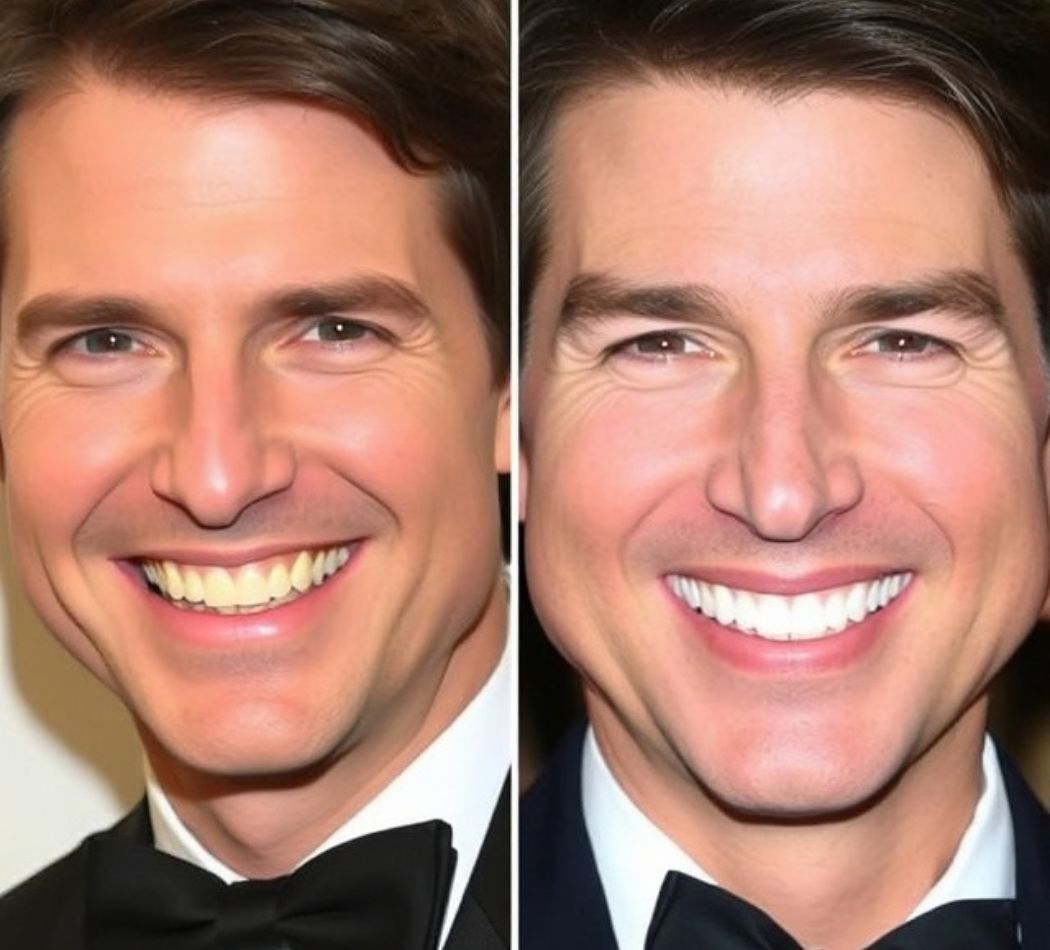
If you have, you’re in good company. Tom Cruise’s teeth have been discussed, dissected, and debated for nearly 40 years. Early in his career, he flashed a charming, slightly imperfect grin that became part of his boy-next-door appeal. Today, his smile is bright, even, and camera-ready.
That journey makes “Tom Cruise teeth” one of the most consistent celebrity dental searches online. It also makes a useful case study. His smile shows how much a person’s teeth can change over decades. It also shows how orthodontics, whitening, and cosmetic dentistry work in the real world, and how much guesswork surrounds celebrity dental work.
In this guide, you’ll learn:
- How Tom Cruise’s teeth looked early in his career and how they changed
- What is confirmed, what is speculation, and why the difference matters
- How braces, whitening, and veneers compare
- Costs, risks, and mistakes to avoid
- What the future of smile design looks like
A quick note on accuracy: Tom Cruise has never published a detailed dental history. Anything about his specific treatments comes from public photos, interviews, and outside commentary, and dentists who haven’t treated him can only speculate. I’ll flag which is which throughout.
Background: The Evolution of Tom Cruise’s Smile
The Early Years: Charm With a Little Crookedness
When Tom Cruise broke out in the early 1980s, in films like Risky Business (1983) and Top Gun (1986), his smile had noticeable character. Fans and commentators often point to slightly crowded or overlapping front teeth, with one canine sitting a bit off-line.
That imperfection did not hurt his career. It arguably helped. In an era before HD video and social media close-ups, a slightly uneven smile read as approachable and human.
The Transformation Years
Through the late 1980s and 1990s, his teeth appeared progressively straighter and brighter. Cruise has been widely reported to have had orthodontic treatment, and photos from his career show a clear alignment shift. Whether that involved braces alone or additional cosmetic work is something he has not spelled out publicly.
The Modern Smile
Today his teeth look uniform, bright, and symmetrical. Cosmetic dentists commenting on social media have often suggested whitening, bonding, or veneers may be involved. That is informed speculation, not confirmation.
Fact vs. Speculation: How to Read Celebrity Dental Claims
This is the angle most articles miss. Before you copy any celebrity smile, learn to judge the claims around it.
| Claim type | Reliability | Example |
|---|---|---|
| Confirmed by the person | High | An interview where they discuss their braces |
| Visible in dated photos | Moderate | Teeth clearly straighter in 1995 than 1985 |
| Dentist commentary (no treatment relationship) | Low to moderate | “That looks like veneers” |
| Tabloid or social media claims | Low | Viral “before and after” posts with unknown dates |
A Simple Framework: The “3-Source Rule”
Before you believe a celebrity dental story, look for three things:
- A dated visual record (photos from clearly different years)
- A direct statement from the person or their representative
- Clinical plausibility (does the change match what the treatment can actually do?)
For Tom Cruise, the first is strong, the second is limited, and the third is reasonable. That is why the honest summary is: his teeth clearly improved over time, likely with orthodontic and cosmetic help, but the exact treatments aren’t publicly confirmed.
How Smiles Like Tom Cruise’s Are Actually Created
Whatever combination he used, the toolkit for a “celebrity smile” is well established. Here are the main options.
1. Orthodontics (Braces and Clear Aligners)
Orthodontics moves your real teeth into better positions. It’s the foundation of most lasting smile improvements.
- Traditional metal or ceramic braces: Effective for complex crowding, bite issues, and rotated teeth.
- Clear aligners (like Invisalign): Discreet and removable, best for mild to moderate cases.
- Adult treatment is common. Teeth can move at any age, provided gums and bone are healthy.
Why it matters: Straightening teeth doesn’t just look better. It can make them easier to clean, which supports long-term gum health.
2. Teeth Whitening
Whitening is the fastest, least invasive step.
- In-office whitening uses professional-strength peroxide, often with light or heat activation.
- Take-home trays from a dentist are slower but gentle and customizable.
- Over-the-counter strips and pastes can help with light surface stains.
Whitening only works on natural enamel. It will not change the color of crowns, fillings, or veneers.
3. Dental Bonding
A tooth-colored resin is sculpted onto the tooth surface to fix chips, gaps, or minor shape issues. It’s affordable and quick, but it stains and wears faster than porcelain.
4. Porcelain Veneers
Veneers are thin shells bonded to the front of teeth. They can change color, shape, size, and minor alignment in one treatment plan.
- Pros: Dramatic and durable results, stain resistant.
- Cons: Usually irreversible, since some enamel is typically removed. They may need eventual replacement.
5. Gum Contouring
A “perfect” smile is also about gums. Reshaping an uneven gum line can make teeth look more proportional.
The Science of Why We Notice Smiles
Why does a celebrity’s smile spark this much conversation? Research and surveys offer clues.
- The American Academy of Cosmetic Dentistry has reported in consumer surveys that the vast majority of adults consider an attractive smile an important social asset.
- Research by Kokich and colleagues in the Journal of Esthetic Dentistry found that dental professionals notice smaller esthetic flaws than the general public does. Laypeople tend to notice bigger issues, such as visible crowding, dark spaces, or a very uneven gum line.
The takeaway: Most people don’t notice small imperfections. Tom Cruise’s early career suggests a slightly imperfect smile can even make someone more likable. Perfection isn’t the only route to attractiveness. Harmony and health matter more.
An Original Angle: The “Character vs. Camera” Trade-Off
Here’s a framework I find useful when thinking about celebrity smiles:
- Character era: Slight irregularities add personality and warmth.
- Camera era: As screens got sharper, close-ups got tighter, and 4K and HD became standard, smiles were held to a higher visual standard.
- Curated era (today): Smile “brands” are managed, polished, and consistent.
Cruise’s teeth moved through all three eras during his career. This isn’t just a Tom Cruise story. It reflects how technology and culture changed what a “normal” smile looks like.
Practical Tips: How to Get a Similar Smile Safely
Not everyone needs Hollywood-level dental work. Here’s a practical roadmap.
Step-by-Step Plan
- Start with a comprehensive dental exam. Treat any cavities, gum disease, or infections first. Cosmetic work on an unhealthy mouth is a recipe for problems.
- Define your goal. Do you want straighter teeth, whiter teeth, or both? Bring photos and be specific.
- Ask about the least invasive option first. Whitening, aligners, or bonding may get you 80% of the way there.
- Get two opinions. Especially for veneers, which can be irreversible.
- Request a preview. Many dentists offer digital smile design or a “mock-up” so you can see the plan before committing.
- Plan for maintenance. Retainers, night guards, and regular cleanings protect your investment.
Daily Habits That Keep Teeth Bright and Healthy
- Brush twice daily with fluoride toothpaste for two minutes.
- Clean between teeth daily with floss or interdental brushes.
- Limit staining drinks like coffee, tea, and red wine, or rinse with water afterward.
- Wear your retainer as directed. Teeth naturally drift back over time.
- Don’t use your teeth as tools. Opening packages or biting nails can chip them.
Ballpark Costs (Vary Widely by Country and Provider)
Prices differ significantly by region, so treat these as rough ranges and get local quotes:
- Professional whitening: typically low to mid hundreds of US dollars
- Bonding: often per-tooth, generally the cheapest restorative option
- Clear aligners or braces: commonly in the low thousands
- Porcelain veneers: often the most expensive, priced per tooth, and can reach five figures for a full smile
Common Mistakes and How to Avoid Them
Mistake 1: Copying a Celebrity Smile Exactly
Your face, lips, gum line, and bite are unique. A smile designed for someone else can look artificial on you.
Solution: Ask your dentist to design for your face, using celebrity photos only as a style reference.
Mistake 2: Choosing Veneers to Fix an Alignment Problem
Veneers can mask mild crookedness, but they don’t fix bite problems or deeper alignment issues.
Solution: Ask whether orthodontics should come first. It’s often the healthier long-term option.
Mistake 3: Going Too White
Ultra-bright teeth can look unnatural, especially in daylight.
Solution: Aim for a shade that fits your skin tone and the whites of your eyes.
Mistake 4: Skipping Retainers
Teeth move. This is why many people who had braces as teens see relapse decades later.
Solution: Wear retainers as prescribed, and ask your orthodontist about long-term retention.
Mistake 5: Choosing on Price Alone
Very cheap cosmetic work can lead to costly corrections.
Solution: Check credentials, reviews, before-and-after cases, and what warranty or follow-up is included.
Pros and Cons: A Balanced Look at “Celebrity Smile” Treatments
Braces and Aligners
- Pros: Preserve natural teeth, improve function, long-lasting when retained
- Cons: Take months to years, require discipline, need retainers afterward
Whitening
- Pros: Fast, affordable, minimal risk when supervised
- Cons: Temporary, possible sensitivity, doesn’t work on restorations
Bonding
- Pros: Affordable, quick, often reversible
- Cons: Can stain or chip, usually shorter lifespan than porcelain
Veneers
- Pros: Dramatic transformation, stain resistant, durable
- Cons: Costly, typically irreversible, eventual replacement, dependent on skilled technique
The Bigger Picture
A polished smile can boost confidence, and that has real value. But there’s a cost. Enamel removal for veneers is permanent, and maintenance is a lifetime commitment. The healthiest approach is “as conservative as possible, as cosmetic as necessary.”
Future Trends: Where Smile Design Is Heading (2026 and Beyond)
I can’t predict specific breakthroughs, but several trends in dentistry are clear and widely discussed.
- Digital smile design: 3D scanning and preview software let you see a simulated result before treatment begins.
- AI-assisted planning: Software is increasingly used to analyze scans and suggest treatment plans. Dentists still make the clinical decisions.
- More conservative veneers: Ultra-thin and minimal-prep options aim to preserve more natural enamel.
- Aligner advances: Materials and planning software continue to improve, expanding which cases aligners can handle.
- Natural-look movement: A shift away from “Chiclet” teeth toward slight variation in shade and shape, which looks more lifelike.
- Preventive focus: Growing emphasis on protecting enamel, gum health, and early intervention rather than only cosmetic fixes.
If the trend toward “natural perfection” continues, the next generation of celebrity smiles may look less uniform and more individual, arguably closer to Tom Cruise’s early charm than to his most polished look.
Conclusion: What Tom Cruise’s Teeth Really Teach Us
Tom Cruise’s teeth tell a bigger story than celebrity gossip. A slightly imperfect smile helped make him relatable. A refined smile later matched his global stardom. And the exact treatments behind it remain private, which is a reminder to be skeptical of confident claims about celebrity dental work.
The real lesson is practical: the best smile is one that’s healthy, harmonious, and right for you.
Key Takeaways
- Tom Cruise’s teeth visibly changed from a slightly crowded early-career smile to a straighter, brighter one.
- Exact treatments are unconfirmed. Braces are widely reported, but veneers and other work are speculation.
- Use the 3-Source Rule (dated photos, direct statements, clinical plausibility) to evaluate celebrity dental claims.
- Start conservative. Whitening, aligners, or bonding may achieve your goal with less permanent change.
- Veneers are typically irreversible. Get a second opinion and a preview.
- Retainers protect your investment. Teeth move for life.
- Avoid copying a celebrity smile exactly. Design for your own face.
- Health first, esthetics second. Treat gum disease and decay before cosmetic work.
Frequently Asked Questions (FAQs)
Did Tom Cruise get braces?
Cruise is widely reported to have had orthodontic treatment, and photos show his teeth becoming more aligned over time. However, he hasn’t publicly detailed his treatment, so specifics like the type or duration are not confirmed.
Does Tom Cruise have veneers?
Some cosmetic dentists have speculated that he does, but there is no public confirmation from Cruise. Comparing photos can’t reliably prove veneers, since whitening, bonding, and orthodontics can produce similar visual results.
Why did Tom Cruise’s teeth look crooked early in his career?
Slight crowding and overlap are very common, and roughly a large share of people have some degree of misalignment. His early films show minor irregularities that many viewers found charming.
How much does it cost to get a smile like Tom Cruise’s?
It depends entirely on what you need. Whitening is typically the cheapest, orthodontics costs more, and a full set of porcelain veneers is usually the most expensive. Costs vary greatly by country and provider, so get written quotes from qualified dentists.
Are veneers better than braces?
Not necessarily. Braces move your natural teeth and can fix bite problems. Veneers change the appearance of teeth and are best for shape, color, and minor alignment. Many good outcomes combine both, with braces first.
How long do veneers last?
Porcelain veneers commonly last about 10 to 15 years or more with good care, though this varies. Composite veneers or bonding generally have a shorter lifespan. Grinding, biting hard objects, and poor hygiene shorten their life.
Can adults get braces or aligners?
Yes. Teeth can move at any age as long as gums and supporting bone are healthy. Adult orthodontics is common and often includes discreet options.
Is teeth whitening safe?
When done correctly, professional whitening is generally considered safe. Some people experience temporary sensitivity. Overuse or unsupervised high-strength products can irritate gums or damage enamel, so follow professional guidance.
Will my teeth move back after braces?
They can, which is why retainers matter. Many orthodontists recommend long-term or nighttime retainer wear.
Can I get a Tom Cruise smile with just whitening?
If your alignment is already good, whitening alone can noticeably improve your smile. If crowding, gaps, or shape issues bother you, you’ll likely need orthodontics or restorative work as well.
Sources and References
This article draws on established dental and public-health resources plus publicly observable career photos. I did not run live searches for this piece, so please verify current details, especially costs and any new public statements, against the sources below.
- American Dental Association (ADA), MouthHealthy.org: guidance on brushing, flossing, whitening, and oral health basics.
- American Association of Orthodontists (AAO): information on braces, aligners, adult orthodontics, and retainers.
- American Academy of Cosmetic Dentistry (AACD): consumer information on cosmetic procedures and smile-related surveys.
- Kokich VO, Kiyak HA, Shapiro PA. “Comparing the perception of dentists and lay people to altered dental esthetics.” Journal of Esthetic Dentistry (1999).
- Mayo Clinic and Cleveland Clinic patient resources: overviews of veneers, bonding, whitening, and orthodontic treatment.
- Publicly available film stills and press photos from Tom Cruise’s career, used for general observation of change over time.
This article is for general education and is not dental or medical advice. Consult a licensed dentist or orthodontist for personal treatment decisions.

Novara Lin
Senior Editor & Clean Beauty Analyst
Novara Lin is a clean beauty researcher and wellness editor dedicated to demystifying modern skincare and evidence-based living. With a background in formulation science and consumer health reporting, she specializes in analyzing complex ingredient profiles, evaluating product safety, and bridging the gap between clinical research and daily self-care routines. Her work focuses on helping readers cut through industry noise to build minimal, highly effective routines rooted in transparency and skin health. When she isn’t testing active formulations or auditing non-toxic household choices, Novara leads editorial strategy for NovaRa Pure.