
We Tested:
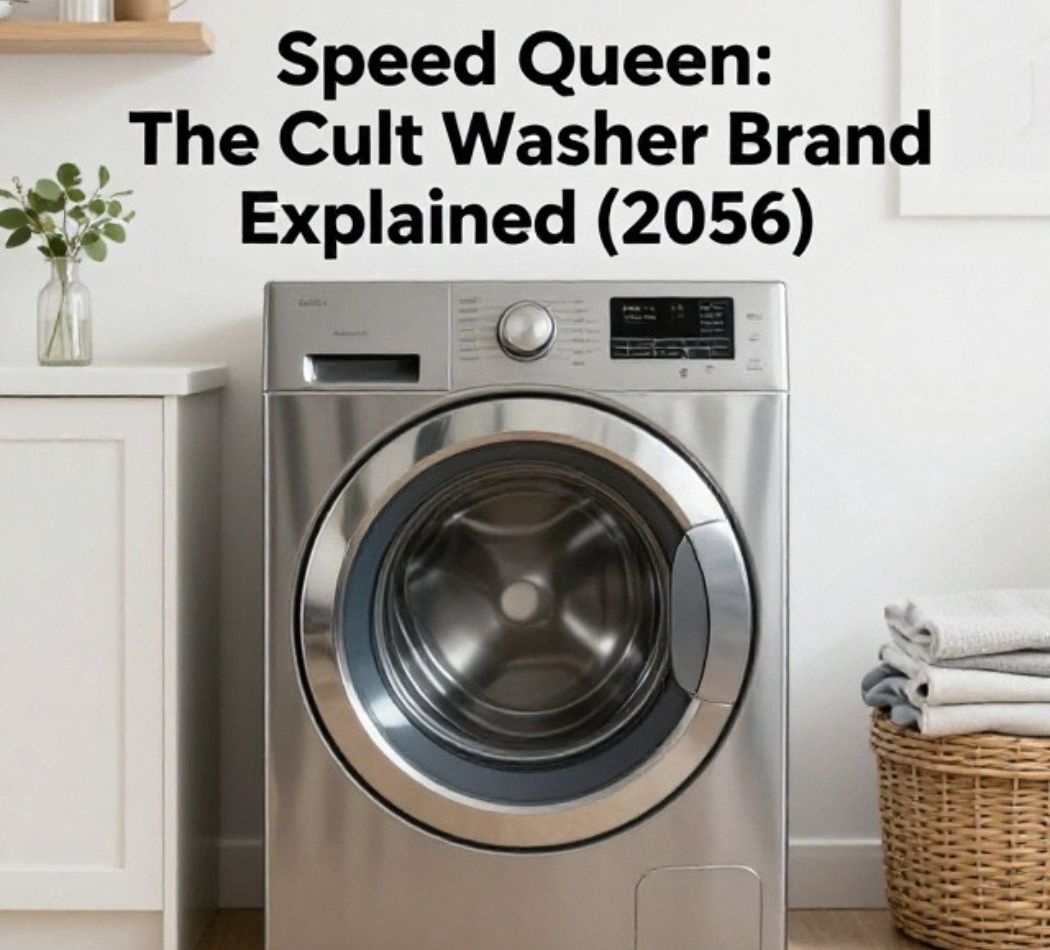
Walk into any independent appliance dealer and ask about washing machines. You’ll get the usual tour of gleaming Samsung and LG models with touchscreens, Wi-Fi connectivity, and enough cycle options to require a manual. Then, tucked in a corner, you’ll see them: plain white boxes with analog dials and a badge that says Speed Queen.
The salesperson’s voice drops slightly. “These are the ones the repair guys buy.”
That sentence—part folklore, part gospel—has turned a small Wisconsin manufacturer into a Reddit darling, a Buy It For Life icon, and arguably the most debated laundry brand in America. Speed Queen doesn’t advertise during the Super Bowl. You won’t find its machines at Home Depot or Lowe’s . Yet in 2026, as consumers grow increasingly frustrated with appliances that die just out of warranty, Speed Queen’s no-frills promise has never been more seductive—or more complicated.
Here’s the uncomfortable truth most articles won’t tell you: Speed Queen is neither the miracle machine its most devoted fans claim nor the overpriced relic its critics dismiss. It’s something far more interesting—a case study in what happens when a commercial-first manufacturer tries to serve homeowners who want reliability without sacrifice.
This deep dive cuts through the cult worship and the contrarian backlash. We’ll examine what Speed Queen actually gets right, where the brand stumbles, and whether the premium price tag makes sense for anyone who isn’t running a laundromat.
Background: From Ripon, Wisconsin to Your Basement
Speed Queen’s story begins in 1908 in Ripon, Wisconsin—a small city about 80 miles northwest of Milwaukee . For over a century, the company built its reputation in laundromats, hotels, hospitals, and military facilities. If you’ve ever hauled a suitcase of quarters to a coin-op laundry, there’s a decent chance you fed a Speed Queen .
That commercial DNA matters. Speed Queen doesn’t design a residential machine and then try to toughen it up. The company builds commercial equipment first, then certifies those same designs for home use . The pitch is straightforward: if a washer can survive years of public abuse, your family’s grass-stained soccer uniforms shouldn’t be a problem.
In 2026, Speed Queen is owned by Alliance Laundry Systems and manufactures its home lineup in the same Ripon facility that’s produced commercial machines for decades . The company claims its residential units are tested to 10,400 cycles—roughly 25 years of use for an average household doing eight loads per week .
The brand’s distribution strategy is equally deliberate. Speed Queen sells exclusively through independent appliance dealers, not big-box chains. This isn’t just snobbery; it’s a service model. Independent dealers can stock parts, service what they sell, and actually understand the product. Big-box retailers, by contrast, often struggle to support niche brands .
But here’s where the story gets messy. Speed Queen’s residential lineup is tiny—just a handful of top-loaders and one front-loader . The machines lack the capacity, features, and sleek styling of mainstream competitors. And in recent years, the brand has faced a quiet but growing chorus of complaints about quality control, customer service, and whether the “25-year” promise is marketing or measurable reality.
The Cult of Speed Queen: Why Repair Techs and Redditors Can’t Stop Talking
The “Built Like a Tank” Reputation
Search Reddit’s r/BuyItForLife for washing machine recommendations. Speed Queen appears in nearly every thread, usually accompanied by phrases like “built like a tank,” “buy once, cry once,” and “my repair guy said it’s the only brand worth buying” .
There’s data behind the anecdotes. According to Yale Appliance—a Boston-area retailer that publishes annual reliability reports—Speed Queen consistently ranks at or near the top for warranty coverage and low service call rates . The brand’s commercial lineage gives it a structural advantage: fewer electronics, simpler controls, and mechanical components designed for heavy-duty cycles.
The machines are also genuinely simple. A Speed Queen top-loader has more in common with a 1990s Maytag than a 2026 Samsung. Analog dials. A lid you can actually lift without waiting for a solenoid. No app. No firmware updates. For a certain kind of buyer—the one who views complexity as a liability rather than a feature—this is the entire appeal .
The Counter-Narrative: Not Everyone Is Sold
Here’s where the cult narrative cracks. Speed Queen’s reputation was built on a specific generation of machines—particularly the legendary AWN series. The current lineup, while still durable, has generated a more polarized response.
A 2026 analysis by Reviewed found that while Speed Queen’s reliability reputation has merit, the brand’s aggressive wash cycles can be “too rough on delicate fabrics” and may prematurely damage fibers . The simplicity that repair techs love can also mean fewer options for gentler cleaning.
More troubling are the scattered but persistent reports of quality control issues. Some users on Walmart’s review platform describe multiple service calls within the first few years, indifferent customer support, and warranty experiences that didn’t match the premium price . A ShopSavvy aggregation for one top-load model (the TR7003WN) noted that while professional reviewers praised build quality, consumer feedback flagged issues including poor cleaning performance on some cycles, lid lock problems, and rust complaints .
The pattern isn’t universal—plenty of Speed Queen owners report years of trouble-free service. But the variance matters. When you pay a 40–60% premium over a comparable mainstream washer, consistency becomes the entire value proposition. A Speed Queen that needs six service calls in five years isn’t just a bad appliance; it’s a betrayal of the brand’s core promise .
What Speed Queen Actually Gets Right (And Where It Stumbles)
The Genuine Wins
Durability where it counts. Speed Queen uses metal components where competitors use plastic. Stainless steel wash tubs, galvanized steel dryer drums, and an Eversmooth transmission with only six moving parts . These aren’t marketing bullet points; they’re engineering decisions that directly affect longevity.
Serviceability. Repair technicians adore Speed Queen because the machines are designed to be fixed, not replaced. Front-accessible components, standard parts, and a design philosophy that treats maintenance as inevitable rather than exceptional . In an era when a failed control board can total a $1,200 washer, this matters.
Warranty coverage. Speed Queen offers a 5-year parts and labor warranty on residential machines—significantly better than the 1-year standard from most competitors . That coverage reflects confidence in the product, even if individual experiences vary.
Spin performance. Speed Queen’s front-load and top-load models deliver extraction speeds that reduce drying time. The commercial-derived suspension systems handle out-of-balance loads without the violent shaking that plagues cheaper machines .
The Legitimate Frustrations
The cleaning paradox. Speed Queen’s wash action is aggressive by design. The same agitation that tackles heavy soil can be unforgiving on delicates, wool, and anything you’d normally wash on a gentle cycle. For households with diverse fabric needs, a Speed Queen alone may not be sufficient—you might need a second, gentler machine or a lot of hand-washing .
The capacity question. Speed Queen’s residential top-loaders have historically lagged behind competitors in drum volume. If you’re washing king-size comforters or laundry for a family of six, the machine’s durability doesn’t compensate for the extra loads required.
Customer service inconsistency. This is the thorniest issue. Speed Queen’s dealer network is a strength when you buy from a good independent retailer. But when something goes wrong, the gap between the brand’s premium promise and the actual support experience can be jarring. Reviews on major retail platforms describe warranty claims that dragged on, unhelpful phone support, and a general sense that the company’s commercial-focused culture doesn’t translate well to residential customer care .
The “25-year” asterisk. The 10,400-cycle claim is based on laboratory testing, not field data from thousands of households. It’s a reasonable proxy for durability, but it’s not a guarantee. A Speed Queen used by a family of two doing four loads a week will likely last far longer than one abused by a home daycare. The number is a useful benchmark, not a warranty .
Speed Queen vs. the World: A Balanced Comparison
| Factor | Speed Queen | Mainstream (LG, Samsung, GE) | Premium Alternative (Miele) |
|---|---|---|---|
| Upfront cost | $1,200–$2,000+ | $700–$1,200 | $2,000–$3,000+ |
| Expected lifespan | 15–25 years (claimed) | 8–12 years | 15–20 years |
| Features | Minimal, analog controls | Extensive, digital, smart | Moderate, European-style |
| Repairability | Excellent | Poor to moderate | Good but parts are expensive |
| Fabric care | Aggressive | Variable | Excellent |
| Warranty | 5 years parts & labor | 1 year typical | 1–2 years typical |
| Where to buy | Independent dealers only | Big-box retailers | Specialty dealers |
The comparison reveals Speed Queen’s niche: it’s not competing on features or fabric care. It’s competing on the proposition that you’ll buy one machine and never think about laundry again. For some buyers, that’s worth every penny. For others—especially those with delicate wardrobes, large families, or a low tolerance for service hassles—the math doesn’t work.
Practical Tips: How to Decide If Speed Queen Is Right for You
Questions to Ask Before Buying
-
How many loads do you actually do per week? If you’re below six, a Speed Queen’s durability advantage is largely theoretical. You’ll likely replace it for aesthetic reasons long before it wears out.
-
Do you have a good independent dealer nearby? Speed Queen’s value proposition collapses if you can’t get competent local service. Check dealer reviews, not just machine reviews.
-
What’s your fabric mix? If your laundry includes workout wear, wool, silk, or anything labeled “gentle cycle,” the Speed Queen top-loader’s aggressive agitation may be a dealbreaker. The front-loader is gentler but adds complexity and cost.
-
Are you optimizing for total cost of ownership or monthly budget? A Speed Queen costs more today. If you keep machines for 15+ years, the math favors Speed Queen. If you upgrade every 7–8 years, a mainstream machine may be the smarter financial choice.
Mistakes to Avoid
-
Buying based on Reddit alone. The r/BuyItForLife hivemind skews toward a specific buyer profile: childless professionals, small households, and people who genuinely enjoy the ritual of appliance maintenance. Your life may not match theirs.
-
Assuming “commercial” means “indestructible.” Commercial machines are designed for high cycle counts, not necessarily for the specific abuses of a household—pet hair, sand, craft glitter, and the occasional forgotten diaper.
-
Ignoring the dryer. Speed Queen’s dryers are equally durable but equally simple. If you want moisture sensing, steam refresh, or smart-home integration, look elsewhere.
-
Expecting premium customer service. The machine is premium. The support infrastructure is not always. Set expectations accordingly.
The Future of Speed Queen: Commercial DNA in a Changing Market
Speed Queen’s path forward is already visible in its 2026 moves. The brand is expanding into residential markets internationally—including a formal push into Thailand’s condo and multi-housing sector—with machines that blend commercial durability with features like Dynamic Balancing Technology for shared-wall living and Pet Plus for animal households . These aren’t the stripped-down boxes of the past; they’re adaptations of commercial platforms for urban residential realities.
On the commercial side, Speed Queen continues to innovate where it’s strongest. The ProCapture lint removal system, which claims up to 96–98% lint capture using cyclone technology, addresses one of laundromat operators’ biggest maintenance headaches . The Quantum Touch control platform offers remote management, multi-language interfaces, and flexible payment options . These are meaningful advances—but they serve business owners, not homeowners.
The bigger question is whether Speed Queen can maintain its residential reputation as it scales. The brand’s cult status was built on a generation of machines that were, by all accounts, nearly bulletproof. The current lineup is more complex, more feature-conscious, and more expensive. If quality control slips or customer service doesn’t match the premium price, the “repair guy’s choice” narrative will erode—one frustrated Reddit post at a time.
There’s also the broader industry trend to consider. Right-to-repair legislation is gaining momentum in several U.S. states, and appliance manufacturers are facing pressure to make machines more serviceable. If mainstream brands improve repairability, Speed Queen’s biggest practical advantage shrinks. The brand’s future may depend less on being the only durable option and more on being the best durable option.
Conclusion: The Verdict on Speed Queen in 2026
Speed Queen is not a miracle. It’s a specialized tool for a specific kind of owner: someone who values longevity over features, simplicity over convenience, and is willing to pay a premium upfront for the chance of not buying another washer for two decades.
For that buyer—the one with a reliable local dealer, a modest household size, and a genuine aversion to disposable appliances—Speed Queen delivers real value. The machines are well-built, the warranty is generous, and the design philosophy is refreshingly honest.
For everyone else, the calculus is murkier. If you have a large family, a delicate-heavy wardrobe, or a low tolerance for service hassles, the Speed Queen mystique may not survive contact with your actual laundry routine.
The most honest thing anyone can say about Speed Queen in 2026 is this: it’s a brand that earned its reputation, but reputation alone won’t do your laundry. Do the math on your own habits, your local support network, and your tolerance for compromise. The answer will be clearer than any Reddit thread.
Key Takeaways
-
Speed Queen’s core strength is durability, not features. Fewer electronics and metal components mean longer life—but also fewer conveniences.
-
The “25-year” claim is a testing benchmark, not a guarantee. Real-world lifespan varies with usage, care, and luck.
-
Service quality depends heavily on your local dealer. The best machine in the world is a headache if you can’t get it fixed.
-
Aggressive wash action is a double-edged sword. Great for heavy soil, risky for delicates and technical fabrics.
-
The premium is real. Expect to pay 40–60% more than a comparable mainstream machine. The breakeven point is roughly 10–12 years of ownership.
-
Customer service inconsistency is the brand’s biggest vulnerability. The machine is premium; the support experience sometimes isn’t.
Frequently Asked Questions
Q: Is Speed Queen really worth the extra money?
A: It depends on your time horizon. If you keep appliances for 15+ years and have a good local dealer, the total cost of ownership can be lower than buying two mainstream machines. If you move frequently or upgrade every 7–8 years, the premium is harder to justify.
Q: Why can’t I buy Speed Queen at Home Depot or Lowe’s?
A: Speed Queen sells exclusively through independent dealers. The company says this ensures knowledgeable sales and service support. It also means you won’t find the brand during big-box sales events .
Q: Are Speed Queen washers good for delicates?
A: The top-loaders are known for aggressive agitation that can be rough on delicates. The front-loader is gentler but still not as fabric-friendly as a Miele or dedicated gentle cycle on a mainstream machine. If delicates are a significant part of your laundry, consider a different brand or plan to hand-wash .
Q: How long do Speed Queen machines actually last?
A: Speed Queen claims 25 years based on 10,400 cycles. Independent data supports above-average reliability, but real-world reports vary. Some owners report 15+ years without issues; others describe problems within 5–8 years. The average is likely somewhere in between .
Q: Does Speed Queen make a front-load washer?
A: Yes, but the lineup is limited—essentially one model with minor variations. The front-loader offers gentler fabric care and higher spin speeds but adds complexity compared to the top-loaders .
Q: What’s the warranty on Speed Queen residential machines?
A: Speed Queen offers a 5-year parts and labor warranty on residential washers and dryers—significantly better than the 1-year standard from most competitors .
Q: Is Speed Queen good for pet owners?
A: Speed Queen has introduced Pet Plus technology on some newer models, designed to handle pet hair. The machines’ aggressive wash action is generally effective at removing embedded hair, though the dryer’s lint filter will still do most of the heavy lifting .
Sources
-
Speed Queen Home (New Zealand) – Official brand information on durability testing, warranty, and commercial-first design philosophy
-
Reviewed.com – “Are Speed Queen washers good?” (2026) – Independent analysis of reliability data, market position, and trade-offs
-
Yahoo Shopping – “Fed up with $2,000 machines that die in years, buyers say one no-frills washer still rules in 2026” – Consumer sentiment and Reddit analysis
-
Speed Queen Commercial – Official commercial product information and ProCapture specifications
-
Speed Queen (Vietnam) – “The Speed Queen Difference” – Brand history and manufacturing details
-
Walmart Customer Reviews – User-reported experiences with Speed Queen combination washer/dryer
-
ShopSavvy – Aggregated reviews for Speed Queen TR7003WN and electric dryer models
-
Appliances Online Commercial (Australia) – Speed Queen product catalogue with cycle testing data
-
Siamrath / Prachachat (Thailand) – Coverage of Speed Queen’s 2026 residential market expansion in Southeast Asia
-
Speed Queen Commercial – Military and federal laundry equipment specifications
-
Alliance Distribution – Laundromat product and management platform information

Novara Lin
Senior Editor & Clean Beauty Analyst
Novara Lin is a clean beauty researcher and wellness editor dedicated to demystifying modern skincare and evidence-based living. With a background in formulation science and consumer health reporting, she specializes in analyzing complex ingredient profiles, evaluating product safety, and bridging the gap between clinical research and daily self-care routines. Her work focuses on helping readers cut through industry noise to build minimal, highly effective routines rooted in transparency and skin health. When she isn’t testing active formulations or auditing non-toxic household choices, Novara leads editorial strategy for NovaRa Pure.