
We Tested:
Last month, a friend hosted a birthday dinner. She spent three hours roasting vegetables, grilling chicken, and making a from-scratch vinaigrette. One guest—a self-proclaimed “clean eater”—pushed her plate aside and asked for plain steamed broccoli instead. “I don’t do oil,” she explained. “It’s processed.”
The room went quiet. The host looked like she’d been slapped. And I realized something important: clean eating has a public relations problem.
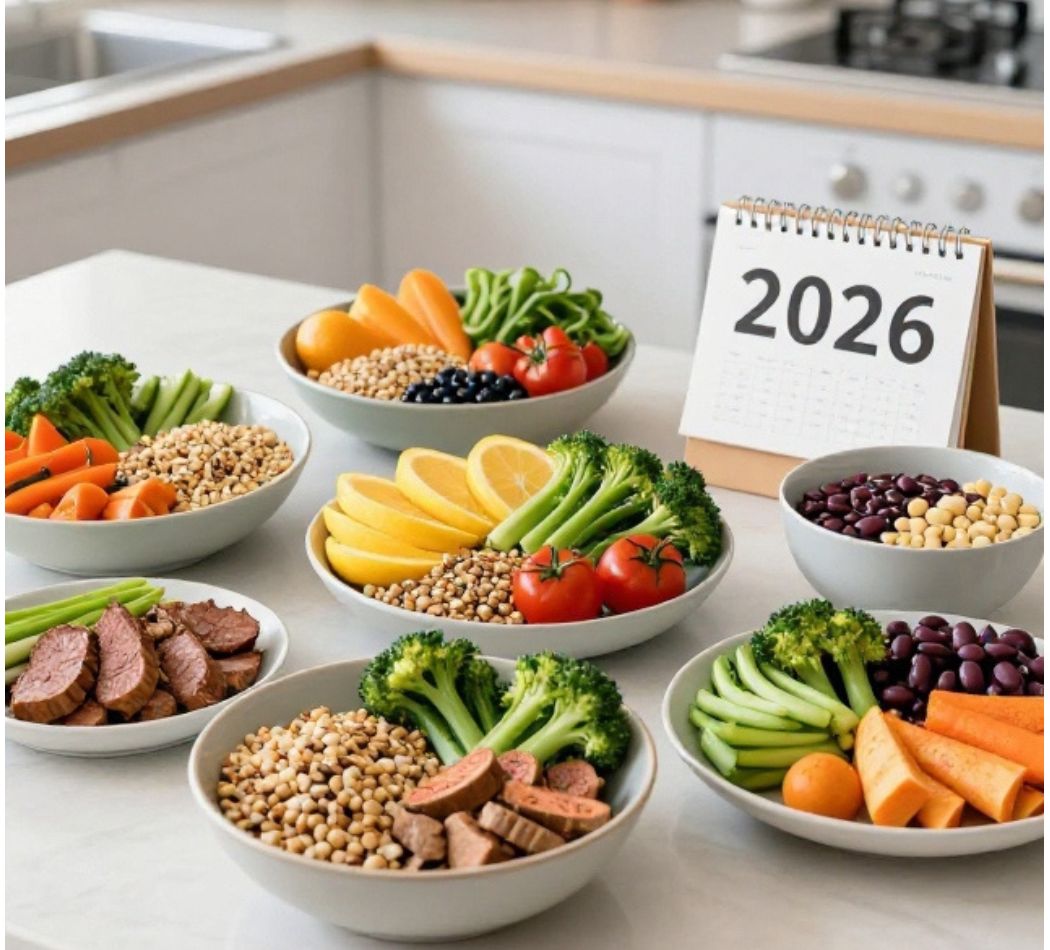
On one hand, the movement is more popular than ever. In 2026, clean eating officially became the number one diet trend, outpacing plant-based, anti-inflammatory, and even intermittent fasting. Over a quarter of global consumers now actively limit processed foods. The new Dietary Guidelines for Americans even tell us to prioritize “real food”.
On the other hand, the term has become a vehicle for moralizing, fear-mongering, and—in its most extreme form—a fast track to disordered eating. Nutritionists call it a “marketing mirage”. Clinicians warn about orthorexia.
So which is it? Is clean eating the key to vibrant health, or a wellness trap dressed up in kale?
The answer is: it depends entirely on how you define it. And that’s exactly what this guide is going to unpack. By the end, you’ll have a flexible, science-respecting framework for eating cleaner—one that improves your health and lets you enjoy your friend’s birthday dinner.
Background: How “Clean” Became the Most Loaded Word in Nutrition
From Gwyneth to Grocery Aisles
The modern clean eating movement didn’t start in a lab. It started on red carpets. Celebrities like Gwyneth Paltrow and Alicia Silverstone popularized the idea of eating “pure” foods in the early 2010s. Blogs multiplied. Instagram feeds filled with mason jars and avocado toast. “Clean” became a synonym for virtuous, disciplined, and—crucially—better than you.
By 2026, the trend has moved from fringe to mainstream. Euromonitor reports that 27% of global consumers now limit processed foods, with the top three ingredient preferences being “no added sugar” (34%), “free from preservatives” (29%), and “all-natural” (28%). Food manufacturers have responded with clean-label products, shorter ingredient lists, and marketing that leans hard into nostalgia and simplicity.
The Definition Problem (And Why It Matters)
Here’s the uncomfortable truth: there is no official medical definition of clean eating. Zero. The FDA doesn’t regulate the term. The USDA doesn’t define it. The American Heart Association doesn’t use it in its official guidance.
This vacuum has been filled by whoever shouts loudest—usually wellness influencers with affiliate links to supplement brands.
Registered dietitian Ashley Kiser puts it plainly: “Clean eating has no official medical definition. So, when I’m having a discussion about clean eating, I try to understand how the individual defines the term”.
Because the definition is so elastic, clean eating can mean:
-
Prioritizing whole foods and cooking at home (good).
-
Avoiding artificial preservatives and added sugars (reasonable).
-
Eliminating entire food groups, refusing to eat food prepared by others, and feeling moral superiority about your choices (problematic).
The word “clean” itself is linguistically loaded. It implies its opposite: dirty. And when you attach morality to food, you attach morality to the people who eat it. That’s where things get dark.
The Real Science: What Actually Works (And What’s Just Marketing)
The UPF Problem: The Genuine Kernel of Truth
If there’s one scientific finding that gives clean eating its credibility, it’s this: ultra-processed foods (UPFs) are associated with worse health outcomes.
A growing body of research links high UPF consumption to weight gain, hypertension, and elevated inflammation. One study of 55 adults found that people eating a minimally processed diet for eight weeks lost twice as much weight as those eating mostly ultra-processed foods—even when the menus were matched for nutrients like sugar, fat, and sodium.
The NOVA classification system, which groups foods by processing level rather than nutrient content, has become a flashpoint in nutrition science. And for good reason: it captures something that traditional nutrient-focused advice misses. A granola bar with “natural flavors” and a chicken breast have very different metabolic effects, even if the label math looks similar.
But Here’s Where the Logic Breaks
A landmark 2024 study from the USDA and University of Minnesota dropped a quiet bomb on the clean eating narrative. Researchers created two menus: one based on ultra-processed foods (67% of calories) and one based on “less-processed” whole ingredients (only 20% of calories from UPFs). Both menus were designed to be nutrient-poor—the kind of diet that meets calorie needs but fails nutritional ones.
The result? The two menus had nearly identical diet quality scores (Healthy Eating Index of 44 vs. 43). The less-processed menu was also more expensive ($15.91/day vs. $9.85/day) and had a shorter shelf life (35 days vs. 120 days).
In other words: processing level alone does not determine nutritional quality. You can eat a “clean” diet of white rice, butter, and well-cooked vegetables that’s nutritionally mediocre. You can also eat a diet including canned beans, frozen spinach, and pasteurized yogurt—all processed—that’s genuinely healthy.
The Mediterranean Diet Doesn’t Call Itself Clean
Here’s the irony: the dietary pattern with the strongest evidence base for health—the Mediterranean diet—isn’t “clean.” It includes bread, olive oil that’s been pressed and bottled, cheese, and wine.
The American Heart Association’s guidance doesn’t mention “clean” once. It talks about eating patterns: plenty of vegetables, fruits, whole grains, lean proteins, nuts, and seeds, while limiting sodium, sugary drinks, and processed meats.
The AHA explicitly debunks several clean eating myths:
-
Myth: Only fresh produce is healthy. Fact: Frozen, canned, and dried produce count.
-
Myth: All processed foods are bad. Fact: Baby carrots, whole-grain bread, plain yogurt, and chopped nuts are all processed—and nutritious.
-
Myth: “Natural” on a label means something. Fact: The FDA has no official definition for “natural”.
The Dark Side: When Clean Eating Becomes a Cage
Orthorexia: The Eating Disorder Hiding in Plain Sight
In 2026, the wellness industry has a shadow problem. It’s called orthorexia nervosa—an obsession with “healthy” eating that becomes physically and socially damaging. It’s not an official diagnosis in the DSM-5, but clinicians are seeing it more and more.
The Centre for Clinical Interventions in Western Australia lists warning signs that should make anyone pause :
-
Cutting out entire food groups without medical reason.
-
Feeling guilty after eating “bad” foods, or pride after “clean” ones.
-
Being unable to eat a meal prepared by someone else.
-
Avoiding social events that involve food.
-
Spending excessive time planning, researching, or thinking about food.
Sound familiar? That’s because these behaviors are frequently celebrated in wellness spaces. The person who brings their own tupperware to a restaurant isn’t seen as struggling—they’re seen as disciplined.
“The term clean eating is inherently problematic because it implies that the alternative way of eating is ‘dirty’ and attaches morality to food,” says dietitian Lydon. “Orthorexia can quickly shape-shift to anorexia nervosa.”
The Social Cost: Eating Alone
One of the most under-discussed consequences of extreme clean eating is isolation. Food is not just fuel. It’s how we connect with family, celebrate milestones, and show love. When someone can’t eat the food their grandmother made, or refuses to split a dessert on a date, the damage goes beyond nutrition.
Kiser emphasizes this: “Food isn’t just about nutrition. It is also a social experience. A healthy approach to food should support both physical health and quality of life”.
A Better Framework: The “Flexible Clean” Approach
So how do you capture the genuine benefits of clean eating—more whole foods, less junk, better cooking habits—without falling into the orthorexia trap or wasting money on $12 cold-pressed juice?
Here’s the framework I use with clients and in my own kitchen. I call it Flexible Clean:
Principle 1: Focus on Addition, Not Subtraction
Most clean eating advice starts with a list of forbidden foods. That’s backward. Research on behavior change consistently shows that adding habits is easier and more sustainable than removing them.
Instead of asking, “Is this clean?” ask, “What can I add to this meal to make it more nourishing?” Add a handful of spinach to your pasta. Add a can of beans to your soup. Add a piece of fruit to your breakfast. These small additions crowd out the less nutritious stuff naturally, without the deprivation mindset.
Principle 2: Judge Processing by Purpose, Not Presence
Not all processing is equal. The NOVA system is useful as a rough guide, but it collapses under scrutiny in real life. Here’s a more practical filter:
Less concerning processing:
-
Freezing vegetables at peak freshness.
-
Canning beans in water.
-
Pasteurizing milk.
-
Milling whole grains into flour.
-
Fermenting yogurt or sauerkraut.
More concerning processing:
-
Adding large amounts of sugar, sodium, or saturated fat for palatability.
-
Creating products designed to be hyper-palatable and difficult to stop eating (think: chips, cookies, certain cereals).
-
Using additives to simulate flavors or textures that don’t exist in the original food.
The question isn’t “Was this processed?” but “What was the purpose of the processing, and what was added? ”
Principle 3: Cook More Than You Order
The single most reliable “clean eating” habit isn’t avoiding gluten or buying organic. It’s cooking at home more often. When you cook, you control the salt, the oil, the sugar, and the portion size. You also—and this is the part most articles miss—connect with your food in a way that makes you appreciate it more.
The AHA recommends preparing food at home to control what’s added, and using healthier cooking methods like grilling, braising, roasting, and sautéing. That’s clean eating without the label.
Principle 4: Make Room for “Dirty” Food
This is non-negotiable. A truly healthy diet includes foods that serve pleasure, connection, and celebration—not just nutrition. Birthday cake. Grandma’s lasagna. A glass of wine on a Friday night.
The research on restrictive diets is brutally consistent: the more you forbid foods, the more you obsess over them. The more you obsess, the more likely you are to binge. And the cycle repeats.
The goal isn’t to eat “clean” 100% of the time. It’s to build a pattern where nourishing foods are the default and pleasurable foods are the exception—without guilt, anxiety, or moral judgment.
Practical Tips: How to Eat Cleaner Starting Today (Without Being Insufferable)
1. Build a “Clean-ish” Pantry
You don’t need to shop at a farmers’ market and spend $200 on supplements. Start with affordable, minimally processed staples that make cooking easier:
-
Canned beans and lentils (rinse them to reduce sodium by up to 40%).
-
Frozen vegetables (frozen at peak freshness, often more nutritious than “fresh” produce that’s traveled for days).
-
Plain yogurt (buy the big tub, add your own fruit and honey).
-
Whole-grain bread (look for “whole wheat” as the first ingredient, not “enriched wheat flour”).
-
Frozen fish and chicken (thaw, season, cook—faster than takeout).
-
Nuts and seeds (unsalted, in bulk).
2. Master Three “Clean” Meals
You don’t need 50 recipes. You need three go-to meals that are fast, cheap, and made mostly from whole ingredients. For me, it’s:
-
Sheet-pan chicken and vegetables (toss with olive oil, salt, pepper, roast at 425°F for 25 minutes).
-
Bean and grain bowl (canned beans, cooked quinoa or rice, whatever vegetables are in the fridge, lemon-tahini dressing).
-
Egg scramble (eggs, frozen spinach, canned tomatoes, a little cheese).
Once these are automatic, you’ve eliminated the “I don’t know what to cook” excuse that sends most people to the drive-thru.
3. Read the First Three Ingredients
You don’t need a degree in food science. A simple rule: if the first three ingredients include added sugar, refined flour, or a long list of things you can’t pronounce, it’s probably not a staple. If they’re whole foods or simple derivatives (oats, olive oil, tomatoes, salt), you’re fine.
4. Stop Paying for the Label
“Clean” and “natural” are marketing terms with no legal definition. “Organic” has stricter standards, but it’s not automatically more nutritious. A 2024 study found that less-processed menus cost 60% more than more-processed ones with the same nutritional quality. Don’t assume that spending more means eating better.
5. Do a Social Check
Ask yourself honestly: Has my eating style made me more isolated? Do I decline dinner invitations because I’m worried about the menu? Do I judge friends for what’s on their plate? If the answer is yes, it’s time to loosen the rules. Health that costs you your relationships isn’t health. It’s a cage.
Common Mistakes (And How to Fix Them)
Mistake 1: Equating “Clean” with “Healthy”
A product can be organic, non-GMO, preservative-free, and still be a nutritional disaster (looking at you, “clean” cookies made with coconut sugar and almond flour). Processing level is one dimension of health. Nutrient density is another. You need both.
Fix: Ask two questions: “What’s in this?” and “What does it do for my body?” A food can pass the first test and fail the second.
Mistake 2: Going All-In Overnight
The most common failure mode in clean eating is overhauling everything at once. You throw out the chips, buy a juicer, and commit to kale salads for every meal. By Wednesday, you’re face-down in a bag of Doritos, feeling like a failure.
Fix: Change one meal at a time. Start with breakfast. Once that’s stable, move to lunch. Sustainability beats intensity.
Mistake 3: Ignoring the Cost
Clean eating has a class problem. Fresh produce, organic meat, and specialty health foods are expensive. A 2024 study found that less-processed menus cost **$15.91 per person per day** compared to $9.85 for more-processed menus. That’s a $2,200 difference per year for a family of four.
Fix: Frozen vegetables, canned beans, eggs, oats, and seasonal produce are all affordable and “clean” by any reasonable definition. You don’t need grass-fed beef and goji berries to eat well.
Mistake 4: Forgetting That You’re a Person, Not a Label
The moment you start identifying as a “clean eater,” you’ve given a dietary pattern power over your identity. That’s dangerous. Foods are not moral. You are not virtuous for eating a salad, and you are not sinful for eating a cupcake.
Fix: Use the word “mostly” more.
Pros, Cons, and a Balanced Verdict
| Pros | Cons |
|---|---|
| Encourages more whole foods (vegetables, fruits, whole grains) | “Clean” has no official definition—easy to manipulate |
| Reduces reliance on ultra-processed foods linked to poor health | Can lead to orthorexia and disordered eating patterns |
| Promotes cooking at home and awareness of ingredients | Often more expensive than balanced, processed-inclusive diets |
| Flexible versions align with Mediterranean and DASH patterns | Moralistic language (“clean” vs. “dirty”) creates shame |
| May support weight management and blood pressure | Can isolate people from social eating experiences |
The verdict: Clean eating is neither a miracle nor a menace. It’s a tool. Used thoughtfully, it nudges you toward more nutrient-dense foods and fewer hyper-palatable ones. Used rigidly, it becomes a source of anxiety and a barrier to living a full life.
The healthiest version of clean eating isn’t about perfection. It’s about direction, not destination. Are you moving toward more vegetables, more home cooking, more awareness? Good. Keep going. Are you moving toward more rules, more guilt, more isolation? Stop. Recalibrate.
Future Trends: What’s Next for Clean Eating?
1. The GLP-1 Effect
The rise of GLP-1 medications (Ozempic, Wegovy) is reshaping the clean eating landscape. People on these drugs eat less overall, which means every bite matters more. Expect to see clean-label products marketed specifically for GLP-1 users—smaller portions, higher protein, nutrient-dense formulations.
2. UPF Regulation on the Horizon
As evidence against ultra-processed foods accumulates, regulators are paying attention. The 2026 Dietary Guidelines’ emphasis on “real food” is a signal. We may see labeling requirements that distinguish between processing levels, similar to how front-of-pack warning labels have rolled out in Chile and Mexico.
3. The “Flexible” Backlash
Expect a counter-trend: influencers and dietitians pushing back against rigid clean eating with messaging around food freedom, intuitive eating, and gentle nutrition. The pendulum is already swinging. The brands that win will be the ones that can position themselves as both “clean” and “flexible.”
4. Fresh Food as Premium
Euromonitor notes that fresh food producers are positioning their products as luxurious, healthy, and unique, moving away from the commodity image. Clean eating has enabled segmentation—heirloom tomatoes, single-origin olive oil, specialty cuts of meat—that command premium prices. The class divide in “clean” food will likely widen.
Conclusion: Eat Clean, Live Messy
Here’s what I want you to take away from this guide. Clean eating is not a religion. It isn’t a personality trait, and it isn’t a way to prove you’re better than the friend who ordered the fries.
It’s a direction of travel. A set of gentle nudges toward food that nourishes your body, respects your budget, and fits into a life that includes dinner parties, birthday cake, and the occasional late-night bowl of cereal.
Key Takeaways
-
“Clean” has no official definition. Define it for yourself—but keep the definition flexible.
-
Processing level is one measure of health, not the only one. Nutrient density matters just as much.
-
Ultra-processed foods are linked to worse outcomes, but “less processed” doesn’t automatically mean “healthy” (or affordable).
-
Watch for orthorexia warning signs: guilt, social isolation, rigid rules, obsession.
-
Cook at home more. It’s the single most reliable “clean” habit.
-
Canned and frozen foods count. They’re affordable, nutritious, and convenient.
-
Include pleasure foods regularly. Restriction breeds obsession.
-
If it makes you anxious, it’s not healthy—even if it’s organic.
FAQs
Q: Is clean eating the same as the Mediterranean diet?
Not exactly. The Mediterranean diet has a specific evidence base and allows for processed foods like bread, cheese, and olive oil. Clean eating is a broader cultural trend with no single definition. However, a flexible clean eating approach often overlaps with Mediterranean principles.
Q: Do I have to give up all processed foods?
No. “Processed” includes frozen vegetables, canned beans, yogurt, and whole-grain bread—all nutritious. Focus on limiting ultra-processed foods high in added sugar, sodium, and saturated fat.
Q: Is clean eating good for weight loss?
It can be, if it leads to eating more vegetables and fewer hyper-palatable foods. But rigid clean eating isn’t necessary for weight loss, and the stress of restriction can backfire. The study linking less-processed diets to weight loss also showed lower blood pressure—but the key was overall diet quality, not the “clean” label.
Q: How do I eat clean on a budget?
Prioritize frozen vegetables, canned beans, eggs, oats, seasonal produce, and whole grains. Rinse canned beans to reduce sodium. Buy plain yogurt and add your own fruit. Skip specialty “wellness” products.
Q: When does clean eating become unhealthy?
When it causes guilt, anxiety, social withdrawal, or nutritional deficiencies. If you find yourself unable to eat food prepared by others, avoiding social events, or feeling morally superior about your choices, it’s time to reassess.
Q: What’s the difference between clean eating and orthorexia?
Clean eating is a dietary pattern. Orthorexia is a psychological obsession with that pattern. The behaviors overlap; the difference is flexibility and distress. A flexible clean eater can enjoy a restaurant meal. Someone with orthorexia cannot.
Sources
-
American Heart Association. “What is clean eating?” (2024).
-
Everyday Health. “Clean Eating: What Does It Really Mean?” (January 2026).
-
NutraIngredients. “The 7 nutrition trends redefining food and drink” (April 2026).
-
USDA/University of Minnesota. “Using Less Processed Food to Mimic a Standard American Diet…” Current Developments in Nutrition (November 2024).
-
American Heart Association. “How Do I Follow a Healthy Diet Pattern?”
-
Centre for Clinical Interventions (Western Australia). “‘Clean Eating’: When ‘Healthy’ Eating Becomes Unhealthy.”
-
Euromonitor International. “Top Five Trends in Fresh Food” (January 2026).
-
WellTuned by BCBST. “What does ‘clean eating’ mean?” (September 2026).
-
Business Wire / Euromonitor. “Processed Foods Lose Favour as Clean Eating Reshapes Global Diets” (November 2025).
-
MDLinx. “Common ‘healthy’ diet trend risks becoming harmful, expert warns” (June 2026).

Novara Lin
Senior Editor & Clean Beauty Analyst
Novara Lin is a clean beauty researcher and wellness editor dedicated to demystifying modern skincare and evidence-based living. With a background in formulation science and consumer health reporting, she specializes in analyzing complex ingredient profiles, evaluating product safety, and bridging the gap between clinical research and daily self-care routines. Her work focuses on helping readers cut through industry noise to build minimal, highly effective routines rooted in transparency and skin health. When she isn’t testing active formulations or auditing non-toxic household choices, Novara leads editorial strategy for NovaRa Pure.