
We Tested:
Maine has a secret. According to recent Pew Research data, 4 percent of Mainers identified as Pagan or Wiccan in a 2023–24 survey—the highest proportion of any U.S. state, and double the figure from just a decade earlier. That is not a typo. In one of the most rural, independent-minded corners of America, an earth-based spirituality rooted in pre-Christian traditions has quietly become a demographic reality.
But Maine is not an anomaly so much as a preview. Across the United States and Europe, modern Paganism is shedding its reputation as a fringe curiosity and entering the mainstream spiritual marketplace. The reasons are layered: declining trust in institutional religion, a hunger for direct spiritual experience, feminist and environmentalist currents, and—perhaps most powerfully—the internet.
If you have ever felt drawn to the moon cycles, felt more reverent in a forest than in a pew, or wondered why “pagan” is used as both an insult and a badge of honor, you are in the right place. This is not a conversion pitch. It is a clear-eyed, research-grounded guide to what modern Paganism actually is, what it is not, and how to navigate it intelligently in 2026.
Background: What “Pagan” Really Means (And Why It’s Confusing)
The word “pagan” comes from the Latin paganus, meaning “country-dweller” . When Christianity became the dominant religion of the late Roman Empire, the term was repurposed to label those who had not joined the “army of God”—a slightly condescending way of saying those rural folks who haven’t gotten with the program. For centuries afterward, “pagan” functioned mostly as a Christian polemical category: anyone who was not Christian, Muslim, or Jewish.
In the mid-twentieth century, something unexpected happened. People began reclaiming the label. The Cambridge scholar Olav Hammer notes that modern Paganism (often called Neopaganism) is an umbrella term for movements that “strive to revive, reinterpret, and experiment with pre-Christian polytheistic religions,” usually those of Europe, the Near East, and North Africa. Crucially, Hammer emphasizes that it is more accurate to speak of Paganisms in the plural—there is no single Pagan church, no unified creed, and no central authority.
This lack of dogma is not a bug. It is the defining feature. As sociologist Helen Berger told The Maine Monitor in 2026, “This is a non-dogmatic religion. It’s a religion of practice; it’s a religion that you get to do your own thing”. That sentence explains both Paganism’s appeal and its chaos.
The Major Paths: A Field Guide for the Curious
If you ask ten Pagans what they believe, you will get twelve answers. But most contemporary practice clusters into a few recognizable streams. Here is what actually matters for someone trying to understand the landscape.
Wicca: The Gateway (and Sometimes the Gatekeeper)
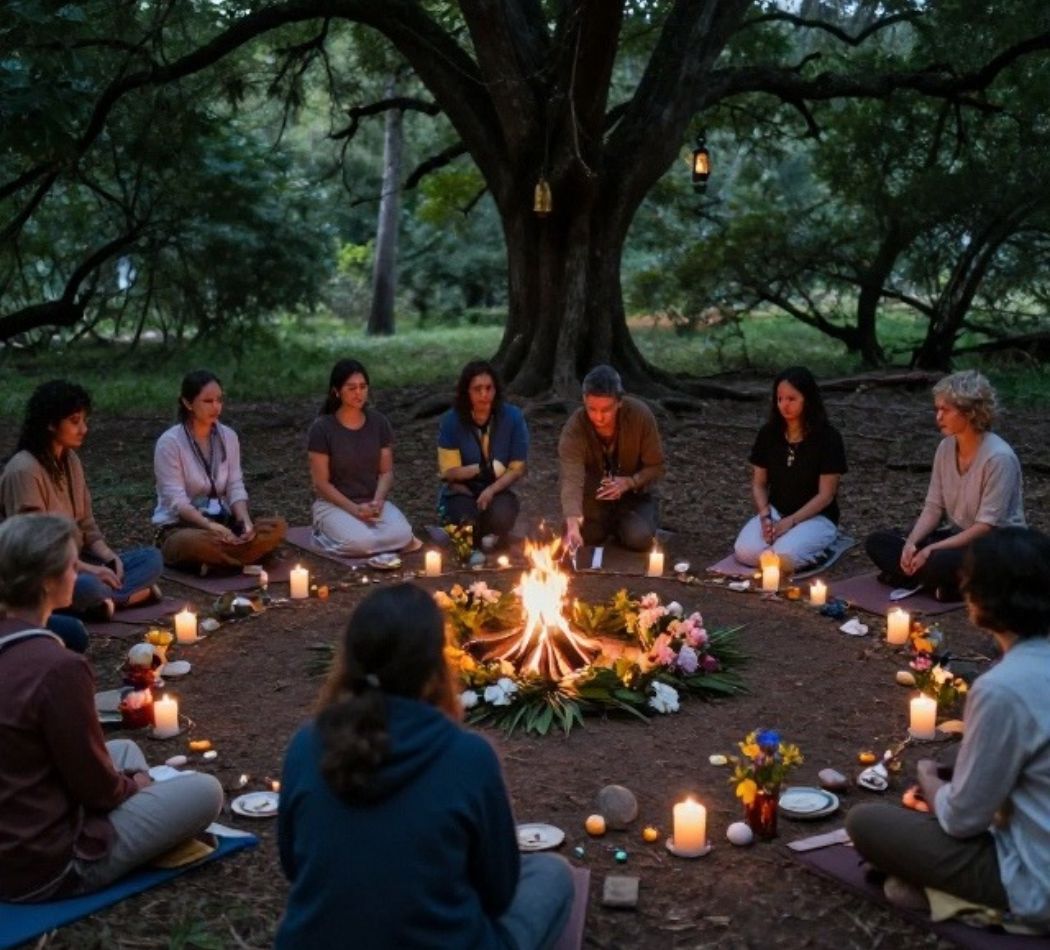
Wicca is the tradition most people picture when they hear “pagan.” It emerged in mid-twentieth-century Britain, largely through the efforts of Gerald Gardner, a retired civil servant who claimed to have been initiated into a surviving witch coven. Whether or not Gardner’s origin story holds up historically—and most scholars doubt it does—Wicca became the template for modern Pagan practice: a Goddess and a God, a ritual circle, the celebration of eight seasonal festivals (the Wheel of the Year), and an emphasis on magic as a natural, ethical practice.
Wicca remains the most visible entry point, but it is no longer the only one. Many Wiccans today practice solo rather than in covens, and the tradition has diversified into Gardnerian, Alexandrian, eclectic, and other lines.
Druidry: Nature as Priesthood
Druidry draws inspiration from the priestly class of ancient Celtic societies, though modern Druidry is far more a creative reconstruction than a continuous lineage. Contemporary Druids—like Paul Ridlon, the Norse Druid mentioned in the Maine reporting—often focus on environmental reverence, community ritual, and what one Druid College describes as training “priests of nature”. If Wicca is the most magical path, Druidry is often the most ecological.
Heathenry (Asatru): The Northern Tradition
Heathenry revives the pre-Christian religions of Germanic and Scandinavian peoples. It is explicitly polytheistic, honoring gods like Thor, Odin, and Freyja, along with ancestors and land spirits. Heathenry has a reputation for being more reconstructionist and historically minded than Wicca—some Heathens care deeply about primary sources and archaeological accuracy. It also has a complicated subculture problem: a minority of Heathen groups have aligned with ethno-nationalist ideologies, a tension the broader community has been actively confronting for years.
Eclectic and Solitary Practice: The Silent Majority
Here is the statistic that most articles miss: the majority of modern Pagans today practice alone. Berger notes that since the 1990s and the rise of the internet, solitary practitioners have become the norm, not the exception. Eclectic Pagans blend elements from multiple traditions—a bit of Wiccan ritual structure, some Norse deity work, a dash of folk magic—without belonging to any formal lineage. This is the face of Paganism in 2026: private, personalized, and algorithmically discoverable.
Why Is Paganism Growing Now? Three Forces Nobody Talks About Enough
1. The Feminism-to-Environmentalism Pipeline
The second-wave feminist movement of the 1960s and 1970s gave many women a vocabulary for spirituality centered on the feminine divine—the Goddess, the earth as sacred mother, the body as a site of power. That energy did not disappear. It evolved. Contemporary Paganism attracts people who care about environmental collapse, bodily autonomy, and anti-authoritarianism, because its theology is immanent: divinity is in the world, not above it. If the earth is sacred, then how you treat the earth is a spiritual issue. That logic resonates in 2026 more than ever.
2. The TikTok Witch and the Death of Gatekeeping
Berger and other researchers point to social media as a major accelerant. “Videos of witches on TikTok and other social media platforms have driven interest in Pagan practices,” The Maine Monitor reported, “and those trends are also helping to destigmatize the beliefs” . The old model of Paganism—find a coven, undergo initiation, learn slowly—has been replaced by a model where a seventeen-year-old can learn more about moon phases and crystal grids in an afternoon of scrolling than a 1990s seeker could find in a year of library visits.
This democratization is genuinely powerful. It is also genuinely messy, which we will address shortly.
3. The Spiritual But Not Religious Pipeline
The “nones”—people with no religious affiliation—are the fastest-growing religious demographic in the West. But many of them are not atheists. They are spiritually hungry but institutionally allergic. Paganism offers ritual without hierarchy, transcendence without doctrine, and community without a membership covenant. As one Vermont practitioner put it, “It’s considered a spirituality, rather than an institutional religion. There’s no church, mosque, temple, synagogue to attain. It’s much more open to your own interpretation”.
Practical Tips: How to Start Without Making a Fool of Yourself
If you are curious about Pagan practice, here is the advice that experienced practitioners wish someone had given them.
Start with observation, not acquisition. You do not need a $200 athame, a carved altar, or a robe. You need attention. Spend a month tracking the moon. Watch the sunrise on a solstice. Note what you feel. The practice is the point, not the props.
Pick one path and study it for six months before blending. Eclecticism is fine, but it is far more meaningful when you understand what you are mixing. Read one solid book on Wicca, or Druidry, or Heathenry, from a reputable publisher—not just a TikTok compilation. Cambridge University Press, for instance, has an accessible academic volume on contemporary Pagan philosophy that will give you more grounding than a hundred viral videos.
Learn the ethics before the spells. Most Pagan traditions emphasize personal responsibility: what you put out comes back (the “Threefold Law” in Wicca), or you are accountable to community and cosmos (Heathenry). Magic without ethics is just wishful thinking with extra steps.
Find community—even if you practice alone. Maine now has a Pagan clergy association that is believed to be the only one of its kind in the country. Online forums, local meetups, and seasonal public rituals are all low-pressure ways to test whether group practice feels right. You do not have to be solitary forever.
Common Mistakes and How to Avoid Them
The “I’m a Natural Witch” Trap. Many beginners assume that spiritual talent is innate and requires no study. Experienced practitioners will tell you the opposite: the people who grow most are the ones who read history, learn from elders, and practice consistently. Intuition is a muscle, not a substitute for knowledge.
Cultural Appropriation. Paganism draws from pre-Christian European traditions, but it also sometimes borrows from closed Indigenous practices (smudging, sweat lodges, spirit animals). The line between inspiration and appropriation is real, and it matters. Stick to traditions that are open, or do the work to understand the context before you borrow.
The Aesthetic Spiral. Altars are beautiful. Crystals are pretty. But if your practice becomes an Instagram curation project, you have missed the point. The earth does not care how your altar looks. It cares whether you show up.
Isolation Without Discernment. Solitary practice is valid, but it can also become an echo chamber. If you find yourself believing that you have unique supernatural powers that no one else can validate, or that you are receiving messages that require you to isolate from friends and family, step back. Healthy spirituality builds connection, not paranoia.
Pros, Cons, and a Balanced Look at the Path
The genuine strengths of modern Paganism are hard to overstate. It offers a framework for re-enchantment in a disenchanted world. It honors the body, the seasons, and the natural world without requiring belief in a specific metaphysical system. It is remarkably welcoming to LGBTQ+ people, feminists, and environmentalists who have been hurt by mainstream religion. And its emphasis on direct experience means that it can meet people where they are, regardless of their background.
The genuine weaknesses are equally real. The lack of centralized authority means that bad actors, conspiracy theories, and shallow commercialism flourish alongside genuine practice. The “do your own thing” ethos can shade into anti-intellectualism, where historical accuracy and ethical rigor are dismissed as unnecessary. And the online ecosystem that has democratized access has also commodified it: Walmart now sells witchcraft starter kits. That is not inherently evil, but it is worth noticing.
The honest assessment is this: Paganism is neither the dangerous occult threat that its critics imagine nor the perfectly harmonious earth-religion that its most romantic advocates describe. It is a diverse, evolving, sometimes messy spiritual ecosystem—which is exactly what you would expect from a movement with no pope.
Future Trends: Where Paganism Is Headed in 2026 and Beyond
Atheopaganism and the “Placebo Witch.” One of the more intellectually interesting developments is the rise of atheopagans—people who participate in ritual, seasonal celebration, and community without believing in literal deities or magic. As one Vermont practitioner described herself, she is a “placebo witch,” finding meaning in practice without metaphysical commitment. This hybrid of skepticism and ritual is likely to grow.
Climate Grief Ritual. As environmental anxiety intensifies, Pagan communities are increasingly offering spaces for grief, rage, and hope around ecological loss. Druidry in particular is well-positioned to serve this need, with its emphasis on land relationship and seasonal attunement.
The Institutionalization Question. Maine’s Pagan clergy association is a small sign of a larger trend: as the movement ages, questions of professional clergy, legal recognition, and ethical accountability are becoming unavoidable. The next decade will likely see more formal structures emerge—not a Pagan Vatican, but perhaps something like the Unitarian Universalist model of congregational autonomy within a shared framework.
The Algorithmic Pagan. The next generation of practitioners will be shaped by platforms in ways we are only beginning to understand. This will accelerate access but also homogenize practice, with the most “aesthetic” and algorithm-friendly traditions gaining disproportionate visibility. The counter-trend will be a renewed interest in local, land-based, and lineage-specific traditions that resist easy contentification.
Conclusion: The Takeaway
Paganism in 2026 is not a costume party, a cult, or a phase. It is a serious, diverse, and rapidly growing spiritual movement that speaks to some of the deepest unmet needs of contemporary life: connection to nature, embodied ritual, personal autonomy, and a sense of the sacred that does not require you to check your intellect or your ethics at the door.
Whether you are exploring for yourself or simply trying to understand a neighbor, coworker, or teenager, the key is to approach with curiosity rather than caricature. The old jokes about dancing naked in the woods miss the point entirely. The real story is quieter, and far more interesting: people are finding their way back to the earth, one moon phase at a time.
Key Takeaways:
-
“Pagan” is an umbrella term for nature-centered, pre-Christian-inspired spiritualities, not a single religion.
-
Wicca, Druidry, and Heathenry are the most visible paths, but most practitioners today are solitary and eclectic.
-
Growth is driven by feminist and environmentalist values, disillusionment with institutional religion, and social media.
-
Practice is prioritized over belief. You do not have to pass a theology exam to show up.
-
The biggest risks are cultural appropriation, commercialized superficiality, and isolation without discernment—not supernatural danger.
FAQ: What People Actually Ask About Paganism
Is Paganism the same as Satanism?
No. This is the most persistent misconception. Pagans do not worship the devil, do not believe in a Christian Satan, and generally do not practice “black magic” or harm others. As the BBC’s introduction to Paganism bluntly puts it, Pagans “do not worship the devil (are not Satanists). Satanism is a separate tradition with its own distinct philosophies and aesthetics.
Do you have to believe in literal gods to be Pagan?
No. Pagan traditions range from hard polytheism (many distinct, literal deities) to soft polytheism (gods as archetypes or facets of a single source) to atheopaganism (no literal deities at all). The common thread is practice and reverence, not required belief.
Can I be Pagan and Christian or Jewish?
This is complicated. Some people blend traditions, but most Pagan communities ask that you be honest about your primary commitments. If you are drawn to Pagan practice but also hold Christian beliefs, the most respectful approach is to explore slowly and be transparent with any community you join. Syncretism exists, but it is not the norm.
Do I need a coven or teacher?
You do not need one, but you may benefit from one eventually. Solitary practice is valid and common. That said, a good teacher or group can help you avoid the mistakes and dead ends that solo study often produces.
What do Pagans actually do?
They celebrate seasonal festivals (solstices, equinoxes, and cross-quarter days), observe moon phases, create altars, practice meditation or trance, work with herbs or crystals, engage in divination (tarot, runes, etc.), and participate in community rituals. The specifics vary wildly from person to person.
Sources
This article draws on the following sources:
-
Hammer, Olav, and Mikael Rothstein. “Neopaganism.” The Cambridge Companion to New Religious Movements, Cambridge University Press, 2012.
-
The Maine Monitor. “As Paganism’s popularity grows in Maine, leaders are coming together around an often solitary practice.” March 2026.
-
Valley News. “Pagan community grows in Vermont amid decline in religion.” January 2026.
-
Cambridge University Press. “Contemporary Pagan Philosophy.” 2024.
-
BBC. “An introduction to Paganism.” 2007.
-
Jennings, Pete. Pagan Paths: A Guide to Wicca, Druidry, Asatru, Shamanism and Other Pagan Practices. Random House, 2008.
-
U.S. News & World Report. “As Paganism’s Popularity Grows in Maine, Leaders Come Together Around an Often Solitary Practice.” March 2026.
Note on data: The 4% figure for Maine comes from Pew Research Center survey data cited in 2026 reporting. As with any survey of a small population, it carries a margin of error and may reflect increased willingness to identify as Pagan rather than pure numerical growth. Interpret with appropriate caution.

Novara Lin
Senior Editor & Clean Beauty Analyst
Novara Lin is a clean beauty researcher and wellness editor dedicated to demystifying modern skincare and evidence-based living. With a background in formulation science and consumer health reporting, she specializes in analyzing complex ingredient profiles, evaluating product safety, and bridging the gap between clinical research and daily self-care routines. Her work focuses on helping readers cut through industry noise to build minimal, highly effective routines rooted in transparency and skin health. When she isn’t testing active formulations or auditing non-toxic household choices, Novara leads editorial strategy for NovaRa Pure.