
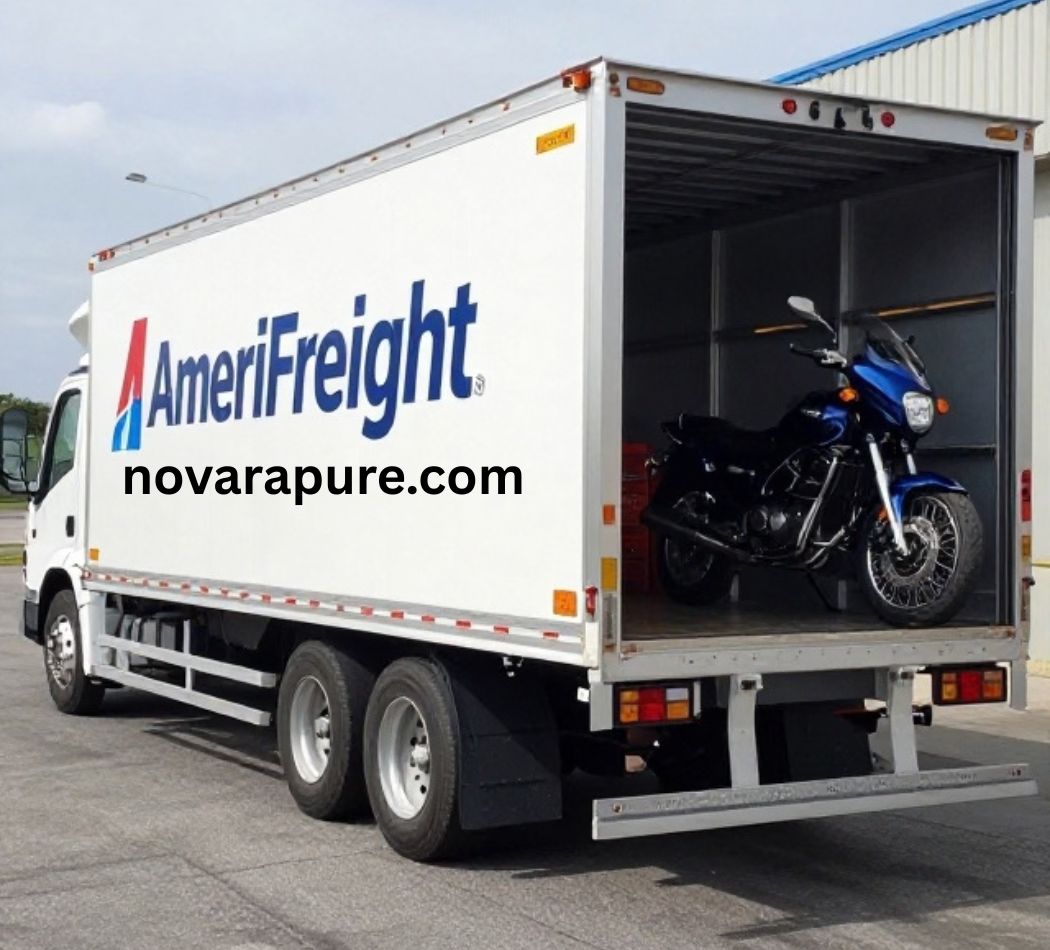
We Tested:
Imagine this: You’ve just bought a pristine 2007 Ducati SportClassic from a seller in Portland, Oregon. You live in Miami. The bike is too beautiful to ride 3,000 miles across the country, and frankly, you don’t have three weeks to spare. So you do what thousands of riders do every year—you hire a motorcycle shipping company.
But here’s the uncomfortable truth most first-time shippers learn too late: a motorcycle is not just a smaller car. It doesn’t have a metal cage protecting it, it doesn’t sit on four wheels, and it can’t just roll onto a trailer and be strapped down like a Honda Civic. Motorcycles are, in the words of one industry insider, “easier to ship than a car and easier to damage in transit”.
That’s why choosing the right shipping partner—and understanding exactly what you’re paying for—matters more than the price tag alone.
In this guide, we’re diving deep into AmeriFreight, one of the most consistently recommended motorcycle shipping brokers in the United States. We’ll cover real costs, insurance nuances, preparation checklists, and the industry trends shaping 2026 and beyond. Whether you’re a first-time shipper or a seasoned collector, this is the practical, no-fluff resource you’ve been looking for.
Background: Who Is AmeriFreight, and Why Do Motorcycle Owners Trust Them?
AmeriFreight Auto Transport has been operating since 2004 as a licensed auto transport broker headquartered in Peachtree City, Georgia. Their federal credentials are verifiable through the FMCSA: MC #597401 and USDOT #2238770. As a broker, they don’t own trucks—instead, they coordinate shipments across a network of over 11,000 independent, vetted carriers.
This broker model is actually a strength for motorcycle shipping. A single carrier might only run certain routes, but a broker with nationwide reach can find a driver for almost any location—including Alaska and Hawaii.
Forbes Advisor named AmeriFreight “Best for Affordability” in its 2026 ranking of motorcycle shipping companies, citing the lowest binding quote in their research and solid overall pricing reviews. Car Talk highlighted their thorough three-tier insurance offerings and price-matching guarantee, noting nearly 4,500 Google reviews with a 4.7-star rating.
But what does that actually mean for you as a motorcycle owner? Let’s break it down.
The Real Cost of Shipping Your Motorcycle with AmeriFreight in 2026
Understanding AmeriFreight’s Tiered Pricing Model
AmeriFreight doesn’t operate like a traditional “fixed-price” shipper. Instead, they use a tiered bidding system that gives you flexibility:
-
Saver Rate – The lowest price, but you may wait longer for a carrier to accept.
-
Market Rate – A balanced option based on current lane pricing.
-
Guaranteed Rate – The highest price, but your shipment is locked in immediately.
You don’t pay a deposit until a vetted carrier accepts the job at a price you approve. Once a driver is assigned, you pay a broker fee to AmeriFreight via credit card, and the remaining balance typically goes directly to the driver in cash or certified funds upon delivery.
This structure means your final cost depends heavily on when you book, where you’re shipping to, and how flexible you are.
Real-World Cost Estimates
Based on 2026 industry data and AmeriFreight’s published rate examples:
-
500-mile transport: Approximately $643
-
1,500-mile transport: Approximately $975
-
2,500-mile transport: Approximately $1,297
For context, the broader motorcycle shipping market in 2026 shows open transport running $350–$550 for routes under 500 miles, and $1,200–$1,600 across the country, with enclosed haulers adding $200–$500. AmeriFreight’s pricing sits comfortably in the competitive range, and their price-matching guarantee means you can often get them to match a lower quote from a reputable competitor.
What Drives Your Final Price?
Several factors swing the number you’ll actually pay:
-
Distance – The most obvious factor, but note that per-mile costs drop on longer hauls. A short trip might run $0.60–$1.00 per mile, while a cross-country haul can drop to $0.30–$0.50 per mile.
-
Open vs. Enclosed Transport – Enclosed shipping typically costs 80% more than open transport, but provides significantly better protection.
-
Seasonality – Winter is generally the cheapest time to ship a bike, since demand drops in most of the country. Summer and rally season see prices spike.
-
Flexibility – If you can be flexible on pickup and delivery dates, you’ll almost always get a better rate.
-
Vehicle Type – A heavy touring bike takes up more trailer space than a lightweight sportbike, which can affect your rate.
AmeriFreight’s Discount Programs
One of AmeriFreight’s standout features is its extensive discount program. Current discounts include:
-
Military: $35 off per request
-
First Responders: $35 off (employment ID required)
-
Students: $25 off (student ID required)
-
Senior Citizens: $25 off (license copy required)
-
Early Bird: $35 off if you book within 48 hours of getting a quote
-
Return Customer: $50 off with proof of previous order
-
Multiple Vehicles: Additional discounts available
These discounts are stackable in many cases, which can bring your total cost down significantly.
Open vs. Enclosed Transport: Which Is Right for Your Bike?
This is the single most important decision you’ll make after choosing your broker.
Open Transport
Best for: Daily riders, older bikes, short-distance moves, budget-conscious shippers.
Open transport is the industry standard and the most affordable option. Your motorcycle is secured on a multi-level trailer alongside other vehicles. It’s exposed to weather, road debris, and whatever the highway throws at it.
Pros:
-
Significantly cheaper
-
Widely available year-round
-
Easier to inspect during transit
Cons:
-
Exposed to elements and road residue
-
Higher risk of cosmetic damage
Enclosed Transport
Best for: Classic bikes, custom builds, luxury motorcycles, show bikes, high-value assets.
Enclosed transport shields your motorcycle completely from the elements. AmeriFreight offers enclosed motorcycle transport specifically designed for riders concerned about safety and protection.
Pros:
-
Full protection from weather and debris
-
Less handling exposure
-
Ideal for high-value machines
Cons:
-
Typically 80% more expensive
-
Fewer carriers available, especially during rally season
-
Longer wait times for pickup
Crated Shipping
For international shipments or extremely high-value machines, crated shipping is the maximum-protection option. The bike is secured to a pallet or in a wooden crate and travels as freight. It costs more and requires more prep work, but offers the highest level of stability and protection.
Our recommendation: If your bike is worth more than $15,000, or if it’s a classic or custom build, go enclosed. The extra cost is cheap insurance against cosmetic damage that could cost far more to repair.
AmeriFreight’s Insurance: What’s Actually Covered (and What Isn’t)
This is where AmeriFreight genuinely differentiates itself.
Standard Carrier Insurance
All carriers in AmeriFreight’s network are fully insured, and they verify each driver’s license, safety record, and insurance through FMCSA data before booking. This is the baseline coverage.
But here’s the catch: standard carrier cargo insurance often has a deductible, and it may not cover everything you’d expect. This is where AmeriFreight’s supplemental offerings come in.
The AFTA Plan
AmeriFreight offers a gap coverage policy called the AFTA Plan that covers up to $2,000 of your personal deductible if the carrier’s insurance doesn’t fully compensate for damage. This is a significant benefit because it means you’re not left holding the bag if the carrier’s insurance falls short.
Three-Tier Insurance Options
Car Talk’s research revealed that AmeriFreight offers three tiers of supplemental insurance:
-
Tier 1: Covers minor damage, including pebbles and rocks
-
Tier 2: Includes rental car coverage if your motorcycle is over 15 days late, plus coverage for lost or damaged keys
-
Tier 3: Waives the cancellation fee
These plans typically run between $50 and $100.
What’s NOT Covered
-
Loose personal items – Standard carrier insurance typically does not cover personal belongings shipped with the motorcycle.
-
Pre-existing damage – This is why documenting your bike’s condition before shipping is absolutely critical.
-
Mechanical issues – If your bike doesn’t start or roll properly, that’s on you, not the carrier.
The Complete Motorcycle Shipping Preparation Checklist
About half of all transit damage happens because of poor preparation. Here’s the exact checklist we recommend following before any motorcycle shipment.
Step 1: Clean and Inspect Your Motorcycle
Wash your bike thoroughly with mild soap and water. This removes dirt that can hide scratches and makes it easier to spot existing damage. Dry it off, polish chrome areas for protection, and then inspect every inch of the bike.
Critical step: Take time-stamped photos from multiple angles—tank, fairings, wheels, exhaust, underside of the engine, handlebars, and mirrors. Document any existing scratches, dents, or cosmetic issues. Record this information on the Bill of Lading or condition report.
Step 2: Reduce Fuel and Check Fluids
Most transporters require your fuel tank to be no more than one-quarter full. A full tank adds weight and increases the risk of leaks or fire hazards during transport.
Check your oil, brake fluid, and coolant levels. Top off if needed and ensure there are no leaks—fluid spills can damage your bike and others in transit.
Step 3: Inspect Tires, Brakes, and Battery
Inflate your tires to the manufacturer’s recommended PSI. Well-inflated tires make loading, unloading, and securing much safer. Check that your brakes are working properly, and test all lights and signals.
Ensure your battery is charged, corrosion-free, and securely fastened. Some carriers may ask you to disconnect it to prevent power drain or electrical issues.
Step 4: Remove Accessories and Personal Items
Detach anything that isn’t bolted down or essential to the bike:
-
Saddlebags
-
Luggage racks
-
GPS or phone mounts
-
Custom add-ons
-
Personal items
Loose items can shift, cause damage, or get lost in transit—and they typically aren’t covered by standard carrier insurance.
Step 5: Secure Vulnerable Areas
Even with enclosed shipping, a little padding goes a long way. Cover areas prone to scratches—gas tank, handlebars, exhaust—with foam, bubble wrap, or a soft towel. Some carriers include padding as part of their service, so ask in advance.
Step 6: Disable Alarms and Prepare Keys
Turn off any alarm or electronic security system to prevent false alarms or battery drain. Prepare two sets of keys: one for the carrier and one to keep with you.
Step 7: Understand How Your Bike Will Be Secured
Ask your carrier how they’ll secure your motorcycle. The right method uses a wheel chock or cradle to hold the front wheel and keep the bike upright, with soft straps over the handlebars or triple clamp, and additional straps at the rear. Avoid bungee cords—professional ratchet straps secured to solid frame points are the standard.
Common Mistakes (and How to Avoid Them)
Mistake #1: Booking the Cheapest Quote Without Vetting the Carrier
The problem: The lowest quote often comes from a carrier with minimal insurance, poor equipment, or a history of damage claims.
The solution: Always verify the carrier’s USDOT and MC numbers are active, ask for a certificate of insurance, and check recent reviews specifically for motorcycle experience.
Mistake #2: Not Documenting Pre-Existing Damage
The problem: If you don’t have photo evidence of your bike’s condition before shipping, it’s your word against the carrier’s if damage occurs.
The solution: Take dated photos from every angle in daylight and record everything on the Bill of Lading. This is your proof.
Mistake #3: Shipping with a Full Tank of Gas
The problem: A full tank adds unnecessary weight and creates a fire hazard. Many carriers will refuse to load a bike with a full tank.
The solution: Drain your tank to one-quarter or less before pickup.
Mistake #4: Leaving Personal Items on the Bike
The problem: Loose items can shift, scratch your paint, or get lost—and they’re not covered by insurance.
The solution: Remove everything that isn’t bolted down.
Mistake #5: Being Inflexible on Dates
The problem: Rigid pickup and delivery windows dramatically reduce the number of carriers willing to take your job, which drives up the price.
The solution: Build in a buffer of several days on either end. Flexibility is the single best way to save money on shipping.
Mistake #6: Forgetting About Seasonal Timing
The problem: Shipping during peak season (late spring through early fall, and especially around major motorcycle rallies) means higher prices and longer wait times.
The solution: If you can ship in winter, do it. Winter is consistently the cheapest time to move a bike in most of the country.
Pros, Cons, and Balanced Analysis
AmeriFreight Pros
-
Competitive pricing with price-matching guarantee – Forbes named them “Best for Affordability” in 2026.
-
Extensive discount programs – Military, first responders, students, seniors, early birds, and return customers can stack discounts.
-
Thorough insurance offerings – Three tiers of supplemental coverage plus the AFTA gap protection plan.
-
Nationwide coverage – All 50 states, including Alaska and Hawaii.
-
Strong customer satisfaction – 4.9/5 on Trustpilot, 4.7/5 on Google, BBB accredited with an A rating.
-
No deposit until a carrier is booked – You’re not locked in until you approve the price.
AmeriFreight Cons
-
Broker model means less direct control – AmeriFreight doesn’t own trucks, so the actual carrier quality varies.
-
No international shipping – If you need to ship overseas, you’ll need a different provider.
-
Limited real-time GPS tracking – Tracking varies by carrier; some offer it, some don’t.
-
No 24/7 customer service – Support is available during business hours.
-
Some reviews note difficulty when plans change – If your schedule shifts, you may encounter challenges.
The Balanced Verdict
AmeriFreight is an excellent choice for budget-conscious riders who want a reliable, well-insured shipment without paying premium prices. The broker model means you’re not getting white-glove, single-carrier service, but for most motorcycle owners, that’s perfectly fine. If you have a high-value classic or custom build and want maximum control, you might prefer a dedicated enclosed carrier. But for the vast majority of riders, AmeriFreight delivers a strong combination of price, coverage, and reliability.
The Future of Motorcycle Shipping: 2026 and Beyond
The global motorcycle shipping market was valued at approximately $1.53 billion in 2025 and is projected to grow at a compound annual growth rate of 3.50% through the forecast period. Here’s what’s shaping the industry:
1. Economic Headwinds and Tariff Impacts
Rising inflation, new tariffs, and recession fears are creating uncertainty in the logistics sector. As we move through 2026, motorcycle shipping companies are adapting to shifting demand patterns and cost pressures. For consumers, this means prices may fluctuate more than in previous years.
2. Digital Transformation
Online quote systems, digital Bill of Lading platforms, and real-time tracking are becoming standard. The days of phone-only bookings are fading. AmeriFreight and its competitors are investing heavily in user-friendly digital experiences.
3. Specialty and Enclosed Shipping Growth
As motorcycle values rise—particularly for classics and limited-edition models—demand for enclosed and crated shipping is growing faster than the overall market. Expect more carriers to offer premium, white-glove options.
4. Sustainability Pressures
The logistics industry is under increasing pressure to reduce carbon emissions. Electric and hybrid transport trucks are slowly entering the market, though they’re not yet practical for long-haul motorcycle shipping. Still, the trend is unmistakable.
5. Route Optimization and AI
Artificial intelligence is being deployed to optimize routes, predict demand, and reduce empty miles. This should, over time, lead to more efficient pricing and shorter delivery windows.
Key Takeaways
-
AmeriFreight is Forbes’ “Best for Affordability” pick for motorcycle shipping in 2026, with competitive rates and a price-matching guarantee.
-
Expect to pay roughly $643 for 500 miles, $975 for 1,500 miles, and $1,297 for 2,500 miles based on 2026 estimates.
-
Open transport is cheaper; enclosed transport costs about 80% more but provides significantly better protection.
-
AmeriFreight’s insurance offerings are a standout—three tiers of supplemental coverage plus the AFTA gap protection plan covering up to $2,000 in deductibles.
-
Proper preparation is non-negotiable. Clean, photograph, reduce fuel, remove accessories, and document everything on the Bill of Lading.
-
Flexibility on dates and shipping in winter are the two best ways to reduce your cost.
-
The broker model means carrier quality varies—always verify USDOT and MC numbers, insurance, and recent motorcycle-specific reviews.
Frequently Asked Questions
How much does AmeriFreight charge to ship a motorcycle?
AmeriFreight’s motorcycle shipping costs range from approximately $643 for a 500-mile transport to around $1,297 for a 2,500-mile transport. Your final price depends on distance, transport type (open vs. enclosed), seasonality, and how flexible you are on dates. They also offer numerous stackable discounts that can bring costs down further.
Does AmeriFreight own its own trucks?
No. AmeriFreight is a licensed auto transport broker (MC #597401, USDOT #2238770). They coordinate shipments across a network of over 11,000 independent, vetted carriers rather than owning their own fleet. This gives them flexibility to find drivers for nearly any route, including Alaska and Hawaii.
Is enclosed shipping worth the extra cost for a motorcycle?
It depends on your bike’s value. If your motorcycle is worth more than $15,000, is a classic, or is a custom build, enclosed shipping is almost always worth the 80% premium. For daily riders and older bikes on shorter routes, open transport is a perfectly reasonable, cost-effective choice.
What insurance does AmeriFreight provide?
All carriers in AmeriFreight’s network are fully insured. Additionally, AmeriFreight offers three tiers of supplemental insurance (starting at $50–$100) covering minor damage, rental car reimbursement for delays over 15 days, lost keys, and cancellation fee waivers. Their AFTA Plan provides up to $2,000 in gap coverage for deductibles.
How far in advance should I book motorcycle shipping?
For the best rates and availability, book at least 1–2 weeks in advance. If you’re shipping during peak season (spring through early fall), aim for 3–4 weeks. Last-minute shipments are possible—AmeriFreight has successfully arranged short-notice motorcycle shipments—but you’ll likely pay a premium.
Can AmeriFreight ship a motorcycle that doesn’t run?
This depends on the carrier. Some carriers can handle non-running motorcycles using specialized equipment, but you’ll need to disclose this upfront. Expect to pay more, and be prepared for the possibility that some carriers won’t accept the job.
What happens if my motorcycle is damaged during shipping?
If damage occurs, you’ll file a claim with the carrier’s insurance first. AmeriFreight’s AFTA Plan covers up to $2,000 of your deductible if the carrier’s insurance falls short. This is why thorough pre-shipment documentation—photos, notes, and a signed Bill of Lading—is absolutely essential.
Does AmeriFreight ship motorcycles internationally?
No. AmeriFreight operates within all 50 U.S. states but does not offer international shipping. For overseas motorcycle transport, you’ll need a specialized international shipping provider.
Sources
-
Forbes Advisor, “Best Motorcycle Shipping Companies Of 2026” – Forbes
-
Car Talk, “Best Motorcycle Shipping Companies of 2026” – Car Talk
-
U.S. News & World Report, “AmeriFreight Review and Prices” – Cars.USNews.com
-
FreightWaves, “AmeriFreight Review” – FreightWaves.com
-
TransportVibe, “AmeriFreight Auto Transport Review” – TransportVibe.com
-
uShip, “How to Prepare for Motorcycle Shipping” – uShip.com
-
Ship A Car, “Shipping a Motorcycle: Open, Enclosed or Crated” – ShipACarInc.com
-
AmeriFreight Official Website – AmeriFreight.net
-
FMCSA SAFER Database – MC #597401, USDOT #2238770
-
Consumer Affairs, “AmeriFreight Auto Transport Reviews” – ConsumerAffairs.com
-
Trustpilot, “AmeriFreight, Inc. Reviews” – Trustpilot.com
-
Market Research, “Global International Motorcycle Shipping Service Market Report 2026–2035”

Novara Lin
Senior Editor & Clean Beauty Analyst
Novara Lin is a clean beauty researcher and wellness editor dedicated to demystifying modern skincare and evidence-based living. With a background in formulation science and consumer health reporting, she specializes in analyzing complex ingredient profiles, evaluating product safety, and bridging the gap between clinical research and daily self-care routines. Her work focuses on helping readers cut through industry noise to build minimal, highly effective routines rooted in transparency and skin health. When she isn’t testing active formulations or auditing non-toxic household choices, Novara leads editorial strategy for NovaRa Pure.