
We Tested:
Imagine a quiet afternoon in a small New England town. School is letting out, and suddenly, traffic grinds to a halt. Neighbors step out of their houses, phones in hand, whispering and pointing. The cause isn’t an accident or a celebrity sighting—it’s a black bear cub, casually perched in a maple tree on Foundry Street.
That moment, which happened years ago in Amherst, New Hampshire, became the unlikely origin story for a modern media experiment. The shared excitement of that day—the way a single bear connected an entire town across neighborhoods and generations—lingered in the community’s memory. In February 2026, that memory materialized into The Amherst Bear, a free, nonprofit, printed community newspaper dedicated to restoring local civic connection.
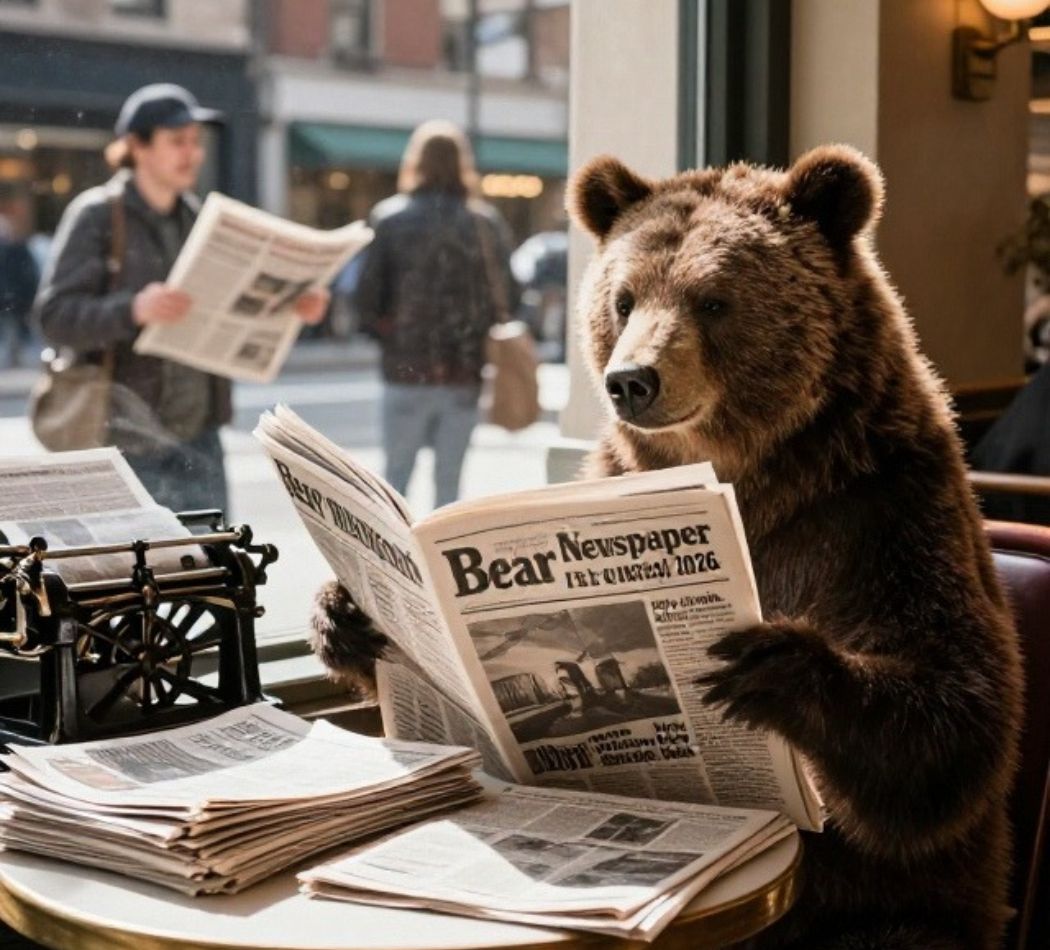
But Amherst isn’t alone. In a surprising twist for an industry dominated by headlines about digital decay, the “bear newspaper” is experiencing a peculiar renaissance. From New Hampshire’s town greens to the leather bars of San Francisco, print publications bearing the bear name are roaring back to life. This is the story of why paper, community, and a very specific animal are converging in 2026—and what it tells us about the future of media.
Background: What Exactly Is a “Bear Newspaper”?
The term “bear newspaper” isn’t a single publication; it’s a fascinating intersection of three distinct media lineages that happen to share a namesake.
The Local Community Paper
The most recent entrant is The Amherst Bear. Launched in early 2026, it is a 501(c)3 nonprofit founded by local residents Marti Warren and Stacey Morison. It was created to fill the void left when The Amherst Citizen, a for-profit paper that had served the town for nearly 30 years, folded shortly after the pandemic. The founders argue that the internet, with its algorithmic silos, cannot replace the inclusive, shared experience of a printed paper that arrives in every mailbox, regardless of whether you searched for it . The first issue was distributed to all residents and businesses in February 2026.
The LGBTQ+ Cultural Magazine
Far from New Hampshire, another “bear” has a much longer and more turbulent history. BEAR Magazine was founded in San Francisco in 1987 by Richard Bulger and Chris Nelson. It began as a photocopied zine—just 45 copies of its first issue—created as an alternative to the shaven, polished men of mainstream gay media. It celebrated “bears”: stocky, hairy men who were largely invisible in glossy magazines.
BEAR grew into an internationally distributed glossy, survived a tax seizure by the IRS in 2002, was revived in 2008, went digital, and eventually went dark. In a significant 2026 development, it has been announced that BEAR is returning to print as a quarterly publication under new ownership, complete with its iconic personal ads restored.
The Quirky Nostalgia & Military History
Beyond these two active revivals, the “bear newspaper” name pops up in unexpected corners. There is Bear Essential News for Kids, an Arizona-based literacy publication that has been run by kids and for kids since 1979. There was the Kodiak Bear, a military newspaper published by personnel at the Naval Operating Base in Kodiak, Alaska, from 1950 to 1972. And, somewhat darkly, there was Der Panzerbär, a Nazi propaganda tabloid printed for only seven days in April 1945 during the Battle of Berlin. These disparate examples prove that the bear as a newspaper mascot is a powerful, versatile symbol—whether it represents community, subculture, or propaganda.
The Main Event: Why Print, and Why Now?
The simultaneous launch of The Amherst Bear and the return of BEAR Magazine might seem like a coincidence, but they share a deep, underlying logic. Both are betting against the feed.
The Case for “Inclusive” vs. “Selective” Media
The Amherst Bear’s founders make a compelling argument that cuts to the heart of the modern attention economy. They describe the internet as “narrow and selective” —you only see what you search for or what an algorithm decides you want. This creates silos and polarization. A printed newspaper, by contrast, is “effortless and inclusive.” It shows up in your mailbox and introduces you to stories you didn’t know you were looking for: a neighbor’s retirement, a subtle change in town zoning, or a school board decision.
This is the “serendipity of print.” In a digital world where every click is tracked and optimized, the physical newspaper remains one of the last bastions of unanticipated information. You might open it for the grocery flyer, but you stay for the story about the bear in the tree.
The Tactile Craving
Richard Jones, the new owner of BEAR Magazine, offers a complementary explanation for the print revival. “We’re at a point where everything is digital, and I think people are craving something physical again—a magazine you can actually hold, keep, put on your coffee table,” he said in a recent interview. “That’s part of why print felt right for this relaunch, not just nostalgia”.
For the bear subculture, the physical object also carries historical weight. The original BEAR zines and magazines were artifacts of identity formation. They were passed between friends, hidden in drawers, and used to build networks before the internet existed. Returning to print is a way to reclaim that tangible sense of belonging.
Practical Tips: How to Launch (or Revive) a Niche Print Publication
If you are inspired by these community and cultural revivals and are considering starting your own niche newspaper, here are actionable steps drawn from the successes of 2026.
1. Identify Your “Bear in the Tree”
Every community has a unifying story. The Amherst Bear’s name comes from a specific, shared memory of a bear cub that stopped traffic. Your publication needs a similar origin myth or mascot that instantly communicates warmth, locality, and a shared identity. Don’t pick a generic name; pick a story.
2. Choose the Right Legal Structure
The Amherst Bear succeeded because it removed the pressure of profit. By registering as a 501(c)3 nonprofit and relying on community donors and a volunteer board, they insulated themselves from the advertising collapse that killed their predecessor. If your goal is civic impact, nonprofit is the way to go.
3. Solve the “Distribution Anxiety”
A newspaper is only as good as its reach. The Amherst Bear ensures distribution to every resident and business. For niche cultural magazines like BEAR, distribution is more targeted: online sales, bear events, and limited retail stores. Know exactly where your audience congregates and put paper in their hands.
4. Blend Nostalgia with Utility
BEAR Magazine is restoring the personal ads but giving them an “up-to-date twist.” The Amherst Bear focuses on hyper-local utility—town hall decisions and school news. Nostalgia alone won’t sustain a paper; it must serve a practical, modern need, whether that is finding a partner or finding out why the roads are closed.
Common Mistakes and Challenges (Plus Solutions)
Launching a print publication in 2026 is not for the faint of heart. Here are the pitfalls to avoid.
| Challenge | The Mistake | The Solution |
|---|---|---|
| The Profit Trap | Assuming advertising will pay the bills. | The Amherst Bear model: nonprofit status, donors, and volunteers. Remove the profit motive to protect the mission. |
| Digital Envy | Trying to be everything to everyone online. | Don’t compete with the feed. Complement it. Use print for the “slow news” and serendipity that algorithms miss. |
| Niche Drift | Forgetting the core audience. | BEAR Magazine knows it serves the bear community. The Amherst Bear knows it serves Amherst. Don’t dilute your identity to chase broader clicks. |
| Ignoring the Archive | Failing to plan for longevity. | The history of BEAR shows how quickly things can vanish (IRS seizures, buyouts). Build an archive and community ownership structure to survive the founder’s departure. |
Pros, Cons, and a Balanced Analysis
Is the “bear newspaper” revival a genuine trend or a nostalgic blip? Let’s weigh it.
The Pros:
-
Civic Health: Local newspapers are correlated with higher voter turnout and lower municipal corruption. The Amherst Bear is a direct investment in civic infrastructure.
-
Subcultural Preservation: BEAR Magazine provides a physical record of a community that has often been marginalized or forced online. It legitimizes the bear identity in a tangible way.
-
Mental Well-being: Reading a physical paper is a linear, finite experience. It reduces the doom-scrolling and decision fatigue associated with digital feeds.
The Cons:
-
Environmental and Economic Cost: Print requires paper, ink, and fossil fuels for distribution. In an era of climate anxiety, this is a legitimate trade-off.
-
The Speed Problem: By the time a monthly paper arrives, the news is often stale. The Amherst Bear and BEAR are betting that depth and curation matter more than speed.
-
Fragility: Print is expensive. Without a massive volunteer base or a wealthy patron, many of these ventures will fold within a year.
The Verdict: The revival is not a rejection of digital; it is a correction. For decades, media chased scale and speed, leaving behind the deep, local, and weird stories that make life interesting. The bear newspapers are reclaiming that territory.
Future Trends and Predictions (2026–2030)
Looking ahead, here is what the “bear newspaper” phenomenon signals for the broader media landscape.
1. The Rise of the “Micro-Nonprofit” Newsroom
Expect to see more towns copy the Amherst model. As for-profit chains continue to gut local news, communities will form hyper-local nonprofits to cover the school board and the zoning meeting. The bear will become a template.
2. The Queer Print Revival
BEAR’s return to print is part of a larger trend. As social media platforms become increasingly hostile to LGBTQ+ content through algorithmic suppression, physical media becomes a safer, more reliable space. Niche magazines will thrive as “safe havens” on paper.
3. The Collectible Object
As digital content becomes infinitely replicable, the physical artifact gains value. Future issues of BEAR Magazine may become collector’s items, much like the early 1987 zines are today. Publishers will lean into this by creating limited-edition covers and high-quality paper stock.
4. AI and the “Human” Newspaper
As AI-generated content floods the internet, the value of a newspaper written by identifiable, local humans will skyrocket. The Amherst Bear’s masthead lists real people with real emails. That trust will be the ultimate currency.
Key Takeaways: The Bear Essentials
-
The “Bear Newspaper” is a diverse phenomenon spanning a New Hampshire nonprofit local paper, a revived San Francisco LGBTQ+ magazine, and historical military publications.
-
The 2026 revival is driven by a rejection of algorithmic silos and a craving for tactile, inclusive, and serendipitous information.
-
Nonprofit ownership is a viable model for local news, insulating publications from the profit pressures that killed their predecessors.
-
Niche print is thriving as a way to preserve subcultural identity and create tangible community artifacts.
-
The future of media is not purely digital; it is a hybrid where paper serves depth, community, and permanence, while digital serves speed and reach.
Detailed FAQs
Q: Is The Amherst Bear a real newspaper?
Yes. It is a free, nonprofit, 501(c)3 monthly printed newspaper that launched in Amherst, New Hampshire, in February 2026. It was founded by local residents to fill the gap left by the closure of The Amherst Citizen.
Q: Why is BEAR Magazine returning to print in 2026?
The new owner, Richard Jones, believes there is a growing consumer craving for physical media that can be held and kept, rather than scrolled past. It also serves as a response to the ephemeral nature of digital content within the LGBTQ+ community.
Q: What was the original BEAR Magazine?
It was a groundbreaking zine-turned-magazine founded in 1987 in San Francisco by Richard Bulger and Chris Nelson. It celebrated hairy, stocky men and is credited with helping to define and popularize the “bear” subculture within the gay community.
Q: Are there other “bear newspapers” I should know about?
Yes. Bear Essential News for Kids is a long-running, award-winning children’s newspaper in Arizona. Historically, the Kodiak Bear served military personnel in Alaska, and Der Panzerbär was a short-lived Nazi propaganda sheet in 1945.
Q: How can I support my local “bear” or community newspaper?
Subscribe, donate, and volunteer. If you have a local nonprofit paper, consider contributing a few hours a month to write, photograph, or deliver. If you are in a niche community, buy the print edition of magazines like BEAR to ensure they survive.
Sources and Further Reading
-
The Amherst Bear – Our Story: Official history of the nonprofit paper’s founding and philosophy.
-
Nashua Ink Link: Reporting on the February 2026 launch of The Amherst Bear.
-
OutXOut / Alternative Line Dance: Detailed coverage of BEAR Magazine’s 2026 return to print.
-
Wikipedia – Bear Magazine: Historical overview of the publication’s founding and ownership changes.
-
Yale Library Archives: Catalog entry for BEAR Magazine (1987–2008).
-
Arizona Daily Star: Feature on the 30th anniversary of Bear Essential News for Kids.
-
Fairbanks Genealogical Society: Historical records of the Kodiak Bear military newspaper.
-
Wikipedia – Panzerbär: Entry on the 1945 Nazi propaganda tabloid.

Novara Lin
Senior Editor & Clean Beauty Analyst
Novara Lin is a clean beauty researcher and wellness editor dedicated to demystifying modern skincare and evidence-based living. With a background in formulation science and consumer health reporting, she specializes in analyzing complex ingredient profiles, evaluating product safety, and bridging the gap between clinical research and daily self-care routines. Her work focuses on helping readers cut through industry noise to build minimal, highly effective routines rooted in transparency and skin health. When she isn’t testing active formulations or auditing non-toxic household choices, Novara leads editorial strategy for NovaRa Pure.