
We Tested:
It’s 9:47 PM on a Tuesday. A Child Protective Specialist in a mid-sized county is sitting in her car outside a grocery store, finishing case notes on a tablet because she hasn’t been to the office since morning. She’s already worked through lunch, skipped dinner, and still has two more home visits to document. Tomorrow, she’ll testify in family court. The day after, she’ll knock on a door where a family may or may not be glad to see her.
Most people never think about CPS staff until a headline forces them to. A child is removed. A family is torn apart—or a child is left in danger. The public asks: How could this happen? The answer almost always runs through the people doing the work: who they are, how they’re trained, how many cases they carry, and whether they stay long enough to get good at it.
This article isn’t a recruitment brochure or a scandal exposé. It’s a grounded look at who CPS staff actually are in 2026—what they do, what they earn, what breaks them, and what a smarter, more sustainable child protection workforce could look like. Whether you’re considering the career, leading a team, or simply trying to understand the system, the details matter more than the stereotypes.
Who CPS Staff Really Are (Hint: Not Who You Think)
The Job Title Hides a Spectrum of Roles
“CPS staff” is shorthand for a surprisingly diverse occupational category. On any given day, the person answering a hotline call, the investigator knocking on a door at 11 PM, the caseworker coordinating therapy referrals, and the supervisor signing off on a removal petition may all fall under the same umbrella. The U.S. Bureau of Labor Statistics counts roughly 218,000 CPS caseworkers in state and local government, with a median government pay of about $65,660. But that number only captures those in the specific occupational code—many more work under titles like “family services specialist,” “investigator,” or “social worker” without being counted cleanly.
In New York City alone, the Administration for Children’s Services employs Child Protective Specialists who conduct home visits, interview family members, assess risk, coordinate services, and testify in family court. The job description reads like a hybrid of detective, social worker, crisis counselor, and bureaucrat—because it is.
What the Day Actually Looks Like
A typical CPS worker’s week splits between field and office. In NYC, specialists are scheduled for community visits two days a week, office work two days, and one hybrid day for documentation from an alternative location. Caseloads average 8 to 12 families at a time in that jurisdiction—a number that sounds manageable until you realize each family may involve multiple children, court dates, service providers, and emergency calls that blow up the schedule without warning.
The work is documentation-heavy. One analysis of occupational tasks found that maintaining case records and preparing reports consumes roughly 20% of a child welfare social worker’s day—and that’s before the crisis calls, the interviews, the court prep, and the emotional labor of telling a parent their child won’t be coming home tonight.
The Retention Crisis Nobody Wants to Name
Why Good People Leave
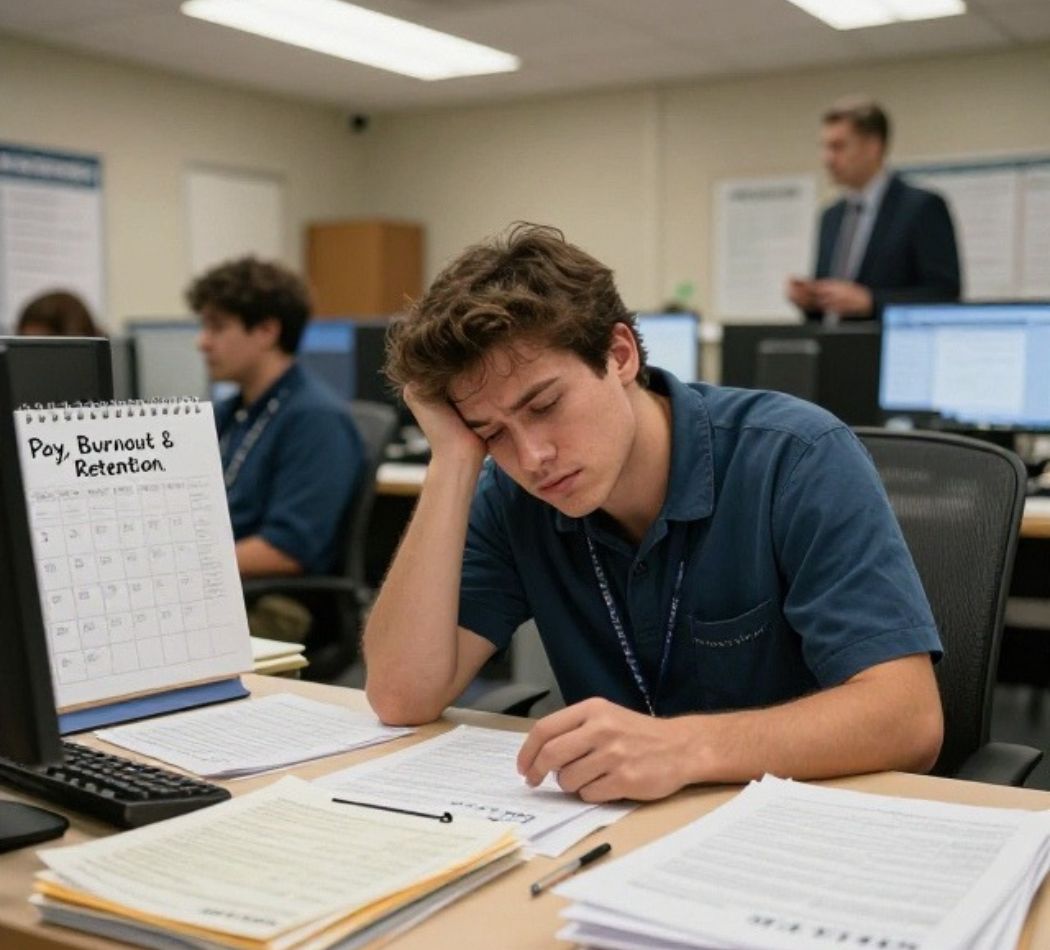
Here’s the uncomfortable truth the recruitment brochures gloss over: many CPS workers don’t stay long enough to become great at the job. Turnover in child welfare is chronic, and the reasons are structural, not personal. Research on child welfare workforce retention points to empowerment, professional support, leadership quality, and learning culture as the organizational factors that determine whether workers stay or go—with job satisfaction acting as the mediating variable. In plain terms: people quit when they feel unsupported, micromanaged, and set up to fail.
The field realities are brutal. A 2026 legislative testimony from Maine described a district office still grappling with “hoteling” children who lack placement, mandatory overtime to staff those placements, and persistent difficulty recruiting and retaining staff. The same testimony noted that social conditions—substance use, housing instability, homelessness, and barriers facing immigrant and refugee families—continue to drive complexity that frontline workers absorb daily.
The Training Cliff
New CPS hires typically undergo a structured onboarding period that masks the true difficulty of the work. In NYC, that means six weeks at a training academy, followed by three months in a training unit with reduced cases, then five months in a transition unit with a modified caseload. Only after roughly eight months does a specialist move to a regular unit with full responsibilities.
That’s a smart design. But it also means the investment in each worker is significant—and when they leave after 18 months, the agency loses both the training cost and the institutional knowledge that only comes from experience. The NYC ACS website proudly notes that 63% of current CPS have worked there three years or longer, and 53% for five years or more . That’s framed as a retention success, and relative to national patterns, it may be. But it also means nearly four in ten specialists have been there less than three years. In a job where a single misjudgment can have irreversible consequences, experience is not a luxury.
Pay, Benefits, and the Public Service Bargain
What the Numbers Actually Look Like
CPS salaries vary wildly by jurisdiction, and the variance tells its own story about how different communities value the work. Entry-level Child Protective Specialist I positions in NYC start at $58,984**, rising to **$64,059 after six months and $68,309** at 18 months, with a range up to **$96,852. A California intake caseworker posting listed journey-level pay between $69,222 and $93,454 annually. Meanwhile, the broader BLS median for government CPS caseworkers sits at $65,660.
The gap between the highest and lowest paying jurisdictions is not trivial. It shapes who can afford to stay in the profession, who has to moonlight, and whose burnout accelerates because financial stress compounds the emotional load.
The Benefits That Keep People (Barely)
Public-sector CPS jobs typically come with benefits that private social service agencies can’t match: defined-benefit pensions, generous health plans, public service loan forgiveness eligibility, and union representation. In NYC, Child Protective Specialists are represented by DC 37, the city’s largest public employee union. Those benefits matter. They are often the reason a worker who is emotionally exhausted after year three decides to stay for year four.
But benefits don’t fix a broken caseload. They don’t make a supervisor return your calls. They don’t erase the memory of a child you couldn’t protect. Retention research consistently finds that organizational support and leadership quality predict staying power more than compensation alone. Pay matters—but feeling set up to succeed matters more.
The Human Cost of Getting It Wrong (and Right)
When Systems Fail Workers, Workers Fail Families
The Maine testimony offered a window into this dynamic: high report volume, high-risk work, and persistent staffing strain create conditions where the system is perpetually reactive rather than preventive. The research literature on individualized case planning for parents with opioid use disorder found that systemic barriers—complex caseloads, limited treatment availability, organizational time constraints—routinely prevent workers from doing the individualized, family-centered work they were trained to do.
What Good Support Looks Like
The counter-evidence is equally clear. When child welfare agencies invest in transformational leadership, professional development, and genuine empowerment, job satisfaction rises and turnover falls. Workers who feel trusted to make decisions, who have supervisors who mentor rather than monitor, and who can access learning opportunities are more likely to stay—and more likely to do good work while they’re there.
Some jurisdictions are experimenting with reduced transitional caseloads for new hires, structured mentorship, and predictable scheduling. These aren’t glamorous reforms. They don’t make headlines. But they address the mechanical causes of burnout: chaos, isolation, and the feeling that no one is watching out for you.
Practical Advice for Aspiring and Current CPS Staff
If You’re Considering the Career
Ask about caseload caps and supervision ratios in the interview. Don’t just ask if they have caps; ask what happens when caps are exceeded. The answer tells you whether the agency has a real plan or a theoretical one.
Build a boundary plan before you start. The work will follow you home if you let it. Decide now what your evenings look like, who you talk to about your day, and how you’ll know when you’re approaching your limit.
If You’re Already in the Work
Document your wins. The system records failures obsessively. It rarely records the parent who showed up to rehab, the child who stayed in a kinship placement instead of foster care, the family that stabilized. Keep a private file of the moments that went right. On the hard days, you’ll need the evidence.
Find a mentor outside your chain of command. Formal supervision is about accountability. Informal mentorship is about survival. Someone who has been in the work for a decade can tell you which battles matter and which are noise.
Use your employee assistance program before you need it. The culture of self-sacrifice in child welfare is real, and it’s toxic. Therapy isn’t a sign that you’re breaking. It’s a sign that you’re paying attention.
Common Mistakes Agencies Make (and How to Fix Them)
Mistake #1: Treating training as a checkbox. The eight-month onboarding pipeline in NYC is a model, but only if the training unit supervisors are actually skilled mentors, not just warm bodies filling a role. Investing in trainer quality is cheaper than replacing burned-out workers.
Mistake #2: Confusing “support” with “perks.” A wellness app and a pizza party don’t compensate for unmanageable caseloads. Real support means realistic expectations, reliable supervision, and a leadership team that shields workers from political pressure rather than passing it down.
Mistake #3: Ignoring the data on what keeps people. The research is unambiguous: empowerment, learning culture, and transformational leadership drive retention. Agencies that still treat turnover as a mystery aren’t reading their own literature.
Mistake #4: Assuming AI will solve the problem. Task-level analysis suggests machines can already handle a substantial share of CPS documentation and reporting work—up to 63% of record-keeping tasks in 2026, rising to 81% by 2035. That’s an opportunity to free workers for human contact, not an excuse to reduce headcount. Agencies that use automation to cut staff rather than support them will make the retention crisis worse.
Pros, Cons, and the Balanced Reality
| Pros | Cons |
|---|---|
| Meaningful work with direct impact on child safety | Chronic emotional stress and secondary trauma |
| Strong benefits and pension in most public agencies | Salaries often lag behind the emotional and educational demands |
| Clear career ladder with structured advancement | Bureaucratic constraints limit ability to help families |
| Union protection in many jurisdictions | High turnover means constant onboarding and institutional memory loss |
| Growing attention to workforce well-being (2026 trend) | Political and public scrutiny can be hostile and uninformed |
The balanced take: CPS work is not a “calling” that should require martyrdom. It is a skilled public service profession that demands fair pay, reasonable conditions, and genuine organizational support. The jurisdictions that treat it that way produce better outcomes for children. The ones that don’t cycle through workers and families alike.
The Future of CPS Staffing: 2026 and Beyond
Three trends will shape the CPS workforce over the next five years.
1. Automation will change the job, not eliminate it. AI-assisted documentation and case management tools are already entering the field. By 2035, task analysis suggests machines could handle 56% of child welfare social work tasks. The smart agencies will use this to reduce administrative burden and protect time for family engagement. The shortsighted ones will use it to justify understaffing.
2. The “hoteling” crisis will force placement innovation. The practice of housing children in offices and hotels because no foster placements are available has become a flashpoint in states like Maine. Expect more legislative attention and, ideally, more investment in kinship navigation, therapeutic foster care, and prevention services that keep families together before removal becomes necessary.
3. Retention research will finally drive policy. The evidence on empowerment, leadership, and learning culture is too consistent to ignore forever. Look for agencies to experiment with reduced transitional caseloads, peer mentorship programs, and leadership development pipelines that promote from within rather than importing managers who don’t understand the work.
Key Takeaways (Quick Summary Box)
-
CPS staff are the backbone of child safety, performing investigations, family assessments, court testimony, and service coordination under intense pressure.
-
Pay varies dramatically by jurisdiction, from roughly $59K entry-level in NYC to $93K+ journey-level in some California counties.
-
Retention is the system’s biggest vulnerability, driven by caseload strain, inadequate supervision, and organizational cultures that don’t empower frontline workers.
-
Training pipelines matter, but they only work if the mentors and supervisors running them are skilled and supported.
-
Automation is coming for documentation and reporting tasks—use it to free human capacity, not to justify cuts.
-
The best predictor of worker retention is job satisfaction, which in turn depends on feeling supported, trusted, and given room to grow.
Frequently Asked Questions
What does CPS staff actually do?
CPS staff respond to reports of child abuse and neglect. They investigate allegations, interview family members, assess risk and safety, coordinate services, document case activity, and testify in family court when necessary. The job combines investigative work with social work and crisis intervention.
How much do CPS workers make?
It varies widely. NYC Child Protective Specialists start at $58,984 and can reach $96,852. The BLS median for government CPS caseworkers is $65,660. Some California jurisdictions pay journey-level workers over $93,000.
Do you need a degree to become a CPS worker?
Most jurisdictions require at least a bachelor’s degree, often in social work, psychology, or a related human services field. Some accept comparable experience. Master’s degrees can lead to advancement and higher pay.
Why is CPS turnover so high?
The research points to organizational factors: lack of empowerment, poor professional support, weak leadership, and unsupportive learning cultures all predict leaving. Caseload size, documentation burden, and emotional toll compound these structural issues.
Is CPS a dangerous job?
It can be. Workers visit homes in unpredictable circumstances and sometimes encounter hostile or violent individuals. Most agencies encourage paired visits and have safety protocols, but the work carries inherent risk.
What’s the difference between CPS and foster care?
CPS investigates and assesses safety. Foster care is a placement option when children cannot safely remain at home. CPS workers may place children in foster care, but the foster system itself is a separate network of caregivers and agencies.
Will AI replace CPS workers?
No. Task analysis suggests machines can handle a growing share of documentation and reporting, but the core of the work—judgment, empathy, family engagement, court testimony—remains human. The risk isn’t replacement; it’s that automation will be used to justify understaffing rather than to support better practice.
Sources
This article draws on publicly available government job descriptions, workforce research, and legislative testimony. Key sources include:
-
NYC Administration for Children’s Services — official CPS job description, salary schedule, training pipeline, and benefits information
-
U.S. Bureau of Labor Statistics / GovJobs Wiki — CPS caseworker employment counts and median pay data
-
Taylor & Francis Online — peer-reviewed research on child welfare workforce retention, empowerment, and job satisfaction
-
Maine State Legislature testimony (April 2026) — frontline perspectives on staffing strain, hoteling, and social complexity
-
311 Institute / O*NET task analysis — automation exposure for child, family, and school social workers
-
California county job postings — journey-level CPS pay ranges
-
O*NET OnLine — detailed job duties and requirements for child protective service roles
Note: Salary figures and employment counts reflect the most recent publicly available data as of 2026. Local figures vary and should be verified with specific agencies.

Novara Lin
Senior Editor & Clean Beauty Analyst
Novara Lin is a clean beauty researcher and wellness editor dedicated to demystifying modern skincare and evidence-based living. With a background in formulation science and consumer health reporting, she specializes in analyzing complex ingredient profiles, evaluating product safety, and bridging the gap between clinical research and daily self-care routines. Her work focuses on helping readers cut through industry noise to build minimal, highly effective routines rooted in transparency and skin health. When she isn’t testing active formulations or auditing non-toxic household choices, Novara leads editorial strategy for NovaRa Pure.