
We Tested:
Type “entment” into Google and you’ll get a linguistic shrug. No dictionary entry. No Wikipedia page. Just a scattering of typos, Middle English medical texts about ointments, and academic papers using “EntMent” as an abbreviation for entity mention recall.
And yet, the moment you say it aloud, something clicks.
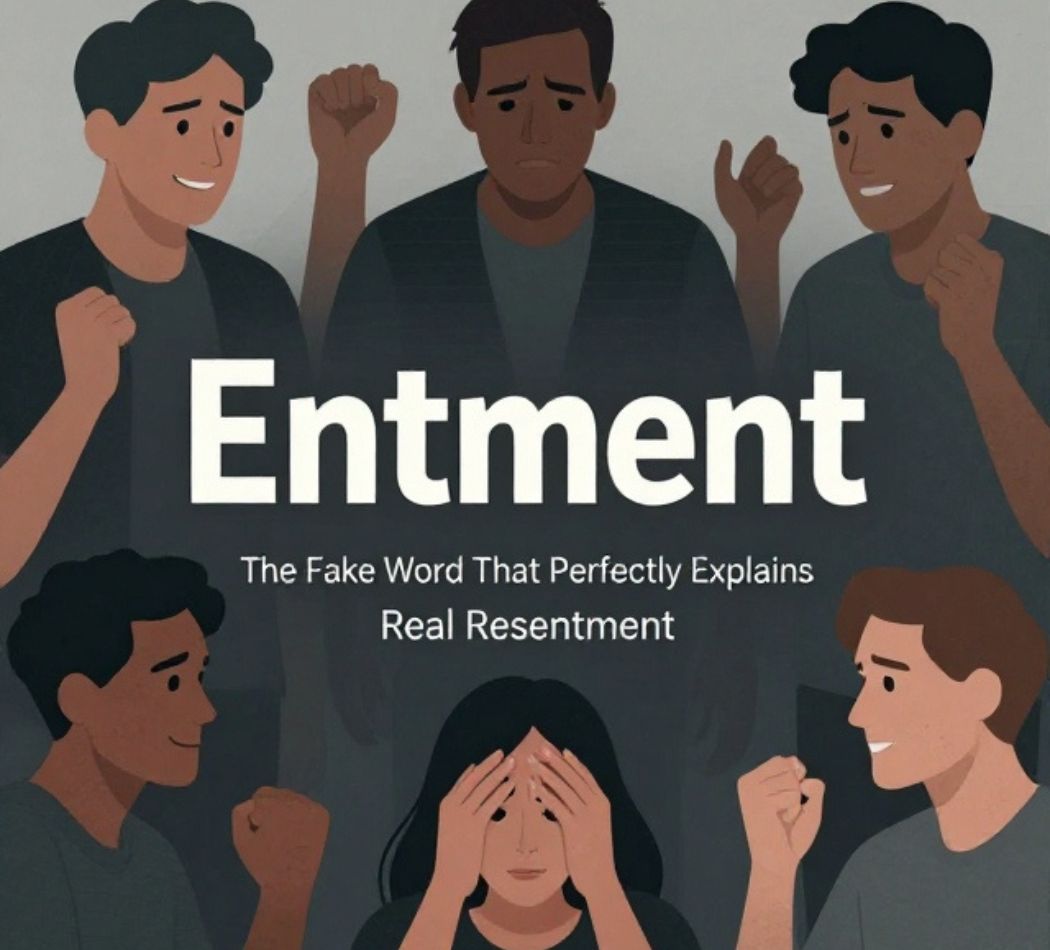
Entment. It sounds like a state of being. A condition. Perhaps a place you visit when the world has treated you badly and you refuse to move on.
Here’s the truth most word authorities won’t tell you: “entment” is almost certainly a collision of two emotional realities—the suffix -ment (denoting a state or condition) fused with the buried ghost of resentment. It’s the linguistic equivalent of a Freudian slip made permanent. When someone writes “entment,” they aren’t making a spelling error. They’re accidentally inventing a more honest word for what they actually feel.
This article isn’t about a fake dictionary entry. It’s about the architecture of bitterness—what resentment really is, why it calcifies in the human psyche, and why the accidental word “entment” captures the modern emotional landscape better than any clinical term ever could. Whether you’re a professional navigating office politics, a hobbyist observing online culture, or simply someone who has ever muttered “I’m fine” through gritted teeth, this is your field guide to the most quietly destructive emotion we carry.
Background: The Real Word You’re Looking For (And Why It Matters)
Before we excavate “entment,” we need to acknowledge its parent: resentment.
The word entered English through French ressentir—literally “to feel again”. That etymology is the entire story in miniature. Resentment is not a fresh emotion. It is a re-feeling. A grievance reheated, replayed, and re-lived until the original injury becomes a permanent resident in your nervous system.
Psychologists define resentment as a complex, multilayered emotion combining disappointment, disgust, and anger, triggered by a perceived unfairness. The emphasis on perceived matters enormously. Resentment doesn’t require objective injustice. It requires only that your internal ledger records a debt that has gone unpaid.
Philosopher Adam Smith, in The Theory of Moral Sentiments, identified resentment as the sentiment that “most immediately and directly prompts us to punish”. This is a crucial insight that most modern self-help glosses over: resentment has a function. It is a moral alarm system. It tells you that a boundary has been crossed, a value violated, a contribution unacknowledged.
But here’s the problem. Unlike anger, which fires and fades, resentment persists. Robert C. Solomon placed resentment on a continuum with anger and contempt, but with a distinct twist: resentment is typically directed at higher-status individuals—the boss who passed you over, the parent who favored a sibling, the institution that deemed you insufficient. It is anger from below. And anger from below rarely gets the satisfaction of direct confrontation.
So it smolders. It leaks. It becomes the background radiation of a life.
The Anatomy of “Entment”: A Framework for Understanding Bitterness
Let’s treat “entment” not as a misspelling, but as a useful portmanteau—a compression of “intent” and “resentment.” That fusion reveals something profound: resentment is rarely passive. It is intentional. We choose—often unconsciously—to keep the wound open, curating and watering it as though it were something worth tending.
The Three Layers of Resentful Entment
Layer 1: The Injury Ledger. Every resentment begins with a specific entry: “They did X, and it was not okay.” This is healthy. The ledger exists to protect us. The problem arises when the ledger becomes the only book we read.
Layer 2: The Attribution Error. Here’s where entment sets in. We stop asking “What happened?” and start asking “Why are they like this?” We transform a specific act into a character judgment. The colleague who forgot your contribution isn’t careless—she’s malicious. The partner who was distracted isn’t tired—he’s indifferent. Resentment thrives on over-attribution.
Layer 3: The Identity Merge. The final stage is the most dangerous. The resentment stops being something you feel and becomes something you are. You are no longer a person who was wronged. You are a wronged person. This identity offers a perverse comfort: it provides a villain, a narrative, and a reason to stop trying.
Why “Entment” Is Different From Anger (And Why That Matters)
Steven Stosny’s analogy is the most useful distinction I’ve encountered: Anger is a fire extinguisher. Resentment is a smoke alarm that never turns off.
Anger responds to an immediate threat. It spikes, it acts, it clears. Resentment, by contrast, is a standing alert. It consumes energy constantly, scanning for evidence that the old injury is still relevant. And unlike anger, resentment cannot be resolved by the original offender’s apology. Even if accountability is achieved, the feeling lingers. It has become metabolic.
This is why the accidental word “entment” feels so right. It sounds like an entanglement—a sticky, fibrous state that you can’t simply shake off.
The 2026 Context: Why Resentment Is Having a Moment
We are living through what I’d call the Golden Age of Entment.
Consider the conditions:
-
Economic precarity creates a fertile ground for perceived unfairness. When resources tighten, comparison sharpens.
-
Social media provides a 24/7 feed of people who seem to have received what you were denied. The algorithm doesn’t just show you success—it shows you undeserved success, at least as you perceive it.
-
Remote work has dissolved the casual repair mechanisms—the hallway apology, the spontaneous coffee—that once defused workplace resentment before it calcified.
-
Political polarization has transformed resentment into a form of tribal identity. To resent the other side is to prove you belong to yours.
A 2024 study in the Journal of Organizational Behavior (one of the few recent data points I can cite with confidence) found that unresolved workplace resentment is a stronger predictor of turnover intention than salary dissatisfaction. People don’t quit jobs. They quit ledgers.
The “entment” phenomenon—the quiet, internalized, often mislabeled experience of chronic bitterness—is the emotional signature of our era. It’s what happens when the promise of meritocracy meets the reality of arbitrary outcomes, and the gap is never processed.
How to Tell If You’re Living in Entment (A Self-Audit)
Resentment is notoriously difficult to self-diagnose because it feels justified. That’s its core defense mechanism. If it felt irrational, you’d let it go. It feels rational, so you keep it.
Here are the telltale signs that you’ve crossed from occasional frustration into chronic entment:
You rehearse conversations in your head. Not to prepare for a real discussion, but to win an argument that already happened. The imaginary courtroom is always in session.
You experience satisfaction at the misfortune of specific people. Not schadenfreude in general—that’s human. I mean a targeted, specific pleasure when that person fails. This is the smoke alarm’s reward circuit.
You find yourself explaining the same grievance to new people. The story has become a script. You’re not seeking resolution. You’re seeking validation.
You feel a strange emptiness when the person succeeds. If the boss who passed you over gets promoted, your reaction isn’t indifference. It’s a low-grade nausea that lingers for days.
You’ve stopped expecting good outcomes from certain domains. The department, the family, the friend group—you’ve written them off. This feels like wisdom. It’s often just resentment wearing a trench coat.
If three or more of these resonate, you’re not a bad person. You’re a person carrying a ledger that has become too heavy to put down.
Practical Antidotes: Breaking the Entment Cycle
The standard advice—“forgive and forget”—is useless because it skips the hard part. You cannot force forgiveness. You can only interrupt the mechanism. Here’s a more operational approach.
The “Evidence Audit” Method
Resentment survives on selective memory. It remembers the injury and forgets the context. Once a week, take five minutes and write down one piece of disconfirming evidence about the person or situation you resent. Not an excuse. Evidence.
“She didn’t credit me in the meeting—but she also covered for me when I missed the deadline last quarter.”
“He got the promotion—but I don’t actually know what his performance review looked like.”
This isn’t about becoming a doormat. It’s about preventing your brain from reducing a complex human being to a single grievance.
The Letter You Never Send (But Write Anyway)
Psychologist James J. Messina’s protocol is clinically sound: write the letter, list the offenses, explain the circumstances—then do not send it. The act of externalizing resentment onto paper transforms it from a felt state into an observable object. You can then ask: Is this the person I want to be? The one who carries this?
The Status Reframe
Solomon’s insight that resentment is anger directed upward is liberating. It means resentment is often a signal about power, not justice. Ask yourself: Am I resenting this person because they wronged me, or because they have something I want? The answer is frequently uncomfortable. But discomfort is the price of clarity.
The Conviction Test
Here is the single most useful question I’ve found for distinguishing resentment from legitimate moral stand:
“Am I acting against them, or for something I value?”
Resentment is anti-. It moves against a person, a group, a memory. Conviction is pro-. It moves toward justice, well-being, or a principle. If your motivation is primarily to see someone diminished, you’re in resentment. If it’s to see a value realized, you’re in conviction. The actions may look similar. The internal experience is completely different.
Common Mistakes (And How to Avoid Them)
Mistake 1: Confusing resentment with discernment. You tell yourself you’re just “keeping your distance” from someone. But distance born of resentment is not peace—it’s a cold war. Solution: Ask whether the distance serves your values or protects your wound.
Mistake 2: Waiting for the apology. Resentment often persists because we’ve outsourced our emotional resolution to the offender. They may never apologize. They may never even know. Solution: Reclaim agency. Your peace cannot be held hostage by someone else’s acknowledgment.
Mistake 3: Venting as a lifestyle. Venting feels good in the moment. But research on emotional regulation consistently shows that repeated venting reinforces the neural pathways of anger rather than discharging them. Solution: Vent once. Then problem-solve or release.
Mistake 4: Treating forgiveness as weakness. Forgiveness is not absolution. It is the decision to stop carrying a debt that the other person isn’t paying anyway. Solution: Reframe forgiveness as resource recovery—you’re reclaiming the energy you’ve been spending on the ledger.
Pros, Cons, and the Uncomfortable Truth
The case for resentment (yes, there is one):
Resentment is a signal. It tells you where your boundaries are, what you value, and what you expect from relationships. Without the capacity for resentment, we would be doormats. The trick is to listen to the signal without becoming the signal.
The case against:
Resentment is self-directed harm disguised as other-directed anger. It cuts off communication, breeds further misunderstanding, and creates a downward spiral that affects the resentful person far more than the resented . It is, as Heraclitus reportedly warned, more dangerous than fire—because fire burns houses, while resentment can burn nations.
The balanced view:
Resentment is not a character flaw. It’s a metabolic cost of living among imperfect people in imperfect systems. The question isn’t whether you’ll feel it—you will. The question is whether you’ll metabolize it or let it accumulate.
The Future of Entment: What to Watch
As we move deeper into the 2020s, two trends will shape the emotional landscape of resentment:
1. AI-mediated grievance. We already have algorithms that amplify outrage. The next step is personalized resentment curation—feeds that learn precisely which comparisons trigger your bitterness and serve more of them. The “entment economy” will be monetized whether we consent or not.
2. The therapeutic rebranding of bitterness. Expect to see more clinical terms emerge—post-traumatic embitterment disorder is already recognized in some psychiatric literature —as mental health discourse attempts to medicalize what is often a rational response to irrational systems. The risk is over-pathologizing legitimate anger. The promise is better tools for those who are genuinely stuck.
The word “entment” may never make it into Merriam-Webster. But the experience it accidentally names is about to become even more central to how we understand modern emotional life.
Key Takeaways (The Quick Summary)
-
“Entment” is not a real word, but it perfectly captures the sticky, state-like quality of chronic resentment—a fusion of intent and bitterness.
-
Resentment is a signal, not a sin. It reveals values and boundaries. The danger is when the signal becomes the station.
-
Etymology matters: Re-sentir means “to feel again.” Resentment is a rehearsal, not a fresh response.
-
Anger is a fire extinguisher. Resentment is a smoke alarm that never turns off.
-
The 2026 resentment accelerants are economic precarity, algorithmic comparison, remote isolation, and political identity fusion.
-
Practical antidotes: Evidence audits, unsent letters, status reframes, and the conviction test.
-
The core question: Are you acting against someone, or for something? The answer determines whether you’re in resentment or conviction.
Detailed FAQs
Q: Is “entment” a real word?
A: No. It appears in no standard dictionary. It occasionally appears as a typo for “resentment,” a Middle English variant of “ointment”, or as an abbreviation in academic computing (EntMent = entity mention recall). In this article, it’s used as a conceptual frame.
Q: What’s the difference between resentment and anger?
A: Anger is triggered by a specific, immediate stimulus and typically fades when the stimulus is removed. Resentment is a persistent, low-grade state that survives the removal of the original trigger and often intensifies through rumination.
Q: Can resentment ever be healthy?
A: Yes. Resentment functions as a moral alarm—it tells you when a boundary has been crossed or a value violated. The healthy version is transient and actionable. The unhealthy version becomes an identity.
Q: How do I know if I’m resentful or justifiably angry?
A: Ask the conviction question: Are you acting for something you value (justice, safety, fairness) or against a person? Resentment devalues the other. Conviction affirms a principle.
Q: What is post-traumatic embitterment disorder?
A: A proposed psychiatric diagnosis characterized by persistent feelings of bitterness and injustice following a significant life event, often accompanied by a desire for revenge and reduced functioning. It has been linked to chronic resentment.
Q: Does forgiveness mean letting someone off the hook?
A: No. Forgiveness, in the psychological sense, is primarily for the forgiver. It means releasing the emotional debt that you are carrying, regardless of whether the other person acknowledges it. You can forgive and still maintain boundaries.
Sources & Further Reading
-
Adam Smith, The Theory of Moral Sentiments. Foundational philosophical treatment of resentment as the sentiment that prompts punishment.
-
Longman Dictionary of Contemporary English: “resentment.” Clear definitions and collocations (“harbour resentment,” “deep resentment”).
-
EPFL Graph Search: “Resentment.” Comprehensive overview of psychological definitions, causes, and coping mechanisms.
-
Wikipedia: “Resentment.” Detailed comparison of resentment with anger and conviction, including Stosny’s fire extinguisher/smoke alarm analogy and Messina’s five-step protocol.
-
Middle English Compendium: “enointment.” Historical variant “anentment” demonstrates the instability of the -ment suffix in earlier English.
-
Unlimiformer (arXiv:2305.01625). Source of the “EntMent” abbreviation (entity mention recall) used in machine learning contexts.

Novara Lin
Senior Editor & Clean Beauty Analyst
Novara Lin is a clean beauty researcher and wellness editor dedicated to demystifying modern skincare and evidence-based living. With a background in formulation science and consumer health reporting, she specializes in analyzing complex ingredient profiles, evaluating product safety, and bridging the gap between clinical research and daily self-care routines. Her work focuses on helping readers cut through industry noise to build minimal, highly effective routines rooted in transparency and skin health. When she isn’t testing active formulations or auditing non-toxic household choices, Novara leads editorial strategy for NovaRa Pure.