
We Tested:
Quick Summary
-
Top overall pick: Siesta Key for its 99% quartz sand and calm, family-friendly water.
-
Best for amenities: Clearwater Beach—Tripadvisor’s No. 2 beach in the U.S. for 2026.
-
Best state-park escape: Caladesi Island, reachable only by ferry or boat.
-
Best hidden gem: Pass-a-Grille—Old Florida charm without the crowds.
-
Best shelling: Sanibel and Captiva, followed by Marco Island and Delnor-Wiggins.
-
Watch out for: Sargassum (record levels in 2025–2026) and seasonal red tide alerts.
Introduction: Why the Gulf Coast Is Winning the Beach Wars
Here’s a question worth sitting with: if Florida’s Atlantic coast has Miami, Palm Beach, and the Keys, why did every single Florida beach on Tripadvisor’s 2026 U.S. top 10 sit on the Gulf Coast?
It’s not a fluke. The Gulf side offers something the Atlantic often doesn’t: calmer water, softer sand, and a slower rhythm. The waves are gentler, the sunsets stretch across the entire western horizon, and the barrier islands act like a natural filter—catching shells, softening surf, and creating the kind of beach day that works for a toddler and a grandparent in the same afternoon.
But “best” is a slippery word. The best beach for a shell collector is not the best beach for a paddleboarder, and the beach with the most awards is not always the beach you’ll want to return to. This guide cuts through the rankings and gives you the best beaches in Florida’s Gulf Coast by region, by use case, and by the practical realities—red tide, sargassum, rip currents, parking—that most listicles ignore.
Background: What Makes Gulf Coast Beaches Different?
Florida’s Gulf Coast runs roughly 800 miles from the Panhandle’s Emerald Coast down through Tampa Bay, Sarasota, and the Paradise Coast around Naples and Marco Island. The geology changes as you move south, and so does the experience.
-
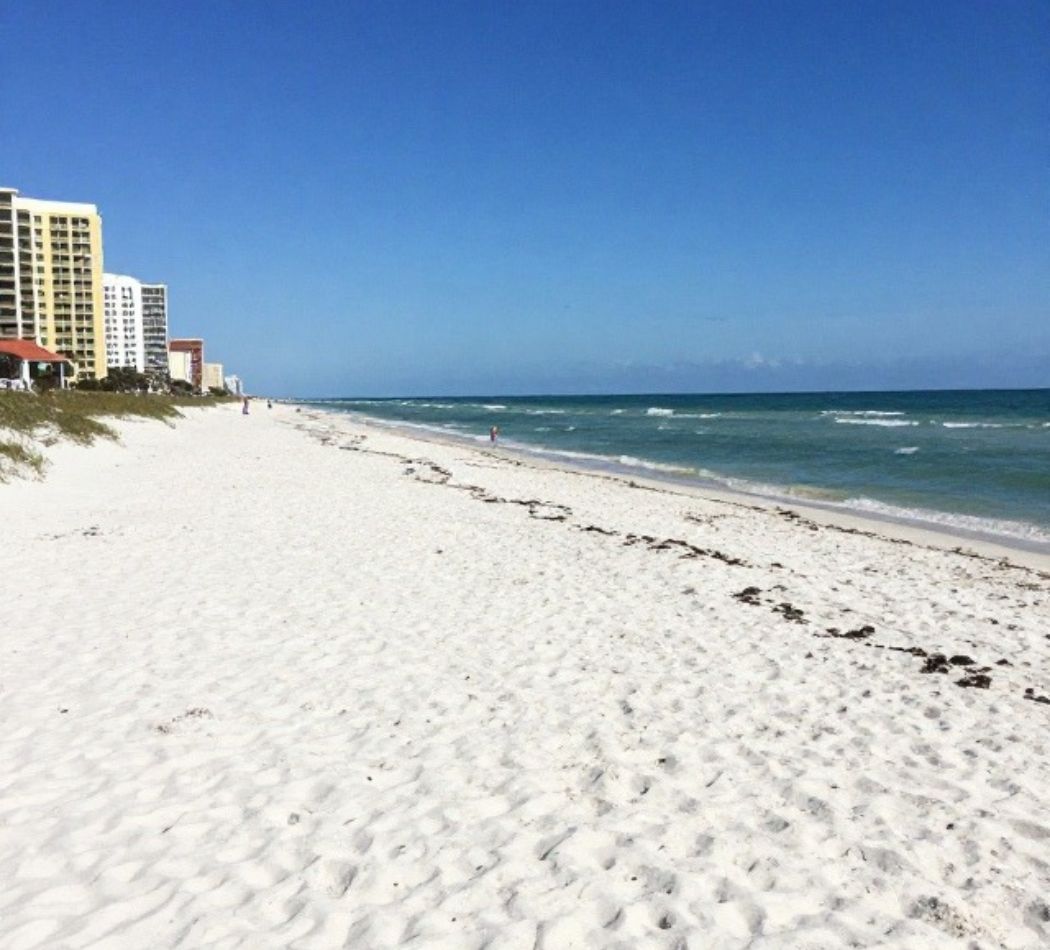
The Panhandle is known for emerald-green water and sugar-white quartz sand that squeaks underfoot. The continental shelf is shallow, so the water warms early and stays clear.
-
Tampa Bay and St. Pete/Clearwater blend award-winning urban beaches with wild state-park islands like Caladesi and Honeymoon.
-
Sarasota is home to Siesta Key’s 99% pure quartz sand, which stays cool even in the midday sun because it reflects heat rather than absorbing it.
-
Southwest Florida’s Paradise Coast—Naples, Marco Island, Sanibel, Captiva—is the shelling capital of the state, thanks to its north–south orientation and calm Gulf shelf that lets intact shells ride ashore.
The Gulf Coast’s defining advantage, though, is predictability. The water is usually calm, the slope is gentle, and the beach experience is less weather-dependent than the Atlantic. That’s why families, beginners, and anyone who wants a beach day without a side of adrenaline keep coming back.
The 2026 Award Winners: What the Rankings Actually Say
Before we get to the hidden gems, let’s look at what the major rankings said in 2026. The consensus is striking—and it reinforces the Gulf Coast’s dominance.
Tripadvisor Travelers’ Choice (2026)
-
Clearwater Beach: No. 2 in the U.S., No. 1 in Florida, and No. 17 in the world.
-
Siesta Beach: No. 6 in the U.S..
-
St. Andrews State Park: No. 8 in the U.S..
-
Treasure Island Beach: No. 2 in Florida in the USA TODAY 10BEST Readers’ Choice Awards.
Dr. Beach (Stephen Leatherman) 2026
The coastal scientist’s 50-criteria evaluation placed three Florida Gulf Coast beaches in the national top 10:
-
St. Andrews State Park: No. 2
-
Caladesi Island State Park: No. 3
-
Delnor-Wiggins Pass State Park: No. 6
Dr. Beach’s criteria include sand quality, water quality, safety, environmental management, cleanliness, and access—not just beauty. That makes these picks especially useful for travelers who care about the whole experience, not just the photo.
U.S. News & World Report 2026
Siesta Key took the No. 1 spot in the publication’s Best Beaches in the U.S. ranking, praised for its powdery white sand, clear Gulf waters, and relaxed coastal atmosphere.
Condé Nast Traveler 2026
Three Southwest Florida beaches made the cut: Naples Beach, Marco Island Beaches, and Bowman’s Beach on Sanibel Island.
The takeaway: The awards cluster around a few key regions—Clearwater/Siesta Key in the Tampa–Sarasota corridor, the Panhandle’s St. Andrews, and the Naples/Marco/Sanibel triangle. But the rankings miss plenty of beaches that are just as good for a specific kind of traveler.
The Best Beaches in Florida’s Gulf Coast, by Region
1. The Panhandle: Emerald Water and State-Park Solitude
St. Andrews State Park (Panama City Beach)
St. Andrews is the rare beach that satisfies both the “I want facilities” and “I want wilderness” crowds. The park has 1.5 miles of Gulf-front beach on one side and 1 mile of calmer bay water on the other. The rock jetties at the eastern tip are legendary among snorkelers, and the bay side is ideal for kayaking and paddleboarding. It’s Dr. Beach’s No. 2 in the nation for a reason.
Best for: Snorkelers, anglers, and travelers who want a state-park experience without sacrificing proximity to restaurants and hotels.
Navarre Beach
Tucked between Destin and Pensacola, Navarre calls itself “Florida’s Most Relaxing Place,” and it earns the title. The sand is sugar-white, the water is emerald, and the pace is intentionally slow. The Navarre Beach Marine Sanctuary has three artificial reef habitats about 100 yards offshore, making it one of the most accessible shore-snorkeling spots on the Gulf.
St. George Island
On the Forgotten Coast, St. George is the antidote to high-rise development. An ordinance restricts buildings over three stories, so the island feels like dunes, bikes, and beach houses rather than condos and traffic. Dr. Julian G. Bruce St. George Island State Park protects nine miles of undeveloped beach and offers some of the clearest stargazing on the Gulf.
2. Tampa Bay and St. Pete/Clearwater: The Award Magnets
Clearwater Beach
Clearwater is the Gulf Coast’s most complete beach town. The sand is wide and pale, the water is calm, and Pier 60 hosts a nightly sunset celebration with street performers and vendors. It’s Tripadvisor’s No. 2 in the U.S. for 2026 and No. 1 in Florida.
The trade-off is crowds. Clearwater is busy year-round, and parking near the pier fills early. Insider move: stay on the beach and walk, or base yourself in nearby Treasure Island or St. Pete Beach and drive over for the sunset.
Caladesi Island State Park
Caladesi is the boat-only beach that consistently ranks among the best in the country. Reachable by ferry from Honeymoon Island or by private boat, it feels almost improbable—a quiet, undeveloped strand beside one of Florida’s busiest coastal corridors. The sand is soft white quartz, the water is clear, and the mangrove kayak trails offer a different kind of Florida entirely.
Best for: Travelers who want a quiet, natural beach day and don’t mind a ferry ride.
Honeymoon Island State Park
Honeymoon Island is Caladesi’s more accessible sibling. It has four miles of white-sand beaches, a pet-friendly section, and some of the best sunset views in the St. Pete–Clearwater area. The rotational dog beach is a rarity on the Gulf Coast and a major draw for pet owners.
Pass-a-Grille Beach
If you want Old Florida charm without the crowds of Clearwater, Pass-a-Grille is your beach. It’s at the southern tip of St. Pete Beach, with uncrowded white sand, locally owned restaurants, and a laid-back, almost residential atmosphere. It’s the kind of place where you park once and walk everywhere.
3. Sarasota: The Quartz Sand Capital
Siesta Beach (Siesta Key)
Siesta Beach is the benchmark for Gulf Coast sand. Its 99% pure quartz composition makes it fine, white, and cool to the touch—you can walk barefoot at noon without burning your feet. The public beach is wide enough to absorb summer crowds, and the gentle Gulf conditions are ideal for beginner paddleboarders and snorkelers.
Don’t miss: Point of Rocks at the southern end of Crescent Beach, one of the best snorkeling spots on the Gulf Coast, with shallow rocks and calm water.
Crescent Beach and Turtle Beach
Siesta Key has three distinct beach experiences. Siesta Beach is the lively, amenity-packed main strand. Crescent Beach is quieter and known for its sunset views. Turtle Beach is the family-oriented option, with picnic facilities and much smaller crowds than the main beach—while still offering the same sugar-white sand.
Venice Beach
Venice is the shark-tooth capital of the Gulf Coast. The beach sits near a fossil-rich offshore ledge, and beachcombers routinely find fossilized shark teeth in the shell hash at the waterline. It’s a different kind of beach day—less about lounging, more about hunting.
4. Southwest Florida’s Paradise Coast: Shells, Sunsets, and State Parks
Delnor-Wiggins Pass State Park (Naples)
Delnor-Wiggins is Dr. Beach’s No. 6 in the nation for 2026, and it earns the spot with powdery sand, dunes crowned with sea oats, fantastic shelling, and calm, warm Gulf water that stays swimmable year-round. It’s a 199-acre barrier-island park with mangroves, dolphin sightings, and a wide, protected shoreline that feels removed from the built-up coast.
Insider tip: Launch a kayak near Water Turkey Bay to explore the mangroves, and watch for gopher tortoises along the dune paths.
Naples Beach
Naples Beach is upscale but accessible, with a miles-long stretch of soft Gulf sand steps from Fifth Avenue’s dining and shopping. The 2026 opening of the Naples Beach Club, A Four Seasons Resort and the expansion of The Ritz-Carlton, Naples have raised the beach’s profile, but the public access remains. The sunset conch-shell ceremony at the Naples Beach Club is a nightly ritual worth timing your visit around.
Tigertail Beach Park (Marco Island)
Tigertail offers two beaches in one. The inner beach is family-friendly, with soft sand and shallow water connected to the parking lot by boardwalks. The outer beach—a spit called Sand Dollar Island—requires wading about 50 yards through a tidal lagoon, but rewards you with calm Gulf water, tidal pools, and some of the best shelling in Southwest Florida. Water shoes are advised for the mucky seagrass bottom.
Bowman’s Beach (Sanibel Island)
Sanibel’s east–west orientation acts like a catcher’s mitt for shells riding the Gulf currents, making it one of the best shelling beaches in the world. Bowman’s Beach is the local favorite: wide, natural, and less developed than the island’s other access points. It’s a Condé Nast Traveler 2026 pick for good reason.
Captiva Beach
Captiva is the sunset beach of the Gulf Coast. The sand is soft, the dunes are rolling, and the western horizon is unobstructed. It’s a quieter, more residential experience than Sanibel, with excellent shelling and swimming.
Hidden Gems Most Tourists Miss
The award winners are great, but some of the best beach days happen at the beaches that don’t make the headlines.
Englewood Beach and Stump Pass (Manasota Key)
Englewood is the affordable alternative to Siesta Key, less than 30 miles south but with a fraction of the crowds. It has fine white sand, picnic tables, grills, volleyball courts, and calm water for paddleboarding. Stump Pass Beach State Park at the southern tip is a remote, unspoiled beach with hiking trails, shelling, and a $3 parking fee that keeps crowds low.
Indian Rocks Beach and Indian Shores
These small Pinellas County towns are local secrets—peaceful stretches of sand with excellent shelling and none of the Clearwater bustle. They’re ideal for travelers who want a quiet base with easy access to the larger beaches.
Sunset Beach (Treasure Island)
At the southern tip of Treasure Island, Sunset Beach is a laid-back local favorite with free parking, calm water, and—as the name promises—spectacular sunsets. It’s a world away from the Pier 60 crowds.
Cape San Blas and Cedar Key
For a truly off-the-grid Gulf Coast experience, Cape San Blas on the Forgotten Coast offers undeveloped dunes and some of the quietest beaches in the state. Cedar Key on the Big Bend is a funky, old-Florida fishing village with small beaches, kayaking, and clam farming—not a resort destination, but a genuine escape.
Practical Tips for Planning Your Gulf Coast Beach Trip
Time Your Visit Around the Water, Not Just the Weather
-
Red tide: Karenia brevis blooms are most common in late summer and fall. Check the FWC red tide status map and VisitBeaches.org before you go. In April 2026, for example, no red tide was present in Florida waters, but by late October, health alerts were issued near Mexico Beach in the Panhandle.
-
Sargassum: 2025 and 2026 were record sargassum years, with 5 million metric tons washing up on the Gulf Coast in June 2026 alone. The Loop Current keeps most sargassum offshore in Southwest Florida, but Panhandle and Texas beaches are more vulnerable. Check NOAA’s Sargassum Watch before booking a summer trip.
-
Rip currents: The Gulf is usually calm, but rip currents still happen—especially near piers, jetties, and inlets. In June 2026, Manatee County lifeguards performed 136 rescues and spotted more than 125 rip currents in a single period. Swim near a lifeguard, and if caught, float and swim parallel to shore.
Accessibility Matters—and the Gulf Coast Is Improving
-
Siesta Key Beach has a 400-foot Mobi-Mat and wheelchair-accessible restrooms, concessions, and boardwalks.
-
Clearwater–St. Pete beaches offer free manual beach wheelchairs at many locations and power chair rentals through Sand Helper.
-
Panama City Beach has powered beach cruisers and floating wheelchairs available for delivery to your accommodation.
Parking and Timing
-
Arrive early. Siesta Beach, Clearwater Beach, and Delnor-Wiggins all fill their lots by mid-morning in peak season.
-
State parks charge entry fees ($6 per vehicle at Delnor-Wiggins, $3 at Stump Pass) but offer a quieter experience and reliable facilities.
-
Use the beach flag system. Green means calm; yellow means moderate surf; red means high hazard; double red means closed.
Shelling Ethics
-
Take only empty shells. Live shells—especially fighting conchs and sand dollars—should be left in place.
-
Check local regulations. Sanibel and Captiva have shelling restrictions during certain seasons.
-
The best shelling is at low tide along the wrack line, especially after a storm.
Common Mistakes and How to Avoid Them
| Mistake | Why It Hurts | Fix |
|---|---|---|
| Booking only for the “best” beach | The top-ranked beach may be the most crowded and least relaxing for your travel style | Match the beach to your priorities: solitude, shelling, snorkeling, or amenities |
| Ignoring sargassum forecasts | A record seaweed year can turn a dream beach day into a smelly mess | Check NOAA’s Sargassum Watch and plan a backup inland day |
| Assuming the Gulf is always calm | Rip currents can occur even on calm-looking days | Swim near lifeguards and know the float-parallel escape technique |
| Visiting Siesta Key without parking strategy | The main lot fills early, and towing is enforced | Arrive before 9 a.m. or use the free trolley |
| Skipping state parks | State parks often have the best sand, fewest crowds, and cleanest facilities | Budget $3–$6 per vehicle and pack accordingly |
| Forgetting reef-safe sunscreen | Some beaches and parks require it; it protects marine life | Use mineral-based sunscreen and rash guards |
Pros and Cons: A Balanced View of Gulf Coast Beaches
Pros:
-
Calmer water than the Atlantic, ideal for families and beginners.
-
White quartz sand that stays cool and doesn’t stick like Atlantic coquina.
-
World-class shelling on Sanibel, Captiva, Marco, and Delnor-Wiggins.
-
State parks that protect undeveloped shoreline and offer camping.
-
Spectacular sunsets—the Gulf faces west, so almost every beach has a sunset view.
-
Improving accessibility with Mobi-Mats, beach wheelchairs, and accessible boardwalks.
Cons:
-
Seasonal sargassum can foul beaches, especially in summer.
-
Red tide can disrupt trips in late summer and fall.
-
Crowds at the top-ranked beaches, especially Clearwater and Siesta Key.
-
Parking is limited and expensive at popular access points.
-
Erosion and hurricane recovery continue to reshape some shorelines—Venice Beach, for example, received 620,000 cubic yards of renourishment sand in 2026.
-
Heat and humidity in summer can be intense, and afternoon thunderstorms are common.
Future Trends: What’s Changing on the Gulf Coast in 2026 and Beyond
1. Sargassum Is Becoming a Year-Round Planning Factor
The record 2025 bloom survived in the Caribbean and Gulf long enough to seed the 2026 season, which means the sargassum season could start earlier and warning times could shrink. Travelers should treat NOAA’s Sargassum Watch the same way they treat a weather forecast.
2. Beach Renourishment Is Accelerating
Hurricanes Helene and Milton caused severe erosion in 2024, and projects like the Venice Beach renourishment are restoring lost sand. But renourishment changes the beach experience—new sand can be coarser and shift the shelling patterns.
3. Accessibility Is Becoming a Competitive Advantage
Beach towns are investing in Mobi-Mats, beach wheelchairs, and accessible boardwalks to attract travelers with mobility challenges. Siesta Key, Clearwater, and Panama City Beach are leading the way.
4. Quiet Beaches Are Gaining Ground
The post-pandemic preference for uncrowded, nature-focused experiences is pushing travelers toward Pass-a-Grille, Indian Rocks Beach, Stump Pass, and the Forgotten Coast. Expect more small towns to invest in low-impact tourism rather than high-rise development.
5. Water Quality Monitoring Is Improving
Real-time tools like VisitBeaches.org and the FWC red tide map are making it easier to plan around blooms. The next step is predictive modeling—forecasting red tide and sargassum days in advance, not just reporting current conditions.
Conclusion: The Best Beach Is the One That Fits Your Day
The best beaches in Florida’s Gulf Coast aren’t a single list—they’re a spectrum. Siesta Key wins on sand quality. Clearwater wins on amenities and sunsets. Caladesi wins on solitude. Delnor-Wiggins wins on shelling and natural beauty. Pass-a-Grille wins on charm. And the Forgotten Coast wins on the feeling that you’ve found something the rest of the world hasn’t.
Key Takeaways
-
If you want the classic Gulf Coast experience: Siesta Key or Clearwater Beach.
-
If you want quiet and nature: Caladesi Island, Stump Pass, or St. George Island.
-
If you’re shelling: Sanibel, Captiva, Marco Island, or Delnor-Wiggins.
-
If you’re traveling with kids: Siesta Beach, Clearwater Beach, or Tigertail’s inner beach.
-
If you have mobility challenges: Siesta Key (Mobi-Mat), Clearwater (beach wheelchairs), or Panama City Beach (powered chairs).
-
Always check: red tide, sargassum, rip current forecasts, and parking availability before you go.
The Gulf Coast rewards travelers who plan around the conditions, not just the rankings. Do that, and you’ll find a beach that feels like it was waiting for you.
FAQs
What is the No. 1 beach in Florida’s Gulf Coast for 2026?
Siesta Key was named the No. 1 beach in the U.S. by U.S. News & World Report for 2026, and Clearwater Beach was Tripadvisor’s No. 1 in Florida and No. 2 in the U.S..
Is the Gulf Coast better than the Atlantic Coast for beaches?
For calm water, soft sand, and family-friendly conditions, the Gulf Coast generally wins. The Atlantic has better surfing and more dramatic scenery. The “best” choice depends on what you want from a beach day.
What is the clearest water on Florida’s Gulf Coast?
The Panhandle’s Emerald Coast—especially around Navarre Beach, Destin, and St. Andrews State Park—has the clearest, most emerald-colored water because of the shallow shelf and white quartz sand bottom.
When is sargassum season on the Gulf Coast?
Sargassum typically peaks in late spring and summer (May–July). In 2026, record levels were recorded in June, though the Gulf’s Loop Current kept much of it offshore in Southwest Florida.
Is red tide a problem on Gulf Coast beaches?
Red tide can appear year-round but is most common in late summer and fall. Check the FWC red tide map and VisitBeaches.org for current conditions before you travel.
Which Gulf Coast beach is best for shelling?
Sanibel Island and Captiva Island are the most famous, followed by Marco Island, Delnor-Wiggins Pass State Park, and the Ten Thousand Islands region.
Are Gulf Coast beaches accessible for wheelchairs?
Many are. Siesta Key has a 400-foot Mobi-Mat; Clearwater–St. Pete beaches offer free manual beach wheelchairs and power chair rentals; Panama City Beach has powered beach cruisers and floating wheelchairs.
What should I pack for a Gulf Coast beach day?
Reef-safe sunscreen, water shoes (for shelling and lagoon crossings), a shade umbrella, cash for parking fees, and a shell bag. In summer, add a lightweight rain jacket for afternoon storms.
Sources
-
Tripadvisor Travelers’ Choice Awards 2026, as reported by Visit St. Pete–Clearwater and Tampa Bay news outlets.
-
Dr. Beach (Stephen P. Leatherman) 2026 Top 10 Beaches, as reported by CBS12.
-
U.S. News & World Report 2026 Best Vacations rankings, as reported by Visit Sarasota County.
-
Condé Nast Traveler 2026 “25 Best Beaches in Florida,” as reported by the Naples Daily News and Tennessean.
-
University of South Florida Sargassum Watch System, via WUSF and Herald-Sun reporting on 2025–2026 sargassum levels.
-
Florida Department of Health red tide alerts and USA TODAY red tide tracker, 2026.
-
Visit Florida Media, “Florida Without Barriers,” on beach accessibility.
-
Visit St. Pete–Clearwater, “Guide to Accessible Beaches,” on beach wheelchair rentals.
-
National Weather Service rip current statements and Manatee County lifeguard rescue data, 2026.
-
Moon Travel Guides, “Best Beaches along Florida’s Gulf Coast”.
-
Afar, “One of Florida’s Best Beach Stretches Isn’t Where You Think,” on Collier County beaches.
-
Travel + Leisure, “This Gulf Coast Town Is an Affordable Alternative to Siesta Key,” on Englewood and Manasota Key.
-
Southern Living/Yahoo, “I’ve Lived on Florida’s Gulf Coast for 30 Years—These Are the Best Quiet Beach Towns,” on St. George Island and Navarre.
-
DredgeWire, “Venice Beach Gets 620,000 Cubic Yards of New Sand,” 2026.
-
AP News and Travel + Leisure reporting on Siesta Key’s 99% quartz sand composition.
-
Sand Dollar Boat Tours, “Best Shelling Beaches on Florida’s Gulf Coast,” 2026.

Novara Lin
Senior Editor & Clean Beauty Analyst
Novara Lin is a clean beauty researcher and wellness editor dedicated to demystifying modern skincare and evidence-based living. With a background in formulation science and consumer health reporting, she specializes in analyzing complex ingredient profiles, evaluating product safety, and bridging the gap between clinical research and daily self-care routines. Her work focuses on helping readers cut through industry noise to build minimal, highly effective routines rooted in transparency and skin health. When she isn’t testing active formulations or auditing non-toxic household choices, Novara leads editorial strategy for NovaRa Pure.